
Migraines – Part 2
In part 1, I explained the difference between a headache [...]


In part 1, I explained the difference between a headache [...]

Reiki is a form of healing therapy originating in Japan [...]
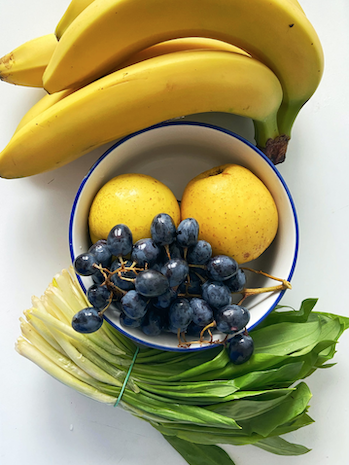
With the current buzz around magnesium supplements it implies that we are all short of magnesium. But are we? First it is important that you are aware there is currently no test to determine your magnesium levels that is cost effective or well validated. Even clinical manifestations of magnesium deficiency are difficult to define due to magnesiums many roles in our body. Despite this amoung researchers, magnesium defficiency is known as the silent epidemic of our times. At first glance this seems a paradox how can people be low in magnesium if you can't measure it? The answer appears to be lifestyle and diet. Less than 30% of U.S adults comsume the recomended daily allowance (RDA) of magnesium. And nearly 20% get only half of the magnesium they need daily to remain healthy. So what are the symptoms of poor magnesium intake:

Having identified that researchers believe there is an epedemic of low magnesium causes by our diets and lifestyles. So what is it we are doing that is the cause of the low magnesium epedmic. 1. Sweet foods Refined sugar found in pastries, cakes, desserts, sweets etc contains no magnesium and causes the body to excrete magnesium. 2. Physical and emotional stress Physcial stress e.g. surgery and emotional stress e.g. moving house, grief can cause a magnesium deficiency. In studies, adrenaline and cortisol by products of the "fight or flight" stress reaction assoicated with stress and anxeity were associated with decreated magnesium. This is because stressful situations require more magnesium use by the body which can lead to a deficiency. A lack of magnesium tends to magnify the stress reaction, worsening the problem. 3. Medication The effects of certain drugs

A growing body of scientific evidence shows that vitamin D plays a crucial role in disease prevention and maintaining optimal health. You have about 30,000 genes in your body and vitamin D affects nearly 3,000. This is in addition to all the vitamin D receptors through out your body. Inflammation is the body's attempt at self-protection; the aim being to remove harmful stimuli, including damaged cells, irritants, or pathogens. While inflammation is a vital part of the body's immune response, it can also be problematic and plays a role in some chronic diseases e.g asthma, arthritis. Researchers investigated specific signalling events that vitamin D suppresses in order to inhibit inflammation. Research published in The Journal of Immunology called it the "inflammatory cascade"; low vitamin D levels failed to inhibit the cascade while adequate levels did the job. Researchers concluded that patients with chronic inflammatory diseases who are also vitamin D deficient may benefit from supplementation. Researchers in Turkey, reported in the international Journal of Rheumatic Diseases that chronic widespread musculoskeletal pain is improved with vitamin D. Fibromyalgia sufferers and other patients with chronic widespread musculoskeletal pain were given 50,000 iu/week oral vitamin D3 for three months. Afterwards scientists discovered decreases in pain, fatigue upon awaking, lack of energy, tender points and depression. Significantly there were 30 Fibromyalgia patients at the beginning of the study and only 20 at the end! Next week I want to look at the relationship between low vitamin D levels and common ailments. References Zhang Y, et al. (2012). Vitamin D Inhibits Monocyte/Macrophage Proinflammatory Cytokine Production by Targeting MAPK Phosphatase-1. The Journal of Immunology.
Reiki is a Japanese healing practice for reducing stress and inducing the body to heal itself. Reiki, pronounced Ray Key, is a Japanese word which means free passage of universal life force energy. This life force energy is known as Prana in India, Chi in China, Ki in Japan, Mana in Hawaii and Elan vital in Europe. All of us have life force energy; it is essential for life and needs to flow freely for optimum health. The aim of Reiki treatments is to harmonise your life force energy and reconnect you to the universal energy. Reiki energy is said to come from the source of all creation. This Source is said to be the vital force that sustains the cosmos and infuses us with light and life, providing the energy source from which our bodies, and all forms of matter, arise. Our aura is an energy body that surrounds our physical body; it emerges from our chakras (the energy centres of the body) and reflects the state of our life force energy. These concepts are the pillars on which all healing traditions including Reiki are built and can be found in the texts of ancient Chinese, Indian and Japanese philosophies. More recently, modern scientific understanding has started to converge with this ancient wisdom. Quantum physicists have discovered that the universe is made up of energy, the Zero Point Field, and this energy is the source of all matter in the universe including human beings.
While taking nutritional supplements suits some women, I know others don’t like taking tablets. So here are a couple of other ideas to assist you with your period pain. There is scientific evidence that from a trail of women who suffer from period pain that certain yoga poses e.g. cobra, cat and fish reduce both the intensity and duration of period pain. The cobra pose is where you lie on your front, with your hand underneath your shoulders and gently push yourself up bending your back as you come up. The cat pose is when you are on all fours and then round your spine like a cat. The fish pose is when you lie on your back, keep your pelvis and head on the floor and an arch your spine towards the ceiling. As an aromatherapist there are a variety of essential oils that you can use to help reduce the severity of period pain. Aromatherapists split period pain into two categories:

In the past series on Reiki I discussed whether Reiki was a placebo, and cited a variety of scientific experiments to demonstrate it is not. Now I would like to discuss the mechanisms of healing. Like all other aspects of healing, the mechanism is little understood. So I would like to discuss the range of ideas concerning such mechanisms. At one end of this range, is the belief, held by many healers, that they are channelling a higher spiritual energy that ultimately derives from God. This energy is often referred to as “divine love” or “unconditional love” by healers. At the other end of the range there are many theories which are based on our knowledge of science, particular physics. The possibility that any conventional electromagnetic energy may be a candidate for “healing energy” seems unlikely as healing has been shown, at times to operate outside the dimensions of space & time. For example there are a wide variety of scientific experiments were healing procedures were partly or wholly undertaken at a distance1. Between these 'spiritual' and 'material' poles there is a middle ground of ideas concerning healing mechanisms based on the concepts of subtle energies, the subtle energy bodies of all living organisms and the universal energy known by names such as prana and chi. . I personally believe that I act as a channel for universal energy that comes from the natural world. References Dossey, L. (1993). Healing Words. The Power of Prayer and the Practice of Medicine. Harper Collins; New York.
If you ask people are they stressed, most people will say no. The reality is that people rarely feel stressed out. So I wanted to publish a guide to helping you becoming more aware of when your stress goes to high. Psychologist Connie Lillas uses a driving analogy to describe the three most common ways people respond when they’re overwhelmed by stress:
| Cognitive Symptoms | Emotional Symptoms |
|
|
| Physical Symptoms | Behavioral Symptoms |
|
|
