
The relationship between vitamin D and your immune system
A growing body of scientific evidence shows that vitamin D plays a crucial role in disease prevention and maintaining optimal health. You have about 30,000 genes in your body and vitamin D affects nearly 3,000. This is in addition to all the vitamin D receptors through out your body.
Inflammation is the body’s attempt at self-protection; the aim being to remove harmful stimuli, including damaged cells, irritants, or pathogens. While inflammation is a vital part of the body’s immune response, it can also be problematic and plays a role in some chronic diseases e.g asthma, arthritis. Researchers investigated specific signalling events that vitamin D suppresses in order to inhibit inflammation. Research published in The Journal of Immunology called it the “inflammatory cascade”; low vitamin D levels failed to inhibit the cascade while adequate levels did the job. Researchers concluded that patients with chronic inflammatory diseases who are also vitamin D deficient may benefit from supplementation.
Researchers in Turkey, reported in the international Journal of Rheumatic Diseases that chronic widespread musculoskeletal pain is improved with vitamin D. Fibromyalgia sufferers and other patients with chronic widespread musculoskeletal pain were given 50,000 iu/week oral vitamin D3 for three months. Afterwards scientists discovered decreases in pain, fatigue upon awaking, lack of energy, tender points and depression. Significantly there were 30 Fibromyalgia patients at the beginning of the study and only 20 at the end!
Next week I want to look at the relationship between low vitamin D levels and common ailments.
References
Zhang Y, et al. (2012). Vitamin D Inhibits Monocyte/Macrophage Proinflammatory Cytokine Production by Targeting MAPK Phosphatase-1. The Journal of Immunology.
Yilmaz, R., Salli, A., Cingoz, H. T., Kucuksen, S. and Ugurlu, H. (2016), Efficacy of vitamin D replacement therapy on patients with chronic nonspecific widespread musculoskeletal pain with vitamin D deficiency. Int J Rheum Dis.
Related Posts
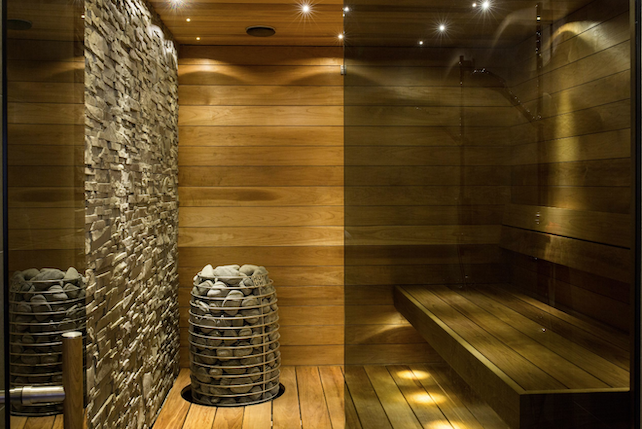
Can going to the sauna help your BP?
I will start with a confession. While I know the benefits of hydotherapy - basically you take a hot shower for 30 seconds then switch to freezing cold for 30 seconds, then go back to hot and repeat for 2 or 3 minutes - it has never appealed to me. It may be fantastic for blood flow and good for your liver, but to me it seems brutal! So in the past, I have only spent a few short minutes in a sauna and I have never been tempted to jump into the ice cold plunge pool afterwards - despite my finnish friends telling me how fantastic it is. So I was interested in the Kuopio Ischaemic Heart Disease Risk Factor Study which looked at if frequent use of a sauna has reduces the risk of high BP. The study looked at 1,621 middle-aged men living in eastern Finland. The study found that
- Going to the sauna 4 to 7 times per week reduces your risk of develping High BP by 46%.
- Going to the sauna 2 to 3 times per week reduces your risk of develpoing High BP by 24%.

Do self hypnosis CD’s really boost resilience?
As things are now back to full swing after the summer holiday, and before things get too budy, I wanted to share with you a piece of research that while being 3 years old is still highly relevant. Researchers were looking at the effectiveness of listening to self-administered hypnosis stress reduction CD's to boost resilience. Eleven subjects took part in the study, all healthy, normally coping and functioning individuals - were provided with a self-administered hypnosis stress reduction CD, to be used for a minimum of 5 days a week over a 12 week period. The CD contained two different hypnosis tracks, one to be played before sleep (25 minutes in duration) and the other to be played in the morning (lasting 7 minutes). The aim of the CD was to recondition the stress response, by minimising the participants "excessive emotional and physical reaction to perceived work and life stressors, while facilitating their coping skills and resilience." Chronic stress and anxiety have been associated with inflammatory changes in the body, and high level of inflammation have been lined to a number of acute and chronic conditions. Blood tests were used to measure the level of inflammatory response and self-reported measures (using the StressScan assesment) were taken pre and post intervention. While the study size is small, it provides some suggestive evidence that a self-administered stress reduction program that is time efficient may be clinically effective for modifying the stress response and boosting resilience. Reference Schoen M and Nowack K (2013) Reconditioning the stress response with hypnosis CD reduces the inflammatory cytokine IL-6 and influences resilience: a pilot study. Complementary Therapies in Clinical Practice 2013; 19 83-88 http://www.ctcpjournal.com/article/S1744-3881(12)00088-6/abstract
What helps fights colds? Part 1
Its that time of year when people tend to get colds, so I wanted to share some tips on natural ways to fight colds. Vitamin C The first thing I reach for when I feel I am run down or coming down with a cold is high dose Vitamin C. There is scientific evidence to suggest that taking vitamin C can shorten a cold by nearly 20%. Zinc One study showed that if kids take a zinc supplement they reduce the number of colds they get by 50%. If you take zinc when you start getting a cold it can help to shorten the duration of the cold. Pelargonium Sidoides An African herb is the key ingredient in Umcka ColdCare. Studies sho that this herbal remedy can help resolve coughs, especially chesty coughs and relieve sore throats. Salt For sore thoats, I normally gargle with salt water. Please be careful not to swollow it as it will make you vomit. I then make a tea, by adding hot water to a chunk (2 cms) of fresh ginger, a slice of lemon and tea spoon of honey. References Strohle, A., Hahn, A. 2009. Vitamin C and immune function. Med Monastsschr Pharm. Feb; 32(2):49-54. http://www.ncbi.nlm.nih.gov/pubmed/19263912 Douglas RM, Hemilä H, Chalker E, Treacy B. Vitamin C for preventing and treating the common cold. Cochrane Database Syst Rev. 2007 Jul 18;(3):CD000980. Review. Update in: Cochrane Database Syst Rev. 2013;1:CD000980 https://www.ncbi.nlm.nih.gov/pubmed/17636648 Heydarian F, Behmanesh F, Daluee M, Kianifar H, Hematian M. The role of zinc sulfate in acute bronchiolitis in patients aged 2 to 23 months. Iran J Pediatr. 2011;21(2):231-4. https://www.ncbi.nlm.nih.gov/pmc/articles/PMC3446156/ Singh M, Das RR. Zinc for the common cold. Cochrane Database Syst Rev. 2013 Jun 18;(6):CD001364. Update in: Cochrane Database Syst Rev. 2015;(4):CD001364 https://www.ncbi.nlm.nih.gov/pubmed/23775705
