About fl1admin

This author has not yet filled in any details.
So far fl1admin has created 340 blog entries.

More causes of the low magnesium epidemic?

In my last blog article, I started to explore how every day food choices and medications were having an adverse impact on our magnesium levels.  I now want to take a look at what we drink and ageing. 1. Cola drinks Most dark colored soft drinks contain phospates, which actually bind to magnesium inside the digestive tract making it unavailable to the body. 2. Caffinated drinks The kidneys regulate the level of magnesium in our body.  Caffine found in tea and coffee caues the kidnesy to release extra magnesium. 3. Alcohol Alcohol increased the excretion of magnesium by the kidneys. 4. Ageing Finally if the list wasn't long enough, we need to add one more thing that we can't avoid, getting older.  The over 55's are particularly vulnerable to low magnsium.  Magnesium metabolism may be less efficient as we grow older as changes to the GI tract and kidneys contribute to older adults aborbing less and retaining less magnsium. References Dean C. The Magnesium Miracle. New York: Ballantine Books; 2007. Weiss GH, Sluss PM, Linke CA. Changes in urinary magnesium, citrate and oxalate levels due to cola consumption. Urology 1992;39:331-3 Brink E. J., Beynen A. C., Dekker P. R., Beresteijn E.C.H., Meer R. Interaction of calcium and phosphate decreases ileal magnesium solubility and apparent magnesium absorption. The Journal of Nutrition. 1992; 122:580-586 Seelig M, Rosanoff A. The Magnesium Factor. New York: Avery Books; 2003 Heaney RP, Rafferty K. Carbonated beverages and urinary calcium excretion. American Journal of Clinical Nutrition. 2001; 74:343–347 Irwin R, Rippe J. Irwin and Rippe’s Intensive Care Medicine. Philadelphia: Lippincott, Williams and Wilkins; 2008 Bernstein A, Luggen AS. Nutrition for the Older Adult. Sudbury, MA: Jones and Bartlett Publishers; 2010.
Is slouching that bad for you? – part 1

We spend the vast majority of our time in static positions — either sitting or standing — when the temptation to slump and sag is just too great. Most of us know from experience that sitting hunched in front of a computer or driving wheel can lead to a stiff, painful back and shoulders.

But in this blog article and the next three, I want to explain how poor posture can lead to other health problems . . . It may raise your blood pressure.... The usual risk factors for high blood pressure are age, being overweight, smoking and chronic diseases such as type 2 diabetes. But scientists now think slouching may trigger it, too.  This is because there is a link between neck muscles and the area of the brain that helps regulate blood pressure.  In a study published in 2007, neuro-scientists at the University of Leeds found that when cells in the neck muscles sense the neck is moving, they send a signal to that area of the brain.   The theory is that this helps ensure adequate blood supply when we change posture, for example from sitting to standing. But if the neck muscle cells become damaged or pressured through stooping and slumping, this could trigger problems with blood pressure, suggests Professor Jim Deuchars, the scientist who led the study. He adds that this might explain why some people who suffer whiplash injuries notice a change in their blood pressure — sometimes it’s higher, sometimes lower. ‘It’s possible that poor posture, which compresses the neck muscles, may be involved in high blood pressure, too, but more research is needed.’  

Is Reiki a Placebo? – Part 1

By nature Reiki is very intangible.   So in a series of blog articles I will try to explore how Reiki works and what the scientific research says. For me Reiki is merely a modern name for an ancient healing practice.  Which is administered by "laying on hands" and is based on the idea that an unseen "life force energy" flows through us and is what causes us to be alive. If one's "life force energy" is low, we are run down and then we are more likely to get sick or feel stress, and if it is high, we are more capable of being happy and healthy. The benefits of Reiki

  • Help some people to feel deeply relaxed
  • Help people cope with difficult situations
  • Relieve emotional stress and tension
  • Help to improve overall wellbeing
  • Help alleviate pain & anxiety
My personal belief about how Reiki works, is that I act as a channel for Reiki energy and the client must be open to receiving it as the Reiki energy cannot “force” itself on to anyone.  As humans have free-will this means a client can block it if they consciously choose too.  The Reiki energy is then a resource that the human body can use to heal itself. So is Reiki just Placebo? A placebo is anything that seems to be a "real" medical treatment -- but isn't i.e. it is fake. The judgement is based on the availability of scientific evidence.  Dame Carol Black (– a former President of the Royal College of Physicians and of the Academy of Royal Colleges) and a group of distinguished doctors and scientists at the Kings Fund has concluded that current assumptions about what constitutes good scientific evidence for complementary therapies are too narrow. Professor Stephen Holgate who is also a member of the Kings Fund said: "As scientists, we have often sneered at the placebo effect. But as doctors, we know it can have a real impact on the outcomes of treatment for our patients. What is it, after all, but a trigger to the body's natural ability to heal itself?  That is something worth encouraging." I am a firm believer in the body's ability to heal itself.  As the aim of all complementary therapies is to stimulate the body to heal itself, they could all be considered placebo.  This is probably especially true of Reiki due to the fact that it has not been well studied scientifically.   The limited studies have not gathered enough evidence to “prove” Reiki energy exists, but this is not the same as proving it doesn’t exist. For me, it makes more sense to assess the impact of Reiki and Reiki energy.  After all if you can assess the impact of the energy then it must exist.  And as to, is it a placebo?  If the Reiki energy has an impact, it must exist, and it can’t be a placebo because its having an impact. So in my next blog I will at the scientific evidence on the impact of Reiki.

Massage for Runners … its all about optimising recovery

We are introducing a new service: Runners Massage a special service to assist runners to optimise their recovery the massage will

  • flush out all the waste products in the tired muscles
  • address micro tears in the muscles
which rejuvenates the tired heavy muscles making them feel light. The goal for runners is to first and foremost prevent the kind of wear and tear that comes with putting physical demands on your body. Yes; running is fantastic and ultimately good for your overall health, but if you are going to push your body to its limits you must prepare it and maintain it to avoid potential injury. With strenuous running, your muscles can lose their ability to relax and they become shorter and tighter.   Chronically tight muscles will lose their flexibility and that is really asking for trouble, as it makes you so much more susceptible to injury.  If your muscles lose flexibility, they can easily pull or tear, and tight muscles become very sore. Blood flow is poor through tightened muscles (ischemia) and that also cause pain.  Massage stretches the muscles in a much more specific way than stretching after a run, to regain lost flexibility. Click here to book your runners massage  

How to test if you have good posture

We all know that we need good posture.  So today I wanted to share with you how to test if you have good posture.

The Wall Test - Stand with the back of your head touching the wall and your heels six inches from the baseboard. With your buttocks touching the wall, check the distance with your hand between your lower back and the wall, and your neck and the wall. If you can get within an inch or two at the low back and two inches at the neck, you are close to having excellent posture. If not, your posture may need professional attention to restore the normal curves of your spine.

The 'Jump' Test - Feel the muscles of your neck and shoulders. Do you find areas that are tender and sensitive? Are the buttock muscles sore when you apply pressure? What about the chest muscles?

If any of your muscles feel tight, sore or achy then why not book in for a massage.

Can going to the sauna help your BP?

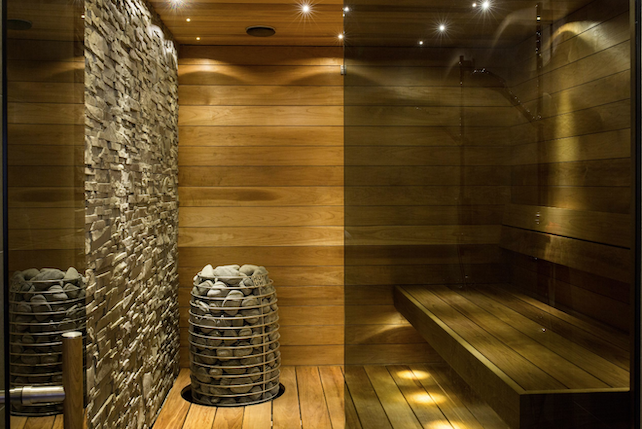
I will start with a confession.  While I know the benefits of hydotherapy - basically you take a hot shower for 30 seconds then switch to freezing cold for 30 seconds, then go back to hot and repeat for 2 or 3 minutes - it has never appealed to me.  It may be fantastic for blood flow and good for your liver, but to me it seems brutal!  So in the past, I have only spent a few short minutes in a sauna and I have never been tempted to jump into the ice cold plunge pool afterwards - despite my finnish friends telling me how fantastic it is. So I was interested in the Kuopio Ischaemic Heart Disease Risk Factor Study which looked at if frequent use of a sauna has reduces the risk of high BP.  The study looked at 1,621 middle-aged men living in eastern Finland.  The study found that

  • Going to the sauna 4 to 7 times per week reduces your risk of develping High BP by 46%.
  • Going to the sauna 2 to 3 times per week reduces your risk of develpoing High BP by 24%.
So my Finnish friends who rave about going to the sauna are wise, going regularly helps to keep your BP  in check. References F Zaccardi, T Laukkanen, P Willeit et al, Sauna Bathing and Incident Hypertension: A Prospective Cohort Study, American Journal of Hypertension, Volume 30, Issue 11, 1 November 2017, Pages 1120–1125, https://doi.org/10.1093/ajh/hpx102

Is there any scientific evidence that massage can assist with pain?

Based on my experience treating clients there is little doubt in my mind that a massage can relieve pain in tight or overworked muscles, but there is also growing scientific evidence that it can help relieve chronic pain. A study published in Annals of Family Medicine in 2014 found that 60-minute therapeutic massage sessions two or three times a week for four weeks relieved chronic neck pain better than no massage or fewer or shorter massage sessions. A study of 262 patients published in the Archives of Internal Medicine found that massage was far superior to acupuncture or patient education for relieving back pain. After 10 weeks, 74 percent of patients said massage was "very helpful." Only 46 percent for those who received acupuncture and about 17 percent of those who read a self-help book had the same response. Massage patients were also four times less likely than other patients to report being bedridden with pain. The authors concluded that "massage might be an effective alternative to conventional medical care for persistent back pain." In a true test of its value, massage has even been shown to ease the chronic pain suffered by cancer patients. A study of more than 1,200 patients at Memorial Sloan-Kettering Cancer Center published in the Journal of Pain and Symptom Management found that massage reduces symptoms such as anxiety, nausea, and pain by about 50 percent. Studies suggest that for women in labour, massage provides some pain relief and increased their satisfaction with other forms of pain relief but the evidence isn't conclusive. In a 2012 study there was evidence that massage may help with pain due to osteoarthritis of knee. References Cherkin DC, Eisenberg D, Sherman KJ, Barlow W, Kaptchuk TJ, Street J, Deyo RA. Randomized trial comparing traditional Chinese medical acupuncture, therapeutic massage, and self-care education for chronic low back pain. Arch Intern Med. 2001 Apr 23;161(8):1081-8. Sherman KJ, Cook AJ, Wellman RD, et al. Five-week outcomes from a dosing trial of therapeutic massage for chronic neck pain. Annals of Family Medicine. 2014;12(2):112–120. Sherman KJ, Cherkin DC, Hawkes RJ, et al. Randomized trial of therapeutic massage for chronic neck pain. Clinical Journal of Pain. 2009;25(3):233–238. Cherkin DC, Sherman KJ, Kahn J, et al. A comparison of the effects of 2 types of massage and usual care on chronic low back pain: a randomized, controlled trial. Annals of Internal Medicine. 2011;155(1):1–9 Furlan AD, Imamura M, Dryden T, et al. Massage for low-back pain. Cochrane Database of Systematic Reviews. 2008;(4):CD001929 Perlman AI, Ali A, Njike VY, et al. Massage therapy for osteoarthritis of the knee: a randomized dose-finding trial. PLoS One. 2012;7(2):e30248 Corbin L. Safety and efficacy of massage therapy for patients with cancer. Cancer Control. 2005;12(3):158–164. Wilkinson S, Barnes K, Storey L. Massage for symptom relief in patients with cancer: systematic review. Journal of Advanced Nursing. 2008;63(5):430–439. Jones L, Othman M, Dowswell T, et al. Pain management for women in labour: an overview of systematic reviews. Cochrane Database of Systematic Reviews. 2012; (3):CD009234

Sleep – Its only one way of getting energy.

The function of sleep is to renew us and its gives us our vitality or give us energy to live our lives.  But while it may be ideal to have 7, 8 or 9 hours a sleep it’s not always possible with our 21st century life styles.  For many people there is simply too much to do to sleep.  So given you can’t create time, what can you do.  First remember that sleep is only one way to recharge our energy battery. Energy How much energy you have right now isn’t purely based on how well you slept last night or how well you have been sleeping recently.  By “energy” I mean your personal ability to live life to its fullest capacity.  So where would you put yourself on an energy scale of 1 to 100% where 1 is very low energy and 100 is full of energy?  Below 30% we are de-motivated, low in self-esteem and feel out of control.  Just like jump-starting a car when the car battery has gone flat, if your energy falls below 30% then you need an energy boost from something like acupuncture, shiatsu or reiki.  Once your energy level is about 30% then it’s possible to help yourself boost your energy. Physical Energy Boosters This is what we do to care for ourselves physical and the things that give us our vitality and make us feel physically well and energised.

  • Rest is not just the essential precursor to brilliant sleep; it is also a substitute for sleep as it allows us to recharge our batteries.
  • A healthy diet provides the nutritional support your body needs to provide physical energy.
  • Exercise including yoga, swimming, walking and tai chi help re-charge our batteries.
Emotional Energy Capacity This is related to your emotional health and energy – your ability to manage your guilt, worry, concerns, fears and anger.  How you nourish positive energy enhancing emotions such as joy, happiness, love and build supportive relationships with your nearest and dearest. Mental Energy Capacity This is about the ways in which we think, problem solve and nourish ourselves intellectually.  For most people this boils down to how we manage our need to control what’s going on around you and our tendency to be a perfectionist.  It also incorporates how we deal with uncertainty in our lives and how we generate optimism even in times of adversity. Spiritual Energy Capacity Spiritual energy is different for every one, I define it as what makes life worth living, its what motivates you.  Its unleashed when you tap into your values when we are doing something you believe in, and gives you determination and resilience. For anyone struggling with their physical energy levels, why not try Reiki, I offer 15 minute Reiki tasters for £12.50.

Migraine – Part 3

In part 1, I explore what a migraine was and how it differed from headaches  and they shared a herbal remedy, last week in part 2 I looked at potential nutrional diffciences.  This week, I want to explore some growing evidence about the impact of exercise. When you are having a migraine it is natural to want to rest and for some people exercise can trigger a migraine.  So I was slightly surprise about the growing evidence that suggest exercise can help migraine sufferers.  Firstly, the evidence all relates to a certain type of exercise known as High Intentsity Interval Training (HIIT).  This is where you alternative periods of intense exercise with periods of less intense recovery. Recently scientists compared the effects of twice weekly HIIT sessions with moderate continous exercise and a control intevention and found that HIIT had most beneficial results.  They found HIIT significantly reduced the munber of migraine days amoung sufferers. Reference Hanssen H, Minghetti A, Magon S, et al. Effects of different endurance exercise modalities on migraine days and cerebrovascular health in episodic migraineurs: A randomized controlled trial. Scand J Med Sci Sports. 2018;28:1103–1112. https://doi.org/10.1111/sms.13023

Natural remedies for the winter blues – Part 1

By January I am seriously missing the sun.  While I know we have had the shortest day, the grey weather and the snow jsut reminds me we are in deep winter.  So with the Brexit impass being deeply demoralising and frustraing, I wanted to share some tips to combat the blues. 1. Vitamin D Most people are short of Vitamin D in the uk.  One of the signs of being short of Vitamin D is feeling blue. 2. Spice it up. Earlier today I was planning my meals for the week before I went to the supermarket.  At this time of year  I always fancy dishes containting yellow rice i.e. paella or pilau rice.  I know its the yellow colour that particularly appeals which you get by adding either Tumeric or Saffron.    In clinical trails Curcumin the main active ingredient in Tumeric (the bright yellow Indian spice) has been to be as effective as Prozac.  A review of several trains of Saffron found it was a safe and effective treatmetn for depression. While I like to cook with the spices, it isn't as effective as supplements which are standardised extracts.  For me cooking with the spice is fine as I am not depressed. 3. 5-HTP A naturally occuring amino acid, 5-HTP is used by the body to make serotonin the "happy hormone".  Suplements produced from the seeds of the West African medicinal plant Griffonia Simplicifoia show promised for depression. References Woo YS, Kim S, Jeong JH, Jung YE, Kim MD, Bahk WM. Vitamin D Deficiency/Insufficiency among Inpatients with Depressive Symptoms. Clin Psychopharmacol Neurosci. 2019 Feb 28;17(1):121-124. Sanmukhani J, Satodia V, Trivedi J, Patel T, Tiwari D, Panchal B, Goel A, Tripathi CB. Efficacy and safety of curcumin in major depressive disorder: a randomized controlled trial. Phytother Res. 2014 Apr;28(4):579-85. Moshiri E, Basti AA, Noorbala AA, Jamshidi AH, Hesameddin Abbasi S, Akhondzadeh S. Crocus sativus L. (petal) in the treatment of mild-to-moderate depression: a double-blind, randomized and placebo-controlled trial. Phytomedicine. 2006 Nov;13(9-10):607-11 Birdsall TC. 5-Hydroxytryptophan: a clinically-effective serotonin precursor.  Altern Med Rev. 1998 Aug;3(4):271-80.

Go to Top