
A guide to shin splints
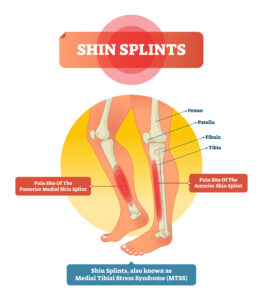
Shin splints is characterised by pain and tenderness along the front of your lower leg (shin). Shin splints is a type of shin pain, usually caused by exercise like running. Shin splints usually get better within a few weeks.
If you have shin splints you may be able to assist yourself by:
- put an ice pack (or bag of frozen peas) in a towel on your shin for up to 20 minutes every 2 to 3 hours
- switch to gentle exercise such as yoga while healing
- you can remain active by exercising with non-weight-bearing exercises like swimming or biking if it doesn’t cause pain
- exercise on soft ground, if you can, when you’re feeling better
- warm up before exercise and stretch after exercise
- make sure your trainers or shoes support your feet properly
Shin splints are a repetitive stress injury and caused by overdoing an activity e.g. running. They can be prevented by:
- Progressively working your way into a new workout or routine
- Gradually increasing physical activity, intensity and mileage
- Wearing proper footwear
- Adding arch supports or insoles designed to absorb more shock or impact
- Bringing cross-training and strength workouts to a training regimen
If you’re suffering from shin splint pain, massage therapy can help with pain relief. The deep tissue strokes release built-up tension, resulting in pain release and the prevention of scar tissue accumulation.
Related Posts

Introduction to Delayed Onset Muscle Soreness
Delayed onset muscle soreness (DOMS) also called muscle fever, is the pain and stiffness everyone is familiar with after strenuous exercises. It is noticeable worse 24 to 72 hours after exercise and it can occur anywhere in the body. However it is more memorable when it affects the lower body i.e. the legs, due to it being so inhibiting. For a long time the cause of DOMS was thought to be the build up of lactic acid and toxic metabolic waste in the muscles. However this theory has now been thoroughly rejected. While the cause of DOMS is not well understood, the current consensus is that DOMS is a result of inflammation triggered by microscopic tears in connective tissues that sensitise nociceptors and heighten pain. The pain of DOMS and the sever soreness may decrease capacity to perform in subsequent workouts. In addition to physical symptoms for some people it can decrease motivation to exercise. So is the pain worth the gain? The short answer is no. DOMS doesn't mean you will build more muscle although it may enhance it a little. References Brad J Schoenfeld, 2010, The mechanisms of muscle hypertrophy & their application to resistance training, Journal of Strengthening & Conditioning Research, vol 24, (10)
Hypertension – Dietary Factors
Following on from my introduction to hypertension and lifestyle factors, I want to explore the link between diet and hypertension in this blog. Optimise your Gut Flora Compared to a placebo, people with high blood pressure who consumed probiotics lowered systolic blood pressure (the top number) by 3.56 mm Hg and diastolic blood pressure (the bottom number) by 2.38 mm Hg1. Including taking probiotics, its is helpful to avoid sugar and processed foods. I should mention that naturally fermented foods in your diet, may contain about 100 times the amount of bacteria than found in a bottle of high potency probiotics. But I appreciate form a practical point of view, buying probiotics is much easier! Eat a Healthy Diet I appreciate this is very common advice. In 1998 in the journal of Diabetes reported that nearly two-thirds of the test subjects who were insulin resistant also high high blood pressure. Insulin resistance is directly attributed to a high sugar, high carbohydrate diet especially if combined with inadequate exercise. Avoiding processed foods (due to their being high in sugar/fructose, grains, trans fat, and other damaged fats) is my number one recommendation if you have high blood pressure2. Instead, make whole, ideally organic, foods the focus of your diet. As you reduce processed foods, and other sources of non-vegetable carbs, from your diet, you’ll want to replace them with healthy fat. Read Part 4 References 1 Hypertension July 21, 2014 2 Metabolism. 2012 May;61(5):641-51.
What causes my muscles to knot?
What are knots:
- Muscle knots are points within a muscle where contracted fibers are unable to relax.
- The dictionary is: “highly irritable localized spots of exquisite tenderness in a nodule in palpable taunt bands of muscle tissue.”
- The medical term for muscle knots is myofascial trigger points.
- Active An active trigger point or knot is one that actively refers pain either locally or via nerve pathways to another location in the body. Active trigger points are the one that clients are aware of and cause them to book to see a masseur.
- Latent A latent trigger point is one that isn’t painful until pressure is applied to it. This is when clients come to me and they find that during the massage they feel pain that they hadn’t felt before the treatment.
- Your posture
- Your potassium and calcium levels as both help to prevent knots
- Being dehydrated doesn’t help
- Your posture
- Stretching may help release knots
- To self-treat a muscular knot put a tennis ball in a sock (it makes it easier to hold on to the ball), simply place the tennis ball in the sock against either a wall or the floor and then press the part of your body with the knot on to it and move your body up and down.
- As an alternative, you could apply a deep, stroking massage directly to the muscle knot.
- The alternative is to visit a masseur.
