
What causes muscle cramps?
Unfortunately no one totally understands what causes muscle cramps. Most authorities agree that in skeletal muscles they are frequently caused by the hyper-excitability of the nerves that stimulate muscles. Rather than thinking of a single cause of muscle cramps, I find it more helpful to think in terms of risk factors.
A field study of 433 Ironman triathletes suggest that those so cramped had exercised harder than usual, had a family history of cramping and had previous tension or ligament damage. Because muscle cramps often occur due to muscle fatigue the problem may be related to nerve malfunction creates an imbalance between muscle excitation and inhibition which prevents the muscle from relaxing. (see Schwellnus et al 2004).
In summary although muscle cramps are likely to be related to overexertion there are other contribution factors.
References
Shang G, Collins M and Schwellnus M (2001). Factors associated with self-reported history of exercise associated muscle cramps in Ironman Triathletes: A case-control study, The Clinical Journal of Sports Medicine 21(3): p204-210
Schwellnus MP, Nicol J, Laubscher R et al (2004). Serum electrolyte concentrations and hydration status are not associated with exercise associated muscle cramping in distance runners, British Journal of Sports Medicine 38(4): p488-492
Related Posts
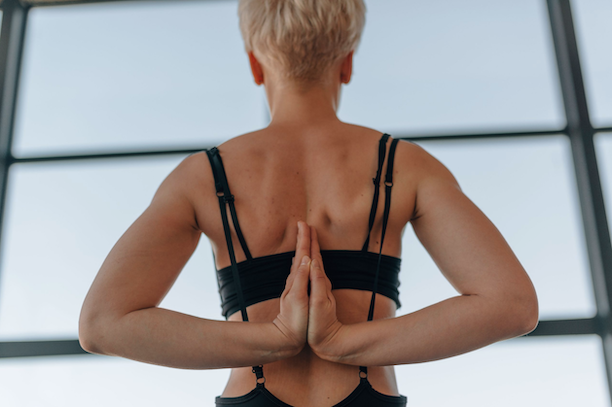
How to test if you have good posture
We all know that we need good posture. So today I wanted to share with you how to test if you have good posture.
The Wall Test - Stand with the back of your head touching the wall and your heels six inches from the baseboard. With your buttocks touching the wall, check the distance with your hand between your lower back and the wall, and your neck and the wall. If you can get within an inch or two at the low back and two inches at the neck, you are close to having excellent posture. If not, your posture may need professional attention to restore the normal curves of your spine.
The 'Jump' Test - Feel the muscles of your neck and shoulders. Do you find areas that are tender and sensitive? Are the buttock muscles sore when you apply pressure? What about the chest muscles?
If any of your muscles feel tight, sore or achy then why not book in for a massage.
Hypertension – Dietary Factors
Following on from my introduction to hypertension and lifestyle factors, I want to explore the link between diet and hypertension in this blog. Optimise your Gut Flora Compared to a placebo, people with high blood pressure who consumed probiotics lowered systolic blood pressure (the top number) by 3.56 mm Hg and diastolic blood pressure (the bottom number) by 2.38 mm Hg1. Including taking probiotics, its is helpful to avoid sugar and processed foods. I should mention that naturally fermented foods in your diet, may contain about 100 times the amount of bacteria than found in a bottle of high potency probiotics. But I appreciate form a practical point of view, buying probiotics is much easier! Eat a Healthy Diet I appreciate this is very common advice. In 1998 in the journal of Diabetes reported that nearly two-thirds of the test subjects who were insulin resistant also high high blood pressure. Insulin resistance is directly attributed to a high sugar, high carbohydrate diet especially if combined with inadequate exercise. Avoiding processed foods (due to their being high in sugar/fructose, grains, trans fat, and other damaged fats) is my number one recommendation if you have high blood pressure2. Instead, make whole, ideally organic, foods the focus of your diet. As you reduce processed foods, and other sources of non-vegetable carbs, from your diet, you’ll want to replace them with healthy fat. Read Part 4 References 1 Hypertension July 21, 2014 2 Metabolism. 2012 May;61(5):641-51.

Runner’s Knee
What is runner's knee? Iliotibial band (ITB) syndrome, or runner's knee, got its nickname for an obvious and very unfortunate reason—it's common among runners. The resulting pain on the outside of the knee, comes on when running, stops when you rest and then starts again when you resume running. Some runners feel something catching on the outside of their knee or a "twang" over the bone on the outside of their knee. What causes runner's knee?
- Long distance running
- Excessive eversion of the feet
- Running on uneven terrain or on cambered roads
- Lack of core strength
- Mobility issues in your lower back or hips
- Listen to your body - stop running if you feel and sharp or shooting pains and review your running style.
- Strengthen your core including your glutes as this will help you run longer and longer distances and will ensure you have adequate strength when running up and down hills.
- Ensure your Iliotibial band and thigh muscles are flexible.
- Avoid running down hill or on a cambered road
- If your feet naturally evert then book an appointment to see a podiatrist to see if you need shoe orthotics.
