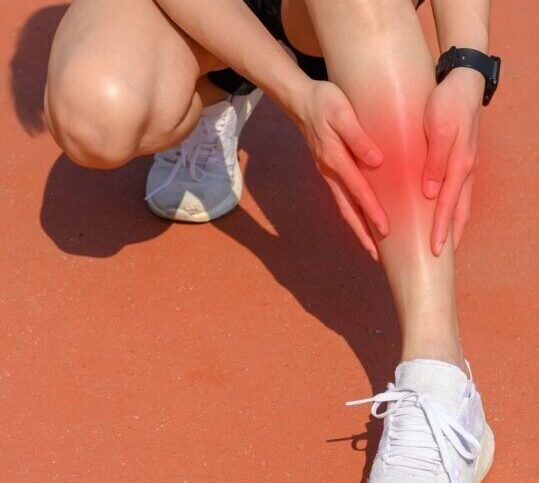
How to prevent muscle cramps?
I know previously I have discussed how to minimise the risk factors associate with muscle cramps including during pregnancy.
Exercise Related Muscle Cramps
May occur during, after or in some case many hours after vigorous activity. In addition to minimising the risk factors I have previously documented you need to ensure you
- Don’t exercise when injured – cramps can occur as a protective mechanism following an injury.
- Warm up thoroughly
- Stretch before and after exercise
- Cool down properly
- Don’t over do it – their is a clear correlation between muscle fatigue and cramps. In addition if you suddenly place a huge physical demand on the body (e.g. a late spurt to win the race) that it is not used to, your body can react by contracting all the muscle and creating cramps. So remember to follow a suitable training program before entering that competition!
Rest Cramps
Night cramps and other rest cramps can often be prevented by regular stretching exercises particularly before going to bed. The most common night cramps are in the calf muscles, to stretch this muscle
- Stand about 2 or 2.5 feet away from a wall. Lean into the wall to place the forearms against the wall with the knees and back straight and the heels in contact with the floor. Hold for 10 to 15 seconds and repeat three times before going to bed.
- In bed while lying down, you can try flexing the ankle by pulling the toes up toward the head with the leg as straight as possible.
Related Posts

Hypertension – Can massage help?
After introducing, Hypertension, I discussed lifestyle and dietary factors that may assist you in either lowering high blood pressure or preventing it. Now I would like to share with you the scientific evidence of the effectiveness of massage in assisting with the management of Hypertension. Seated Acupressure Neck & Shoulder Massage In 1997 Cady et al. in Perceptual & Motor Skills evaluated the effectiveness of a 15 minute chair massage on reducing stress as indicated by blood pressure. 52 employed participants' blood pressures were measured before and after a 15 minute massage at work. Analysis showed a significant reduction in participants' systolic and diastolic blood pressure after receiving the massage. High Blood pressure is associated with anxiety and stress, this study supports the conclusion that chair massage is relaxing, reduces stress and high BP. Relaxing (or Swedish) Massage In 2013 Givi in International Journal of Preventive Medicine looked at the effectiveness of a relaxing (swedish) massage in the management of pre-hypertension. The study was a single-blind clinical trial with 50 women selected by random sampling divided into a control and test group. The test group (25 women) received 15 minute swedish massage 3 times a week for 10 weeks. Their BP was measure before and after each session and 72 hours after finishing the massage therapy. The results indicate the average systolic and diastolic BP in the massage group were significantly lower. In addition 72 hours after the finishing the massage therapy there was still a significant difference between the test and control group. So if you are concerned about your Blood Pressure, go to your GP and have it checked. Then why not book a massage. References Cady SH and Jones GE, Feb 1997, Massage therapy as a workplace intervention for reduction of stress, Perceptual & Motor Skills, (1) p157- 158 Givi M, Feb 2013, Durability of Effect of Massage Therapy on Blood Pressure, International Journal of Prevention of Medicine, 4 (5) P 511 - 516.
Is the way you breathing causing your neck pain? – Part 2
In my last post, I explained how both your scalenes and sternocleidomastoid can become both tense and painful from shallow breathing. Obviously deep breathing will help as it will address the cause. But what if you have a bad habit of shallow breathing, and know its causing tension in your neck muscles? First there are some stretches that will help.
Finally you can book a Seated Acupressure Neck & Shoulder massage.- Sternocleidomastoid Stretch
 The sternocleidomastoid muscle runs like two long strap-like muscles on either side of the front of the neck.
To stretch it, rotate the head to one side as far as is comfortable. Then tilt the head to the same side, as if trying to reach the ear to the shoulder.
Hold for 30 seconds and then repeat on the other side of your neck.
The sternocleidomastoid muscle runs like two long strap-like muscles on either side of the front of the neck.
To stretch it, rotate the head to one side as far as is comfortable. Then tilt the head to the same side, as if trying to reach the ear to the shoulder.
Hold for 30 seconds and then repeat on the other side of your neck.
- Scalenes Stretch