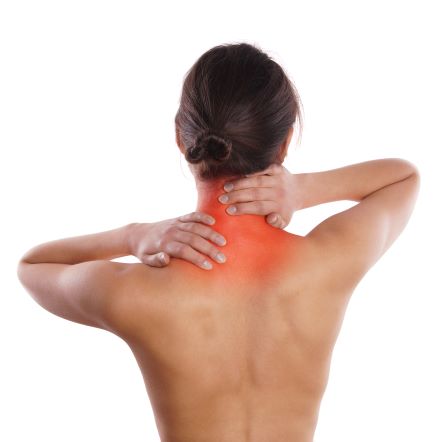
How to prevent “text neck”
It’s that time of year again when lots of you will be hoping for new gadget’s for Christmas, maybe a new smartphone?, maybe a new tablet? maybe both? So it feels like a timely reminder to talk about how we uses these devices. While I have never met anyone who has admitted to an ambition to turn themselves into a hunchback, walking around London you see lots of people head down, rounded shoulders hunched over a device. This posture looks as though they are practicing to be a hunchback in later life and leads to “text neck”.
So while I often talk to my clients of the importance of posture at their desks, its equally important when you are using gadgets. Ideally the head should sit directly on the neck and shoulders, like a golf ball sits on a tee. The impact of of having your head forward and looking down is that you strain your neck & upper back muscles. The result can be tired, achy muscles and tension headaches.
Remember if your the head weighs 10lbs and the center of the ear sits directly over the center of the shoulder, the load on the spine and its tissue is only 10lbs. However, if the head is translated forward, it’s weight will increase by 10lbs for every inch forward it is. In effect, if the center of the ear is three inches forward from the center of the center of the shoulders, the weight of the head on the spine and its discs, joints and nerves is 30lbs.!*
So what if you know, your posture when using your smartphone or tablet? Well all is not lost, why not try the following exercises:
- Stand against a wall with a small pillow at your mid-back, move your head back to touch the wall, hold for a count of 3and do 20-25 reps.
- Lay face down on the floor and extend your head and shoulders up, while pinching your shoulder blades together. Hold for a count of 3 and do 15-20 reps.
If you do have achy upper back muscles, why not book a Seated Acupressure Neck & Shoulder massage.
Reference
* Cailliet R. Soft Tissue Pain and Disability. Philadelphia: FA Davis Co.,1977
Related Posts

What causes muscle cramps?
Unfortunately no one totally understands what causes muscle cramps. Most authorities agree that in skeletal muscles they are frequently caused by the hyper-excitability of the nerves that stimulate muscles. Rather than thinking of a single cause of muscle cramps, I find it more helpful to think in terms of risk factors. A field study of 433 Ironman triathletes suggest that those so cramped had exercised harder than usual, had a family history of cramping and had previous tension or ligament damage. Because muscle cramps often occur due to muscle fatigue the problem may be related to nerve malfunction creates an imbalance between muscle excitation and inhibition which prevents the muscle from relaxing. (see Schwellnus et al 2004). In summary although muscle cramps are likely to be related to overexertion there are other contribution factors. References Shang G, Collins M and Schwellnus M (2001). Factors associated with self-reported history of exercise associated muscle cramps in Ironman Triathletes: A case-control study, The Clinical Journal of Sports Medicine 21(3): p204-210 Schwellnus MP, Nicol J, Laubscher R et al (2004). Serum electrolyte concentrations and hydration status are not associated with exercise associated muscle cramping in distance runners, British Journal of Sports Medicine 38(4): p488-492
The Impact of Sitting All Day – Part 3
In part 1, I looked at the impact of sitting on your muscles, and in part 2 I started to explore the impact on the rest of your body. In this post I continue to explore the impact of sitting on your circulatory system including your heart. Heart Disease When sitting for prolonged periods of time, muscles burn less fat and blood flows more sluggishly, allowing fatty acids to more easily clog the heart. In 2012 Ford & Caspersen in their research paper, Sedentary behaviour and cardiovascular disease: a review of prospective studies (International Journal of Epidemiology, Vol 41, No 5 pages 1338 - 1353) showed that the people with the most sedentary time are more than twice as likely to have cardiovascular disease than those with the least. In 2012 Zedric and Hamilton found that just a few hours sitting suppresses a gene that helps keep your cardiovascular system healthy by controlling inflammation and blood clotting. T W Zedric & M T Hamilton, 2012 Identification of hemostatic genes expressed in human and rat leg muscles and a novel gene (LPP1/PAP2a) suppressed during prolonged physical inactivity (sitting), Lipids in Health and Disease, Vol 11 see http://www.biomedcentral.com/content/pdf/1476-511X-11-137.pdf Cholesterol Sitting also means that your large postural support muscles are inactive. When active these muscles produce a quite of beneficial molecules. One molecule skeletal muscles produce is an enzyme called lipoprotein lipase - which you can think of as a vacuum cleaner for fats in the blood stream. A study in rats showed that after 24 hours forced inactivity, their lipoprotein lipase acitivity was reduced by 90 - 95%, which led to a 75% drip in the ability of their muscles to remove fats from their bloodstream as will as a significant decrease in "good" (HDL) cholesterol. L Bay & Mark Hamilton, 2003, Suppression of skeletal muscle lipoprotein lipase activity during physical inactivity: a molecular reason to maintain daily low-intensity activity, Journal of Physiology, Vol 551, No 2 pages 673 - 682.See http://onlinelibrary.wiley.com/doi/10.1113/jphysiol.2003.045591/full