Why does massage help so much?
In a previous post I outlined some of the benefits of the 15 minutes Seated Acupressure Neck & Shoulder massage including the scientific evidence for these claims.
But I think their is one benefit that stands out above these.
I know in my previous life as an IT project manage, several times I spent most of a day trying to fix a problem and I just couldn’t find a solution. I had a tendency to get caught up in a problem and its just frustrating — it can literally stress you out. When you’re stressed out, it’s harder to think clearly. Emotional stress can send your problem-solving skills into a tailspin. To make matters worse I used to flip over that fine line between being focused on solving the problem and obsessing over it.
The trick to break this cycle is to shift your focus. The purpose of shifting your focus is to temporarily get your mind off whatever challenge has it tied up in knots. So when you come back to it you have are re-energised and have a fresh perspective.
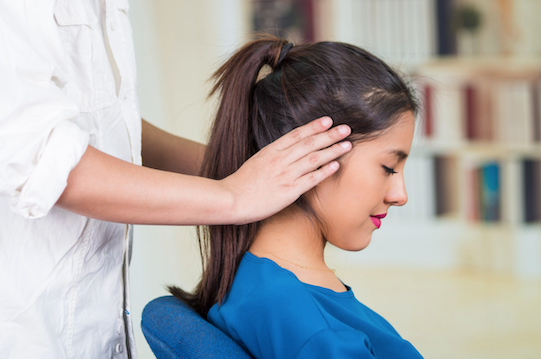
Going for a massage, shifts your focus to your body releases anxiety and the seated acupressure massage energises you & improves your mental alertness. So I found it an ideal way of breaking the cycle of mentally obsessing over problems when I worked in IT.
Related Posts

A Guide to Sciatica
One of the most common questions I get asked, by my clients is "is my back pain sciatica?". So I would like take some time to explain what sciatica or piriformis syndrome is. Sciatica is the irritation of inflammation of the sciatic nerve, which runs from L3 down through your legs and feet to your toes, so its the longest (and widest) nerve in the human body. The reason sciatica is called piriformis syndrome is that the piriformis muscle (which is in your bum) can compress the sciatic nerve. Because in most people approximately 87% the sciatic nerve passes below the piriformis muscle, in approximately 13% people the sciatic nerve passes in part or entirely though the piriformis muscle. So tightness in the piriformis muscle is a major cause of sciatica and this tightness can be exasperated by prolonged sitting. Other notable causes are trauma to your lower back or your pelvis, a history of herniated disc in your lower back and some systemic diseases e.g. diabetes. So how can you tell if you have sciatica or lower back pain? Sciatic is characterised by the presence of one or more of the following symptoms:
- Constant pain in one side of the buttock or back of one leg.
- Sharp or burning pain or tingling radiating down the back of your thigh.
- Pain is worse when sitting for long periods of time.
- Pain may be aggravated by sneezing, stooping or straining.
- You feel that you want to slouch away from the effected side.
- Possible pins and needles or parasthesia (numbness) down leg.
Is a 15 minute Neck & Shoulder Massage beneficial?
Fifteen minutes is a very short space of time, so I am often asked by potential clients if they will receive any benefits from such a short massage. Well the good news is that you do receive benefits, and its not just me saying that, or the subjective experience of other clients there is scientific evidence too.
- In 1996 Shulman, K.R. & Jones, G.E. in the Journal of Applied Behavioural Science, looked at the effectiveness of chair massage in reducing anxiety in an organisation. An on-site chair massage therapy program was provided to reduce anxiety levels of 18 employees in a downsizing organization. 15 control group s participated in break therapy. Subjects’ stress levels were measured with the State-Trait Anxiety Inventory, which was administered twice during pretest, post-test, and delayed post-test to achieve stable measures. The study concluded that significant reductions in anxiety levels were found for the massage group. 1
- In 1996 Field, Ironson, Pickens et al. in the International Journal of Neuroscience concluded that chair massage therapy offers benefits in not just alleviating the physiological effects of anxiety, but also in improving mental alertness.2
- In 1997 Cady et al. in Perceptual & Motor Skills evaluated the effectiveness of a 15 minute chair massage on reducing stress as indicated by blood pressure. 52 employed participants' blood pressures were measured before and after a 15 minute massage at work. Analysis showed a significant reduction in participants' systolic and diastolic blood pressure after receiving the massage. High Blood pressure is associated with anxiety and stress, this study supports the conclusion that chair massage is relaxing and reduces stress. 3
- KR Shulman and GE Jones, 1996, The effectiveness of massage therapy intervention on reducing anxiety in the work place, Journal of Applied Behavioural Science (32), p160 – 173
- Field T; lronson G; Scafjdi F; Nawrocki T; Goncalves A; Burman I; Pickens J; Fox N; Schanberg S; Kuhn C, Sep 1996, Massage Therapy Reduces Anxiety and Enhances EEG Pattern of Alertness and Math Computations, The International Journal of Neuroscience, 86 (3-4) p197-205Read More: http://informahealthcare.com/doi/abs/10.3109/00207459608986710
- Cady SH and Jones GE, Feb 1997, Massage therapy as a workplace intervention for reduction of stress, Perceptual & Motor Skills, (1) p157- 158Read More: http://www.ncbi.nlm.nih.gov/pubmed/9132704