
Stretches for Head, Neck and Shoulders
These stretches can either be done as a complete series or individually and most of them can be done at your desk. Some will ease tension in specific parts of the body whilst others are generally relaxing. Please remember stretching should always be relaxing and never painful!
To get maximum benefit from these stretches you should do them daily and hold each stretch for 15 seconds and repeat twice.
Head And Neck
- Head rotation – keeping your head level, slowly turn from side to side.
- Slowly drop your head sideways moving your right ear towards your right shoulder and push down with your left shoulder – repeat on other side.
- Stand with your feet shoulder distance apart; look down towards your right foot (hold for 15 seconds), dropping left shoulder – repeat the exercise looking towards your left foot.
- Drop the lower jaw and open the mouth wide.
Shoulders
- Shrugging shoulders in a circular movement – forwards and then backwards.
- Raise your shoulders high and let them drap heavily; whilst letting breathing out.
- Clasp hands behind your head, with elbows back – push your chin back. Hold for 15 seconds. From this position look down and push your elbows together at the front and hold for a further 15 seconds.
- Clasp you hands and push up towards the ceiling, palms up now look down.
- Sit upright in a chair with a firm seat. Raise your arms as high as possible and remaining seated drop forward letting your head and arms hang heavily towards the floor.
Related Posts

Factors that contribute to Muscle Cramps
I know those of you that have had a muscle cramp or spasm may be fearful of it reoccurring. So I know what to explore some of the contributing factors to muscle cramps. The aim of this is by minimising the contributing factors you will reduce the likely hood of getting muscle cramps. Dehydration Muscle cramps commonly coincide with dehydration. So good hydration before, during and after exercise is important, especially if the exercise exceeds one hour. So how much should you drink? Hydration guidelines are personal but the goal is to prevent excessive weight loss i.e. >2% of body weight. You can weigh yourself before and after exercise to see how much fluid you have lost through sweat. One litre of water weight 2.25 pounds. Depending upon on the amount of exercise, temperature, humidity, body weight and other factors you can loose anywhere from 0.4 to 1.8 litres per hour. A good rule of thumb is to always drink enough fluids so that your urine is clear, pale yellow & copious. Electrolytes Sodium & potassium are the major components of sweat. So anyone who exercises hard for more than four hours in heat such as marathon runners, triathletes, tennis players etc should replace the lost electrolytes. While a lack of sodium and potassium may contribute to muscle cramps, it should be noted that a potassium deficiency is unlikely as your body contains more potassium than even a marathon runner might lose during a hot, sweaty race. However you can rule out this as an issue by eating potassium rich foods such as bananas and oranges on a daily basis. Replacing the sodium lost during sweaty exercise is vital and this can be done by having an endurance sport drink or a salty snack.
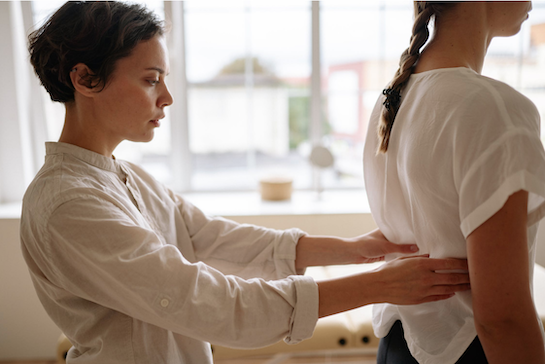
What is NMT or Neuromuscular Technique?
NMT (Neuromuscular Technique) is a soft tissue technique developed in the 1930's by Dr Stanley Lief. NMT is the application of quasi-static pressure perpendicular to the skin with the aim of releasing pain and tension in muscles (normally in skeletal muscles). Neuromuscular Technique is used by
- Physiotherapists
- Osteopaths
- Chiropractors
- Massage Therapists
- muscle spasms
- muscle tension
- aches & pains
- trigger points
The scientific evidence base for Sports & Deep Tissue Massage
I would like to write a series of blog articles on the scientific evidence for massage. I think it is important to start by stating the obvious that while massage can be studied, not many scientists are interested in studying it and not many massage therapists have scientific training. This means that massage is woefully under researched. In addition it is amazingly difficult to find 100 people with the same problem, who need exactly the same massage treatment, so large scale studies are very rare, which means a weakness of most studies is their size. Finally, while, most scientists are interested in how massage works, we don't have to know how something works to know if it works. I know most of my clients are interested in scientific evidence but equally important is anecdotal evidence, their own opinion and experience of the treatment. What it crystal clear from scientific data and widely agreed upon by massage therapist researchers is that massage
- Reduces anxiety
- Reduces depression
- Reduces stress
- Reduces high BP
