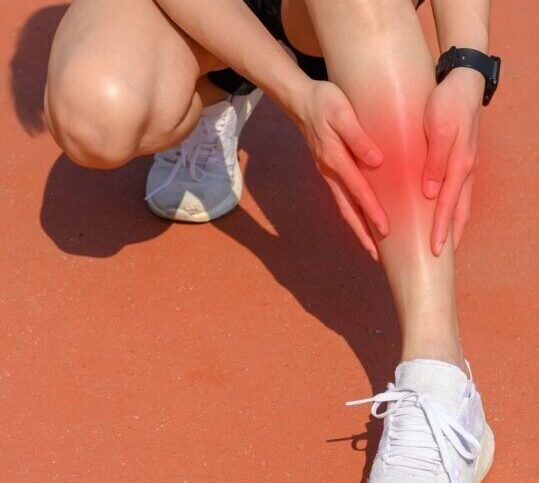
What is NMT or Neuromuscular Technique?

NMT (Neuromuscular Technique) is a soft tissue technique developed in the 1930’s by Dr Stanley Lief.  NMT is the application of quasi-static pressure perpendicular to the skin with the aim of releasing pain and tension in muscles (normally in skeletal muscles).

Neuromuscular Technique is used by

  • Physiotherapists
  • Osteopaths
  • Chiropractors
  • Massage Therapists

A lot of clients will be familiar with NMT techniques from having either a sports massage, deep tissue massage or seated acupressure massage with Vitality Therapy.  We commonly use NMT when we treat

  • muscle spasms
  • muscle tension
  • aches & pains
  • trigger points

When we have identified the problem area in your muscle, we apply pressure with our fingers, knuckles or elbows.  We often hold the static pressure for between several seconds to up to two minutes.  What we look for are non-verbal and verbal signals that the pain and tension are releasing.

Is NMT Painful?

When we apply the pressure, we aim for a “good pain” where you feel the right level of pressure is being applied to create the release.  Sometimes I ask clients to rate the pain on a scale of 0 to 10 to ensure that it is bearable and hence a “good pain”.


Related Posts

  • Arm and Hand Stretches

    These stretches can either be done as a complete series or individually and most of them can be done at your desk.  Some will ease tension in specific parts of the body whilst others are generally relaxing.  Please remember stretching should always be relaxing and never painful! To get maximum benefit from these stretches you should do them daily and hold each stretch for 15 seconds and repeat twice unless otherwise stated. Arm and Hand Stretches

    • Stand with your feet together, keeping you feet together and your knees soft.  Raise your arms alternatively swinging them over your head as if you were performing backstroke.
    • Raise your left arm above your head and push up as high as you can.  Feel the stretch down the left side of the body.  Hold for 30 seconds.  Repeat on the right.
    • Raise your right arm to the side, keeping at shoulder height.  Point your fingers towards the ceiling and push your palm away from your body.  Hold for 30 seconds and repeat on left side.
    • With your right hand by your side, point your fingers behind you with your palm facing up.  Push your right shoulder and wrist towards the floor, then make a fist.  Hold.  Repeat on the other side.
    • Keep your arms by your side and clench your fists as tight as you can, then spread your thumb and fingers as far apart as possible.
    • Let your arms hang loosely by your side and shake them for about 15 seconds.
     
  • So massage is safe for pregnant women, but is it effective?

    Last week we established that massage is safe for pregnant women.  A scientific review of studies of pregnancy in massage fond that pregnant women who received massage had

    • decreased depression
    • decreased anxiety
    • decreased leg and back pain
    In addition pregnant women who received massage had reduced
    • reduced cortisol levels
    • reduced excessive fetal activity
    • lower rate of prematurity (a baby being born before its 37 weeks old)
    For pregnant women who received massage during labour they
    • experienced less pain
    • required less medication
    • had shorter labours (on average 3 hours shorter)
    The study concluded massage is effective for pregnant women. Reference Field T. Pregnancy and labor massage. Expert review of obstetrics & gynecology. 2010;5(2):177-181. doi:10.1586/eog.10.12.
  • The Impact of Sitting All Day – Part 7

    There is a wide range of American start up companies, creating technology solutions to combat the new "sitting disease".  In previous posts I have discussed in the impact of sitting all day

    In my post, "Taking a Break", I explored the reasons for taking a break and looked at the latest research on the length of break you need to take and the frequency.  In my last blog post, "Get Moving" I looked at how you can move while working.  In this post I want to review the technology solutions that are out there. Activity Trackers Most of the technology solutions currently available are wearable activity trackers. These products are basically advanced sensors that come embedded inside of bracelets or clips that hook onto your clothing. They measure your daily activity (steps taken and calories burned), sleep, and through an associated app, diet.  Below I list some of the common trackers.
    • 1. Apple Watch
    Everyone knows that Apple is about to launch the Apple Watch which will have a plethora of health and fitness functionalities. However the Apple Watch heavily relies on the iPhone to function and is not really considered a standalone device. But I want to focus on one interesting feature which is that ten minutes before each hour, the Apple Watch taps on their arms as an alert to ecourage you to stay active or just simply stand up. I can see this being essential for people who want to stay active but find they lose track of time when they work.
    • 2. Jawbone UP
    The company’s wearable activity tracker, Jawbone UP includes a step counter, sleep tracker and an idle alert, which offers reminders to users by buzzing if they are inactive. What is neat about Jawbone is that it links to your calendar from your iPhone and see what your schedule is with meetings and we can say — rather than buzzing you during the middle of your board meeting — we can actually wait until the end and give you some insight.
    • 3. Nike+ Fuelband
    What is good about the Nike+ Fuelband activity tracker is that lets you set an activity goal, you can press a button on an LED screen to check your progress, and displays a green light when you have achieved your goal.  However it can be inaccurate if for some reason you happen to move your hands swiftly throughout the day.
    • 4. Fitbit One
    Fitbit One is the best holistic tracking of activity, diet and sleep and is good value compared to some of the other activity trackers. The app creates graphs, charts and tools based on your data and lets you easily log food, water, weight, food plans and more.  It is especially good for women as you can clip it in the center of your bra, rather than trying to blend in a wrist based activity tracker with your outfit. Applications “I'll help you unclog your mind and uncramp your body”, is the promise of HotSeat health app that turns short breaks into meaningful activity through nudges and social accountability.  What I like about this application is that it allows you to create competition - which are always very motivational! Darma - The Hitech Cushion Digital health upstart Darma have developed a cushion that aims to help people take control of their sitting habits.  It helps you remember to maintain good posture when sitting down for long periods of time. The cushion contains one millimeter-thick fiber optic sensors that sense the user’s movements. The pillow also has embedded sensors that detect heart rate, stress level, and respiration. All of this information is sent to a companion app on the user’s smartphone. The app can then track a user’s stress level, sitting time, and posture and try to motivate users to get up every now and then. It will also alert users when they’ve slipped into a bad position and explain how to correct their posture. If users are feeling back pain, the app can guide them through stretches that might help relieve it.  To me this more directly provides relevant information to help my clients than some of the more wearable technology solutions.  I am looking forward to its launch later this year, until then there is always massage!