
A guide to shin splints
Shin splints is characterised by pain and tenderness along the front of your lower leg (shin). Shin splints is a type of shin pain, usually caused by exercise like running. Shin splints usually get better within a few weeks.
If you have shin splints you may be able to assist yourself by:
- put an ice pack (or bag of frozen peas) in a towel on your shin for up to 20 minutes every 2 to 3 hours
- switch to gentle exercise such as yoga while healing
- you can remain active by exercising with non-weight-bearing exercises like swimming or biking if it doesn’t cause pain
- exercise on soft ground, if you can, when you’re feeling better
- warm up before exercise and stretch after exercise
- make sure your trainers or shoes support your feet properly
Shin splints are a repetitive stress injury and caused by overdoing an activity e.g. running. They can be prevented by:
- Progressively working your way into a new workout or routine
- Gradually increasing physical activity, intensity and mileage
- Wearing proper footwear
- Adding arch supports or insoles designed to absorb more shock or impact
- Bringing cross-training and strength workouts to a training regimen
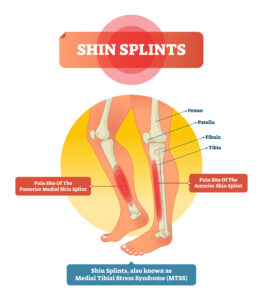
If you’re suffering from shin splint pain, massage therapy can help with pain relief. The deep tissue strokes release built-up tension, resulting in pain release and the prevention of scar tissue accumulation.
Related Posts

Guess what science has discovered about back pain …
According to the UK's Office for National Statistics the UK economy loses almost 31 million work days per year which costs the UK economy £14 billion to bad backs, neck & other muscle problems. A bad back is of the most common causes of absence and 80% of p will suffer with people will experience back pain at some point in their lives. At Vitality Therapy we find back pain is something we treat on a regular basis. I know a lot of my clients and potential clients are interested in what the latest scientific research is on how effective massage is for treating back pain, becuase they don't want to waste their time and money if massage isn't going to help them. Until now scientific studies of the effectiveness of massage were conducted in controlled research situations. However in a recent study, a physician sent patients to a massage therapist. The massage therapist designed and provided a series of 10 massage -- at no cost to the patient -- in a clinical treatment environment. This clinical treatment environment mimicks the experience of people who choose to seek massage in the real world. More than 50 percent of those who participated in the study experienced clinically meaningful improvements in their low back pain. The reasearches concluded that the study gives primary care providers (i.e. GPs) the confidence to tell patients with chronic low back pain to try massage, if the patients can afford to do so. References http://www.nhsemployers.org/news/2015/04/bad-backs-cost-the-uk-31-million-days-of-work Elder WG, Munk N, et al, 2017, Real Wold Massage Therapy Produces Meaningful Effectiveness Signal for Primary Care Patients with Chronic Low Back Pain: Results of a Repeated Measures Cohort Study, Journal of Pain Medicine, 18(7):1394-1405

