
Hypertension – Can massage help?
After introducing, Hypertension, I discussed lifestyle and dietary factors that may assist you in either lowering high blood pressure or preventing it. Now I would like to share with you the scientific evidence of the effectiveness of massage in assisting with the management of Hypertension.
Seated Acupressure Neck & Shoulder Massage
In 1997 Cady et al. in Perceptual & Motor Skills evaluated the effectiveness of a 15 minute chair massage on reducing stress as indicated by blood pressure. 52 employed participants’ blood pressures were measured before and after a 15 minute massage at work. Analysis showed a significant reduction in participants’ systolic and diastolic blood pressure after receiving the massage. High Blood pressure is associated with anxiety and stress, this study supports the conclusion that chair massage is relaxing, reduces stress and high BP.
Relaxing (or Swedish) Massage
In 2013 Givi in International Journal of Preventive Medicine looked at the effectiveness of a relaxing (swedish) massage in the management of pre-hypertension. The study was a single-blind clinical trial with 50 women selected by random sampling divided into a control and test group. The test group (25 women) received 15 minute swedish massage 3 times a week for 10 weeks. Their BP was measure before and after each session and 72 hours after finishing the massage therapy. The results indicate the average systolic and diastolic BP in the massage group were significantly lower. In addition 72 hours after the finishing the massage therapy there was still a significant difference between the test and control group.
So if you are concerned about your Blood Pressure, go to your GP and have it checked. Then why not book a massage.
References
Cady SH and Jones GE, Feb 1997, Massage therapy as a workplace intervention for reduction of stress, Perceptual & Motor Skills, (1) p157- 158
Givi M, Feb 2013, Durability of Effect of Massage Therapy on Blood Pressure, International Journal of Prevention of Medicine, 4 (5) P 511 – 516.
Related Posts

Stretches for Head, Neck and Shoulders
These stretches can either be done as a complete series or individually and most of them can be done at your desk. Some will ease tension in specific parts of the body whilst others are generally relaxing. Please remember stretching should always be relaxing and never painful! To get maximum benefit from these stretches you should do them daily and hold each stretch for 15 seconds and repeat twice. Head And Neck
- Head rotation - keeping your head level, slowly turn from side to side.
- Slowly drop your head sideways moving your right ear towards your right shoulder and push down with your left shoulder - repeat on other side.
- Stand with your feet shoulder distance apart; look down towards your right foot (hold for 15 seconds), dropping left shoulder - repeat the exercise looking towards your left foot.
- Drop the lower jaw and open the mouth wide.
- Shrugging shoulders in a circular movement - forwards and then backwards.
- Raise your shoulders high and let them drap heavily; whilst letting breathing out.
- Clasp hands behind your head, with elbows back - push your chin back. Hold for 15 seconds. From this position look down and push your elbows together at the front and hold for a further 15 seconds.
- Clasp you hands and push up towards the ceiling, palms up now look down.
- Sit upright in a chair with a firm seat. Raise your arms as high as possible and remaining seated drop forward letting your head and arms hang heavily towards the floor.
The role of Vitamin D in common ailments
Low levels of vitamin D in childhood have traditionally been linked to rickets, which thankfully is now very rare. However, there is a growing body of evidence shows that low levels of vitamin D are linked to a huge variety of current common medical conditions. Cardiovascular disease Vitamin D is very important for reducing hypertension, atherosclerotic heart disease, heart attack and stroke. One study showed that vitamin D deficiency increased the risk of heart attack by 50 percent. (see >> https://www.ncbi.nlm.nih.gov/pmc/articles/PMC2851242/) Autoimmune diseases Vitamin D is a potent immune modulator, making it very important for the prevention of autoimmune diseases. Research has shown that MS is more common in countries further away from the equator (see>> http://www.bmj.com/company/wp-content/uploads/2016/11/JNNS-MS-lat.pdf). In 2016 researches found that low levels of Vitamin D were common in people with inflammatory bowel disease (IBD) and is associated with higher morbidity and disease severity. (see >> http://www.nature.com/ajg/journal/v111/n5/full/ajg201653a.html) Migraine Recent research also suggests vitamin D can play a role in migraines. Researchers at Cincinnati Children's Hospital Medical Center found that many who suffer from migraines have deficiencies in vitamin D, riboflavin (B2) and coenzyme Q10 (CoQ10). (see >> http://www.medicaldaily.com/migraine-headaches-vitamin-d-riboflavin-coenzyme-q10-389272) Girls and women who suffered migraines were particularly prone to having CoQ10 deficiency, while boys and men were more likely to be deficient in vitamin D. Those with chronic migraines were more likely to have CoQ10 and riboflavin deficiencies, compared to those with episodic migraines. Neurological/psychological/mental disorders Vitamin D also plays a major role in neurotransmission, and vitamin D deficiency has been associated with a number of neurological and brain disorders, including cognitive dysfunction and Alzheimer's disease, schizophrenia, Parkinson's disease, stroke, epilepsy and depression. In one study, those who were most vitamin D deficient had a 31 percent increased relative risk of suffering neurocognitive decline. (see >> http://nervedoctor.info/research-reveals-which-chronic-illnesses-caused-by-vitamin-d-deficiency/)
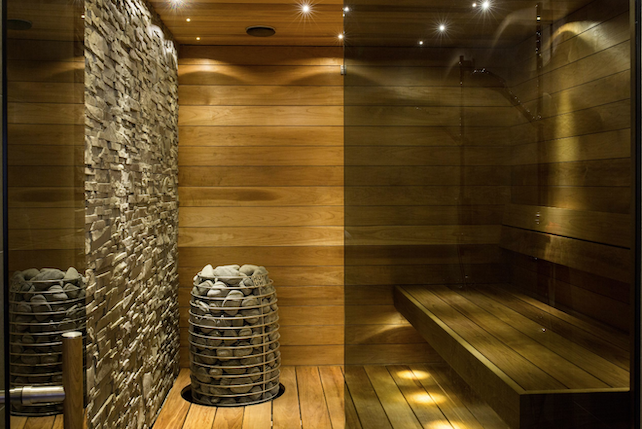
Can going to the sauna help your BP?
I will start with a confession. While I know the benefits of hydotherapy - basically you take a hot shower for 30 seconds then switch to freezing cold for 30 seconds, then go back to hot and repeat for 2 or 3 minutes - it has never appealed to me. It may be fantastic for blood flow and good for your liver, but to me it seems brutal! So in the past, I have only spent a few short minutes in a sauna and I have never been tempted to jump into the ice cold plunge pool afterwards - despite my finnish friends telling me how fantastic it is. So I was interested in the Kuopio Ischaemic Heart Disease Risk Factor Study which looked at if frequent use of a sauna has reduces the risk of high BP. The study looked at 1,621 middle-aged men living in eastern Finland. The study found that
- Going to the sauna 4 to 7 times per week reduces your risk of develping High BP by 46%.
- Going to the sauna 2 to 3 times per week reduces your risk of develpoing High BP by 24%.
