
Is there something in the quackery?
 Many people think that homeopathy is unscientific nonsense – however a new study reports that homeopathy can reverse the skin condition vitiligo, which are the white patches on people’s skin.
Classical homeopathy which is where individualized remedies are perscribed – has been sucessfully used on 14 vitiligo sufferers say researchers are the Centre for Classical Homeopathy in Bangalore , India. The remedies reduces the white patches on skin in all 14 patients within an average of 5 years of starting treatment.
With classical homeopathy, the remedy will vary and is determined by the characteristics of each individual patient, and so researchers are unable to point to one remedy that could treat the problem.
Vitiligo is an autoimmune condition that causes the loss of melanin, the skin pigment. Conventional medicine treats the condition with light therapy and drugs, which can restore some pigmentation but doesn’t treat the underlying condition.
Reference
Related Posts

So you thought you knew what causes hardening of arteries … think again
The standard theory of heart disease states that fatty foods cause the arteries to "clog up" and narrow, which is a major feature of cardiovascular disease. Researchers have discovered that a lack of sleep seem to have more to do with hardening of the arteries (atherosclerosis) than a fatty diet. Not getting enough sleep on a regular basis can cause a buildup of plaque in the arteries, which causes them to stiffen and eventually close. Researchers at Massachusetts General Hospital now think that hardening of arteries has more to do with a "neuro-immune axis" linking sleep to the cardiovascular system. Sleep helps regulate the production of inflammatory cells and maintain healthy blood vessels, and so it would follow that lack of sleep has the reverse effect. The researchers demonstrated the effect on a group of laboratory mice. Although the cholesteral levels of sleep deprived ice remained the same, they developed larger arterial plaques and had double the number of inflammatory cells known to contribute to hardening of arteries. Reference Tall AR, Jelic S. How broken sleep promotes cardiovascular disease. Nature. 2019 Feb;566(7744):329-330
Massage Therapy and Neck Pain
 One of the most common conditions we treat is neck pain which can range from a simple stiff neck, to inability to turn your head to either the right or left.
So in this blog post I wanted to discuss the recent scientific research regarding massage therapy for neck pain in people with neck arthritis.
One of the most common conditions we treat is neck pain which can range from a simple stiff neck, to inability to turn your head to either the right or left.
So in this blog post I wanted to discuss the recent scientific research regarding massage therapy for neck pain in people with neck arthritis.
Background
- 1 in 5 people who visit a massage therapist do so because of neck pain
- 28% of people with neck pain due to neck arthritis are likely to book a massage
Until the most recent research the scientific literature on the effects of massage therapy on neck arthritis pain was mixed. In this study an attempt was made to enhance the effects of weekly massage therapy by having the participants massage themselves daily.
Methods
Forth eight participants from a medical school, suffering from neck arthritis pain, were randomly split into two groups, one that received massage treatments and a wait list control group. The first group received a course of four 30 minutes weekly moderate pressure massages and supplemented this with 15 minute daily self-massage. The control group started the same course of treatments after four weeks without massages.
The effectiveness of the treatments were measured through self-reports and range of motion assessments, completed after massage treatments on the first and last days of the monthly study period.Results
The group that received the monthly course of weekly massage treatments, showed significant reductions in pain and improvements in range of motion. These ROM changes occurred specifically for nodding your head (flexion) and right and left lateral flexion motions. Between the first and last day of the course of treatments showed on average a 50% decrease in pain during flexion. Conversely the control group reported increases in pain and reductions in range of movement while waiting for massage treatments.
The study Field T, Diego M, Gonzalez G and Funk C G (2014) Neck arthritis pain is reduced and range of motion is increased by massage therapy, Complementary Therapies in Clinical Practice 20(4): 219 - 223 supports my subjective experience that massage therapy helps reduced neck pain and increase clients range of movement when it has been compromised.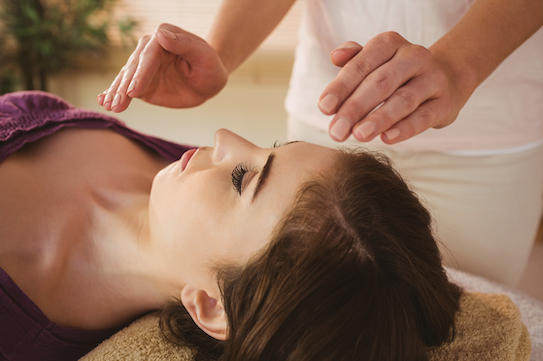
Is Reiki a Placebo? – Part 4
I know want to examine the scientific evidence of the impact of Reiki on more subjective issues like pain and anxiety. Heidt (1979) utilised healing to reduce levels of anxiety in patients in a hospital cardiovascular unit. Ninety volunteers were divided into three matched groups receiving treatments as follows: a five-minute period of healing, casual touch and no touch at all. Pre- and post-intervention levels of anxiety were measured using a special questionnaire. In those subjects receiving healing there was a highly significant reduction in anxiety following the treatment. Quinn (1982) also studied the effects of healing on anxiety states in hospitalised cardiac patients, but without making physical contact. Sixty patients were randomly assigned to either an experimental group receiving five-minute treatments of non-contact healing given by an experienced practitioner; or to a control group where inexperienced practitioners went through similar procedures whilst doing mental arithmetic. Assessments were done by the patients before and after treatment using a specialised questionnaire. Results showed that the experimental group had a very significant reduction in anxiety post-treatment. Gulak (1985), a healer, undertook a study on his patients measuring anxiety levels before and after healing treatment. Seventy six patients were given 15-minute treatments, with anxiety levels being assessed 14 days before and 21 days following the treatments using a specialised questionnaire. Different statistical analyses showed the reductions in anxiety to be significant as well as other health issues being cleared up. Wirth, Brenlan, Levine & Rodriguez (1993) performed a double-blind, crossover study on the effect of healing on post-operative pain, following surgical removal of both impacted lower molar teeth. Twenty one patients were randomly assigned to control or treatment groups before the first tooth was removed; and before the second operation the groups were transposed from control to experimental and vice versa. All conditions for both groups were the same except that the experimental groups received Reiki and healing post-operatively. Healing was undertaken at a distance of several miles from the patients with the healers concentrating on individual patients' photographs. Patients measured their pain intensity and pain relief over a period from 3 to 9 hours after operation using specialised pain assessment techniques. A statistically significant difference was found between the treatment and control groups in both pain intensity and amount of pain relief at hours 4 to 8 and hour 9. When combined, the data showed a highly significant improvement in pain levels as a result of the distant/remote healing. I started the series of articles by saying that Reiki is intangible. But in the last four articles I have demonstrated the impact on Reiki energy on human blood, yeast and plants as well as the human body. In addition there is clear evidence Reiki helps with pain, anxiety and lowering blood pressure. References Heidt, Patricia (1979). An Investigation of the Effect of Therapeutic Touch on the anxiety of Hospitalized Patients. Ph.D. dissertation, New York Univesity. See also: Heidt, Patricia (1981). Effects of therapeutic touch on the anxiety level of hospitalized patients, Nursing Res., 30, 30-37. Gulak, J. (1985). Lowering the anxiety levels in persons undergoing bioenergo-therapy. Psychotronika, 1985, 6-9. Quoted by Benor (1993). Wirth, D. P., Brenlan, D. R., Levine, R. J. & Rodriguez, C. M. (1993). The effect of complementary healing therapy on postoperative pain after surgical removal of impacted third molar teeth. Compl. Therap. Med., 1. 133-138.
