
Does owning a dog help you live longer?
A new study has discovered that dog owners:
- live longer
- less likely to suffer a heart attack
The protective effect of having a dog is increased if the dog is a hunting dog e.g. a terrier or a retriever.
However it may not be owning a dog itself that helps you live longer but the lifestyle of dog owners. This is because dog owners have to walk the dog so they are more active. During these walks they may bump into other dog walkers and talk so there is increased social contact. In addition the dirt the dog brings into your home changes the dog owners gut microbiome making them less susceptible to a heart attack.
What ever the reason the statistics are impressive. The risk of premature death drops by around 33% and the chances of a heart attack is reduce by 11%, according to researchers who studied the health of 3.4 million swedes of which 13% owned a dog for up to 12 years.
To focus in on the benefits of dog ownership, researchers focused in on single people living alone as this is recognised risk for heart disease.
One potential flaw in the is study is that people who choose to get a dog may already be more active and social and hence less likely to develop heart disease anyway.
Reference
Related Posts
Action plan for a healthy small intestine
The small intestine is as wide as your thumb and around 5.5m long. It is both a food blender and assimilator as it digests more of your food than your stomach. Food stays in the small intestine for 1 - 4 hours before moving on to the large intestine for further processing. Maintaing a healthy small intestine is all about controlling your bacteria levels and mucus build-up on your intestinal walls which can cause havoc and deplete your energy levels. If you have bloating, gas and loose bowel movements you may have a small intestine issues such as:
- Candida
- IBS
- SIBO (small intestinal bacterial overgrowth
- Cut out imflammatory drugs e.g. asprin, paracetamol and avoid alchol.
- Take L-glutamine and butyric acid both of these can help heal the gut, but check with a nutritionalist first as dosage is important.
- Drink slippery elm tea which calms inflamation of the small intestine and helps relieve IBS.
- Up your intake of vitamins A and D - liver is an excellent sourch of these vitamins which protect the mucus membrane of the gut.
- Eat more antibacterial foods such as garlic, honey and sauerkraut which preven the growth of Candida, fungus and yeast infections.
- Take oregano oil (Oregnano Vulgaris) which has been shown to stop Candidan in its tracks.
- Take probiotics daily - look for a count of 50 billion or more in each dose.
- Take prebiotics daily - to feed the probiotics. Or eat food prebiotic foods such as sauerkraut or kimchi.
- Go gluten free. Cut out gluten for an entire week and keep a food diary to check if your symptoms improve.
- Mimosa pudica an ayurvedic herb is brilliant at wiping out parasites.
- Eat more ant-parasitics such as garlic, thyme, chilli, tumeric and ginger.
Is Reiki a Placebo? – Part 4
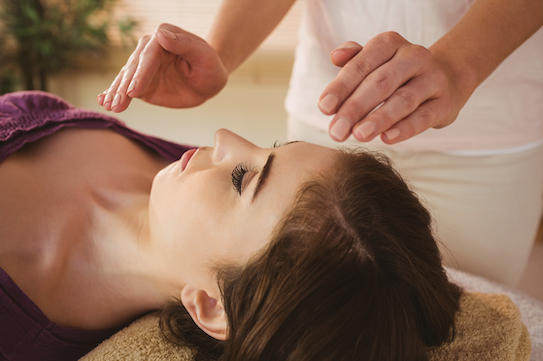
I know want to examine the scientific evidence of the impact of Reiki on more subjective issues like pain and anxiety. Heidt (1979) utilised healing to reduce levels of anxiety in patients in a hospital cardiovascular unit. Ninety volunteers were divided into three matched groups receiving treatments as follows: a five-minute period of healing, casual touch and no touch at all. Pre- and post-intervention levels of anxiety were measured using a special questionnaire. In those subjects receiving healing there was a highly significant reduction in anxiety following the treatment. Quinn (1982) also studied the effects of healing on anxiety states in hospitalised cardiac patients, but without making physical contact. Sixty patients were randomly assigned to either an experimental group receiving five-minute treatments of non-contact healing given by an experienced practitioner; or to a control group where inexperienced practitioners went through similar procedures whilst doing mental arithmetic. Assessments were done by the patients before and after treatment using a specialised questionnaire. Results showed that the experimental group had a very significant reduction in anxiety post-treatment. Gulak (1985), a healer, undertook a study on his patients measuring anxiety levels before and after healing treatment. Seventy six patients were given 15-minute treatments, with anxiety levels being assessed 14 days before and 21 days following the treatments using a specialised questionnaire. Different statistical analyses showed the reductions in anxiety to be significant as well as other health issues being cleared up. Wirth, Brenlan, Levine & Rodriguez (1993) performed a double-blind, crossover study on the effect of healing on post-operative pain, following surgical removal of both impacted lower molar teeth. Twenty one patients were randomly assigned to control or treatment groups before the first tooth was removed; and before the second operation the groups were transposed from control to experimental and vice versa. All conditions for both groups were the same except that the experimental groups received Reiki and healing post-operatively. Healing was undertaken at a distance of several miles from the patients with the healers concentrating on individual patients' photographs. Patients measured their pain intensity and pain relief over a period from 3 to 9 hours after operation using specialised pain assessment techniques. A statistically significant difference was found between the treatment and control groups in both pain intensity and amount of pain relief at hours 4 to 8 and hour 9. When combined, the data showed a highly significant improvement in pain levels as a result of the distant/remote healing. I started the series of articles by saying that Reiki is intangible. But in the last four articles I have demonstrated the impact on Reiki energy on human blood, yeast and plants as well as the human body. In addition there is clear evidence Reiki helps with pain, anxiety and lowering blood pressure. References Heidt, Patricia (1979). An Investigation of the Effect of Therapeutic Touch on the anxiety of Hospitalized Patients. Ph.D. dissertation, New York Univesity. See also: Heidt, Patricia (1981). Effects of therapeutic touch on the anxiety level of hospitalized patients, Nursing Res., 30, 30-37. Gulak, J. (1985). Lowering the anxiety levels in persons undergoing bioenergo-therapy. Psychotronika, 1985, 6-9. Quoted by Benor (1993). Wirth, D. P., Brenlan, D. R., Levine, R. J. & Rodriguez, C. M. (1993). The effect of complementary healing therapy on postoperative pain after surgical removal of impacted third molar teeth. Compl. Therap. Med., 1. 133-138.

Does abstinence improve sporting performance?
I know lots of my readers take part in sporting competitions and they always want to perform at their peak and win. So is it best to abstain the night before a competition? Certainly here is a myth that abstinence before sporting activities improves performance? But does it? Researchers at the University of Florence reviewed hundreds of studies to determine if there was any truth in the myth that abstinence helps performance. They found no evidence to support the myth that abstinence before a sporting competition improves performance. In addition they found no evidence that having sex the night before impairs performance the next day. They came across one study that found marathon runners did better the next day after having sex the night before. All sporting competitions are as much about the mind as the physical activity. So the impact of sex the night before on marathon runners may be psychological. Maybe that is why the organisers of the Rio Olympics distributed more than 450,000 condoms in the athletes' village during the 2016 Olympics. Reference Stefani Laura, Galanti Giorgio, Padulo Johnny, Bragazzi Nicola L., Maffulli Nicola, 2016, Sexual Activity before Sports Competition: A Systematic Review, Frontiers in Physiology, Vol 7, pg 246 http://journal.frontiersin.org/article/10.3389/fphys.2016.00246
