
The Impact of Sitting All Day – Part 4
In part 1, I looked at the impact of sitting on your muscles, and in part 2 generally explored the impact on the rest of your body. In part 3 I focused on the impact of sitting on your circulatory system including your heart. In this article I will explore the impact of sedentary behaviour (sitting) and the link to cancer.
So how common is cancer?
According to Cancer Research UK
- Every two minutes someone in the UK is diagnosed with cancer.
- 1 in 2 people in the UK born after 1960 will be diagnosed with some form of cancer during their lifetime.
- Breast, lung, prostate and bowel cancers together account for over half of all new cancers each year.
- Overall cancer incidence rates in Great Britain have increased by more than a third since the mid-1970s, with almost this entire rise occurring before the late 1990s.
And here is the good news is more people survive cancer than die from it now.
- 46% of men and 54% of women cancer patients diagnosed in 2010-2011 in England and Wales are predicted to survive 10 or more years.
- Cancer survival in the UK has doubled in the last 40 years.
The Link Between Cancer & Inactivity
Last year in a meta-analysis, Daniela Schmid and Michael F. Leitzmann of the University of Regensburg in Germany analyzed 43 observational studies, amounting to more than 4 million people’s answers to questions about their sitting behavior and cancer incidences. The researchers examined close to 70,000 cancer cases and found that sitting is associated with a 24% increased risk of colon cancer, a 32% increased risk of endometrial cancer, and a 21% increased risk of lung cancer.
D Schmid & MF Leitzmann, 2014, Sedentary behaviour insreases the risk of certain cancers, Journal of National Institute of Cancer, Volume 106, No 7. see http://jnci.oxfordjournals.org/content/106/7/dju206.full
The really bad news is that your can’t exercise away the harmful effects, “Adjustment for physical activity did not affect the positive association between sedentary behavior and cancer” write Schmid & Leitzmann. Even participants who achieved the daily recommended levels of physical activity were at the same risk as those who spent their day sitting.
One theory as to why this is the case, is that regular movement boosts natural antioxidants that kill cell-damaging and potentially cancer-causing free radicals, another theory is that the excess insulin encourages cell growth.
The pancreas produces insulin, a hormone that carries glucose to cells for energy. But cells in idle muscles don’t respond as readily to insulin, so the pancreas produces more and more. A 2011 study by Stephens et al found a decline in insulin response after just one day of prolonged sitting.
Stephens et al, 2001, Effects of 1 day of inactivity on insulin action in healthy men and women: interaction with energy intake, Metabolism Volume 60, No 7 pages 941 – 949. see http://www.sciencedirect.com/science/article/pii/S002604951000315X
Related Posts

Are acupressure points the same as trigger points?
In last week's article entitled Why do your muscles hurt? I explained what trigger points were. In this article I want to explain the difference between acupressure points and trigger points. Acupressure points (are the same points used by Acupuncturists) are situated on the meridians. With acupressure they are stimulated by the application of pressure from the fingers & elbows to relieve
- pain
- muscular tension
- headaches
Can going to the sauna help your BP?
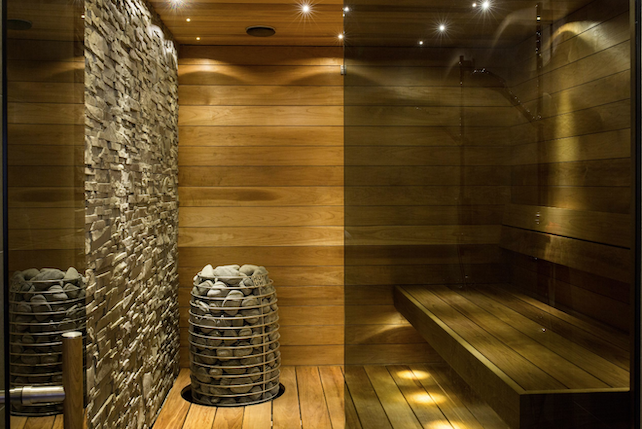
I will start with a confession. While I know the benefits of hydotherapy - basically you take a hot shower for 30 seconds then switch to freezing cold for 30 seconds, then go back to hot and repeat for 2 or 3 minutes - it has never appealed to me. It may be fantastic for blood flow and good for your liver, but to me it seems brutal! So in the past, I have only spent a few short minutes in a sauna and I have never been tempted to jump into the ice cold plunge pool afterwards - despite my finnish friends telling me how fantastic it is. So I was interested in the Kuopio Ischaemic Heart Disease Risk Factor Study which looked at if frequent use of a sauna has reduces the risk of high BP. The study looked at 1,621 middle-aged men living in eastern Finland. The study found that
- Going to the sauna 4 to 7 times per week reduces your risk of develping High BP by 46%.
- Going to the sauna 2 to 3 times per week reduces your risk of develpoing High BP by 24%.
Hip Pain
Hip pain is common problem, and it can be confusing because there are many causes. The most common cause of Hip Pain is arthritis for which you will need to see your GP for them to advise on the best treatment option of you. Trochanteric Bursitis Trochanteric bursitis is an extremely common problem that causes inflammation of the bursa, which is a protective cusion over the outside of the hip joint. There are two main bursa which protect the hip joint, the superficial trochanteric bursa and the deep trochanteric bursa. The superficial trochanteric bursa lies beneath the tensor fasciae latae (one of the muscles on the side of your hip) and the deep trochanteric bursa lies beneath the the largest of your glutes (gluteus maximus) both of the these muscles insert in to the Iliotibial Band (ITB). Reduced flexibility in your gluteus maximus, tensor fasciae latae or ITB can cause trochanteric bursitis, from too much cycling or running or from running on uneven surfaces. Another common cause is some women is an imbalance between your abductor and adductor muscles. Trochanteric bursitis can also be caused by clients altering their posture as a result of a previous back injury. In all these cases a deep tissue or sports massage can help. However if the cause is walking with more weight going through the outside of your foot (excessive foot eversion) then your make need to see a podiatrist for personalized orthotics. Hip Flexors Illiopsoas the main hip flexor, shortens when we sit down, so prolonged sitting can cause contracture (anatomical shortening) which can cause either lower back or hip pain. I have personally found this to be a common cause of hip pain which can be successfully treated with deep tissue or sports massage. If you experience lower back or hip pain when standing up from a seated position then rectus femoris which is one your largest quadriceps muscle make be tight and/or your gluteus maximus which is the other muscle which helps your stand from a seated position may be weak. If you suspect you have weak glutes you can strengthen them with squats and lunges. Fractures Hip fractures are common in the elderly with osteoporosis. Stress fractures of the hip are common in people who participate in high impact sports e.g. long distance running, treatment is usually to avoid the high impact sport and this is usually successfully. When should I see my GP about my hip pain?
- Inability to walk comfortably on the affected side
- Injury that causes deformity around the joint
- Hip pain that occurs at night or while resting
- Hip pain that persists beyond a few days
- Inability to bend the hip
- Swelling of the hip or the thigh area
- Signs of an infection, including fever, redness, warmth
- Any other unusual symptoms
