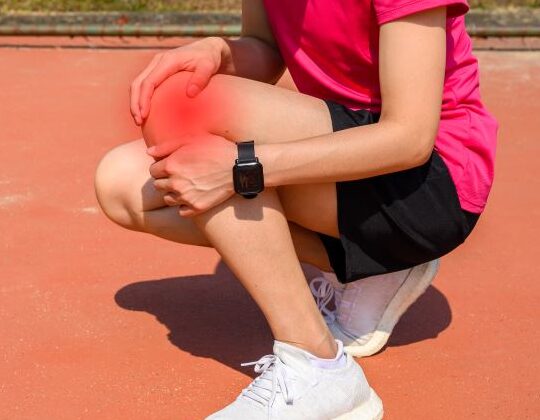
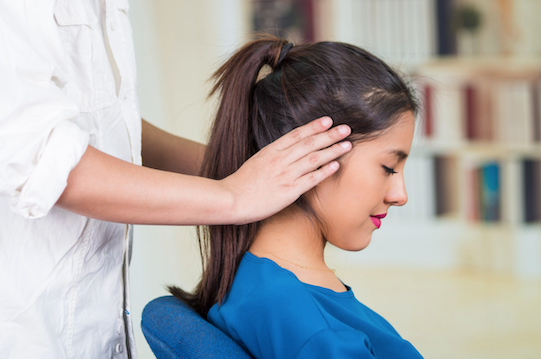
Why are my muscles rigid? Introduction
Muscle rigidity tends to happen when muscles contract for a long period of time, often due to
- stress
- medications e.g. statins
- underlying health conditions
- dehydration
- delayed-onset muscle soreness – which is a condition characterised by muscle pain and stiffness that develops hours or days after very strenuous exercise
- minor injuries
- over use due to repetitive movements e.g. sewing, knitting, exercise, typing
There are several self-help strategies that may be effective in treating muscle rigidity caused by minor injuries, stress, or overuse. They can include the following:
- Applying a warm compress or heating pad to the affected muscle to help relax rigid muscles.
- Gently stretching your stiff muscle to help relax it.
- Avoiding strenuous activity that may trigger the muscle to become rigid again.
- Encouraging the muscles to relax using massage, yoga, or tai chi.
If muscle rigidity is affecting you, and you would like to book a massage, click here.
Related Posts

Arm and Hand Stretches
These stretches can either be done as a complete series or individually and most of them can be done at your desk. Some will ease tension in specific parts of the body whilst others are generally relaxing. Please remember stretching should always be relaxing and never painful! To get maximum benefit from these stretches you should do them daily and hold each stretch for 15 seconds and repeat twice unless otherwise stated. Arm and Hand Stretches
- Stand with your feet together, keeping you feet together and your knees soft. Raise your arms alternatively swinging them over your head as if you were performing backstroke.
- Raise your left arm above your head and push up as high as you can. Feel the stretch down the left side of the body. Hold for 30 seconds. Repeat on the right.
- Raise your right arm to the side, keeping at shoulder height. Point your fingers towards the ceiling and push your palm away from your body. Hold for 30 seconds and repeat on left side.
- With your right hand by your side, point your fingers behind you with your palm facing up. Push your right shoulder and wrist towards the floor, then make a fist. Hold. Repeat on the other side.
- Keep your arms by your side and clench your fists as tight as you can, then spread your thumb and fingers as far apart as possible.
- Let your arms hang loosely by your side and shake them for about 15 seconds.

Is the way you breathing causing your neck pain? – Part 2
In my last post, I explained how both your scalenes and sternocleidomastoid can become both tense and painful from shallow breathing. Obviously deep breathing will help as it will address the cause. But what if you have a bad habit of shallow breathing, and know its causing tension in your neck muscles? First there are some stretches that will help.
Finally you can book a Seated Acupressure Neck & Shoulder massage.- Sternocleidomastoid Stretch
The sternocleidomastoid muscle runs like two long strap-like muscles on either side of the front of the neck.
To stretch it, rotate the head to one side as far as is comfortable. Then tilt the head to the same side, as if trying to reach the ear to the shoulder.
Hold for 30 seconds and then repeat on the other side of your neck.
- Scalenes Stretch

Cryotherapy
We all know that sports stars take ice baths and I am often asked why they do it, and do I need to do it after I run. So today I am going to answer that question. Cryotherapy is one of long accepted tools of a sports masseur. If you have ever watched a football match on telly, you will have seen someone fall to the ground and the coach run on with a bucket of water and the magic sponge and the player then hopefully gets up and hobbles around before taking an active part in the game. So the magic sponge, (the application of cold water to an injured area) is Cyrotherapy in its most basic form. The local application of ice or cold water is beneficial because
- It relieves pain
- Reduces muscle spams (i.e. athletes take ice baths to avoid feeling stiff the next day)
- When someone is injured it moderates inflammation
- Rest - by which I mean avoid weight bearing activities and anything that causes pain for 24 - 48 hours.
- Ice - Use either cold water or ice wrapped in a tea towel and apply for 2 - 20 minutes for 2-3 days then 3 times daily. When applying ice you go through the cold, aching, burning and numbness sensation cycle, it is very important to stop at numbness to avoid burning yourself.
- Compression - use a compression bandage if necessary
- Elevation - if the injury is to a limb, elevate it to help it heal.