
How to chill out…
While it’s impossible to lead a completely stress-free life, finding ways to unwind and “chill out” are key to retaining your energy levels and ultimately your sanity when you have a demaning job.
There are as many techniques to decompress as there are human beings; but when it comes to finding inner calm, practices such as mindfulness, meditation and meditation are usually top of mind. Although these are great tools they don’t appeal to everyone. Personally I love both yoga and adult colouring books. But what can you do it none of these apeal.
My golden rule is any activity that is enjoyable and absorbs you to the extent that you aren’t aware of the time and you stop thinking about work helps you unwind and chill out. So you can choose any activity that helps you distracting your mind from everyday pressures and you love. Once you have choose your activity do it often, and put it in your diary and don’t feel guilty – we all need time out.
One free, easy activity is just going for a stroll. I don’t mean walking fast to hit your 10,00 steps per day target. Just go for a stroll for the sake of it.
Related Posts

What is a muscle cramp?
What is a muscle cramp? Normal movement of our bodies involves muscles alternating between contract and relaxation. A muscle that contracts involuntarily and is unable to relax is a spasm; and a forceful and prolonged spasm becomes a cramp. A muscle cramp can last anywhere from a few seconds to up to 15 minutes or occasionally longer. Any muscle can develop a cramp, but the most common site for muscle cramps are the legs, particularly the front of the thighs (quadriceps), back of the thighs (hamstrings) and calf muscles (gastrocnemius & soleus). Unfortunately almost everyone, one estimate is 95% of the population will experience a muscle cramp at some time in their life. Muscle cramps are one of those things that also increases as we get older. Those of you that have already had a muscle cramp will undoubtedly remember the unrelenting pain! Tip: Most muscle cramps can be stopped if the muscle can be stretched. Muscle spasms & cramps are one of the most common complaints that massage therapists deal with.
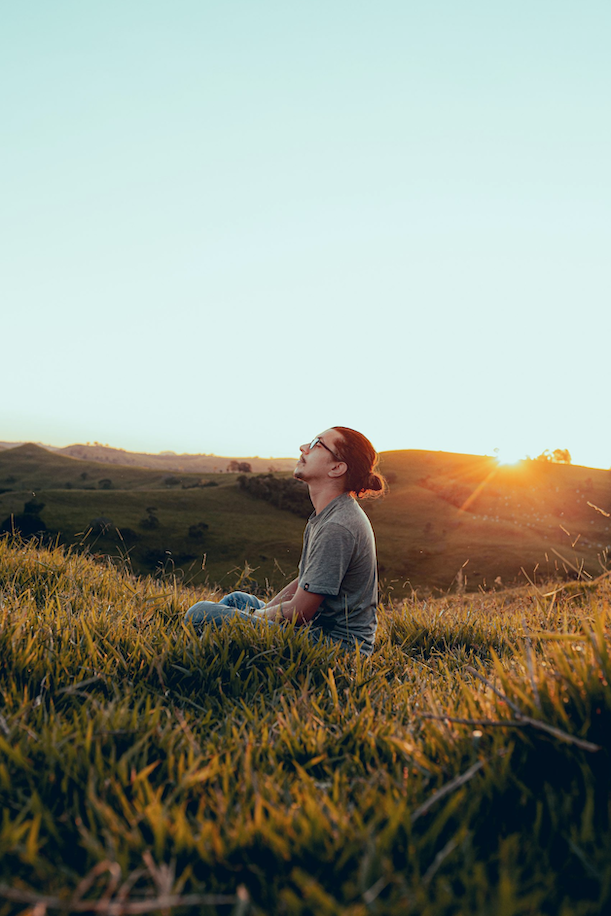
An alternative way to do simple mindfulness (Part 1)
Most mindfulness techniques have at their heart a simple instruction. Focus on your breath... This is supposed to be simple, but what if it isn't simple for you? What then? For people struggling with anxiety it may increase the feelings of panic. Mindfulness involves placing our attention on a chosen anchor, noticing when our mind is distracted or wandering and choosing to return it back, with a king and friendly curiosity towards the experience. You should start simple by focusing 1 - 5 minutes or even do short 30 second bursts a couple of times during the day. So, I want to introduce you to a few alternatives to using breathing as the anchor focused around our senses. 1. Look & Focus Choose an everyday object in the room to look at and become aware of the colour, shape or light reflections. I personally like looking at a light candle as its often flickers so there is movement too.
How do your friends impact your health?
In my last blog article, I explored how your social network including your friends and family impact your motivation to be healthy. Being part of a group, or better yet, lots of groups is good for your health. The kind of groups doesn't seem to matter - it could be a family group, friendship group, religious or spiritual group, tennis or book club. What is important is that you identify with it and see it as a meaningful part of your life. Here are five good reasons why?
- It can help you live longer
- "As a rule of thumb if you belong to no groups but decide to join one, you cut the risk of dying over the next year in half" R Putman, Bowling Alone.
- An adequate social life provides health benefits on a par with quitting smoking
- The benefits of social ties are akin to those of exercise once you retire. In one study retirees belonging to two social groups had a 2% risk of death but if they lost touch with both groups it jumps to 12%.
- It can protect your heart
- Heart disease is generally lower for those who are members of a social group.
- The risk of death from heart disease diminishes if you belong to more than one social group.
- It can cut your risk of a cold
- Those belonging to a wide range of social groups e.g family friends, work, recreation or religious groups are least likely to come down with a cold. Six or more types of diverse groups cut the risk of a cold more than four times.
- It can alleviate depression
- The more social groups you belong to the less likely you are to suffer from depression.
- If you are depressed, joining a group can help you recover and cut the risk of a relapse by nearly a 1/4 if you join one group or by almost 2/3 if you join three.
- If you are a member of a religious or spiritual group you are less likely to have depressive symptoms and more likely to have feelings of well being.
- It motivates you to be healthy
DC Classen, SL Pestotnik, JF Lloyd, JP Burke (1997) Adverse drug events in hospitalised patients. Excess length of stay, extra costs and attributable mortality JAMA Jan 22-29;277(4):301-6.F Tabassum, J Mohan, P Smith (2016) Association of volunteering with mental well-being: a lifecourse analysis of a national population-based longitudinal study in the UK BMJ Open 6(8)A Moe, O Hellzen, K Ekker, I Enmarker (2013) Inner strength in relation to perceived physical and mental health among the oldest old people with chronic illness Aging Mental Health 17(2):189-96.M P Aranda (2008) Relationship between religious involvement and psychological well-being: a social justice perspective Health and Social Work 33 (1): 9 - 21M Tarrant, K Warmoth, C Code, S Dean, V A Goodwin, K Stein, T Sugavanam (2016) Creating psyhcological connections between intervention recipients: development and focus group evaluation of a group singing session for people with aphasia BMJ Open 2016; 6(2)- It can help you live longer
