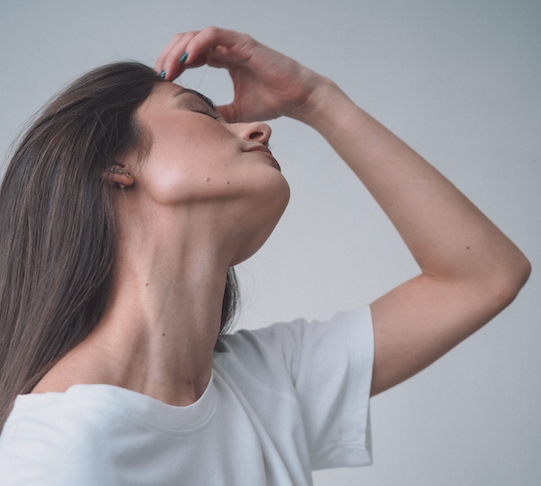
How to stay healthy at your desk
This week the daily mail reported that three in four office workers blame desk for sickness: badly set up desks and chairs cost companies 7bn each year. Rather than sitting in silence or popping pain killers to ease headaches or back pain, here are my top 7 tips for staying healthy while working at your desk.
- Sit up straight. As you read this post, if you’re not running to an appointment or standing, how are you sitting? Really take notice of how you are sitting and poised. Are you legs crossed? Is your back hunched over as you read this? Or are you sitting up straight? If you are sitting ensure that you are sitting up straight, not slouched, with your head directly over your torso and your feet on the ground, using a foot rest if necessary.
- User a wrist support. Repeatedly bending your wrists up and down (extension and flexion) compresses structures inside the carpal tunnel in the wrist. This can cause pain and lead to injuries like carpal tunnel syndrome. Place the heel of your palm on a wrists pad to minimise wrist pain.
- Use a headset. If you spend a lot of time on the phone user a head set rather to avoid holding the phone to your ear by raising your shoulder which may cause neck & shoulder pain.
- Don’t bang the keyboard instead use a light touch. Try to use the minimum amount of force necessary to depress the keys. The tendons from your fingers connect near your elbow, so striking the keys too hard can lead to problems you might not associate with your keyboard-for example, pain and inflammation in your elbows (Epicondylitis).
- Look straight ahead. Maintaining proper eye level with your computer monitor is essential. This helps you avoid straining your back, neck, shoulders, and arms. In addition, proper eye level reduces unnecessary eye strain. To accomplish this sit in your office chair and stare straight ahead. You should be looking directly at the center of your monitor. If you are not looking at the center of the screen adjust the monitor until you have the correct measurement and use a monitor riser where necessary.
- Save your work, save your shoulders. Working as a massage therapist who specialise in Acupressure Neck & Shoulder massage withing an office environment, I know muscular tension in shoulders causing neck and shoulder pain is a common problem. To minimise the build up of muscular tension in your shoulders, every time your save your work or send an email simply circle your shoulder three times clockwise and then three times anti-clockwise.
- Book a massage. If you are feeling the stain and pain for working long hours at your desk then book a massage which are highly effective at relieving neck pain, shoulder pain, back pain and tension headaches.
Joanne Mullins of Vitality Therapy offers Vitality Breaks – Acupressure Neck & Shoulder massage within a corporate environment allowing individuals to get well and stay well.
Related Posts

This one if for my fellow women – sorry guys! Part 2
Following on from part 1 on how to treat unirary tract infections naturally here are more tips. Probiotics In a study of postmenopausal women prone to UTIs, a probiotic supplement containting Lactobacillus rhamnosus GR-1 and Lactobascillus reuteri RC-14 cut the number of recurrences by around 50% over a yea. The "good guy" bacteria were almost as effective as antibiotics and they had the advantage of not leading to drug resistant bacteria which may happen with antibiotics. Probiotics also seem to help prevent UTI when use as vaginal suppositories. Ulva Ursi There is evidence to suggest the herby may reduce the duration of a UTI when one strikes. The German Federal Institue for Drugs and Medical devices approves the herb for treatment of UTIs. In one clinical trial, supplements containing standardized extracts of uva ursi as well as dandelion root taken for 1 month effectively prevented UTIs over the following year. Vitamin C Vitamin C may help prevent and treat UTIs by acidifying the urine, creating a hostile environment for infection - causing bacteria. In a study of preganty women, those given daily supplements including 100mg vitamin C experienced significantly fewer UTIs than women given supplements without vitamin C. Reference https://www.ncbi.nlm.nih.gov/pubmed/22782199 https://www.southampton.ac.uk/ctu/news/2018/04/20-atafuti-trial-protocol-publication.page https://www.sciencedirect.com/science/article/pii/S0011393X05802048?via%3Dihub https://www.bmj.com/content/340/bmj.c199 https://www.ncbi.nlm.nih.gov/pubmed/17611821

Natural remedies for the winter blues – Part 1
By January I am seriously missing the sun. While I know we have had the shortest day, the grey weather and the snow jsut reminds me we are in deep winter. So with the Brexit impass being deeply demoralising and frustraing, I wanted to share some tips to combat the blues. 1. Vitamin D Most people are short of Vitamin D in the uk. One of the signs of being short of Vitamin D is feeling blue. 2. Spice it up. Earlier today I was planning my meals for the week before I went to the supermarket. At this time of year I always fancy dishes containting yellow rice i.e. paella or pilau rice. I know its the yellow colour that particularly appeals which you get by adding either Tumeric or Saffron. In clinical trails Curcumin the main active ingredient in Tumeric (the bright yellow Indian spice) has been to be as effective as Prozac. A review of several trains of Saffron found it was a safe and effective treatmetn for depression. While I like to cook with the spices, it isn't as effective as supplements which are standardised extracts. For me cooking with the spice is fine as I am not depressed. 3. 5-HTP A naturally occuring amino acid, 5-HTP is used by the body to make serotonin the "happy hormone". Suplements produced from the seeds of the West African medicinal plant Griffonia Simplicifoia show promised for depression. References Woo YS, Kim S, Jeong JH, Jung YE, Kim MD, Bahk WM. Vitamin D Deficiency/Insufficiency among Inpatients with Depressive Symptoms. Clin Psychopharmacol Neurosci. 2019 Feb 28;17(1):121-124. Sanmukhani J, Satodia V, Trivedi J, Patel T, Tiwari D, Panchal B, Goel A, Tripathi CB. Efficacy and safety of curcumin in major depressive disorder: a randomized controlled trial. Phytother Res. 2014 Apr;28(4):579-85. Moshiri E, Basti AA, Noorbala AA, Jamshidi AH, Hesameddin Abbasi S, Akhondzadeh S. Crocus sativus L. (petal) in the treatment of mild-to-moderate depression: a double-blind, randomized and placebo-controlled trial. Phytomedicine. 2006 Nov;13(9-10):607-11 Birdsall TC. 5-Hydroxytryptophan: a clinically-effective serotonin precursor. Altern Med Rev. 1998 Aug;3(4):271-80.