Does Reflexology help foot pain/tension or plantar fasciitis?
One of the most frequent questions I am asked by clients, is “will reflexology help my foot pain/tension or plantart fasciitis”?
Reflexology is a whole body treatment, where the therapists stimulates reflex points on the feet to effect healing in the corresponding parts of the body. Reflexology allows the body to rebalance, which assists you to:
- De-stress
- Improve your sleeping patterns
- Reduce anxiety
- Calm an over active mind
- Relax the body to aid digestion
Reflexology does not work on the muscles of the feet. So the short answer is no, reflexology does not help with foot pain/tension or Plantar Fasciitis. (For more information on Plantar Fasciitis see previous blog post >> http://vitalitytherapy.co.uk/blog/heel-pain-part-1)
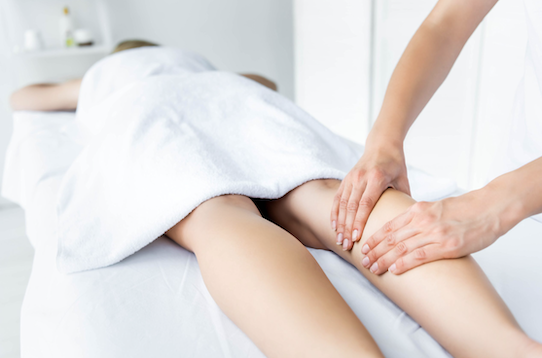
If you have any aches, pains or tension in either of your feet then a deep tissue leg massage is the best treatment for you. The reason for treating the whole leg, rather than just the foot is that some of the muscles that control the foot i.e. flex or extend it start just under the knee and the same is true for the some of the muscles that control the toes. This is why if a client comes to Vitality Therapy with a foot issue we always massage the leg as well as the foot.
So if you have problem with your feet why not book in for a deep tissue leg massage.
Related Posts

Do you have tight hips? – part 1
Many of the clients we see exercise regularly but I have never heard anyone mention including in their workouts exercises that focus on the hips. Yet, this is extremely important, as sitting for long periods of time can cause your hip flexors to become tight or weak or both leading to problems with posture and back pain. In addition weak hip flexors contribute to foot, ankle and knee injuries. Sitting is a primary culprit in tight hips and thighs because the muscles are rarely extended (although they may also become tight from working out). To lengthen and strengthen these muscles, try this move created by Suzanne Bowen, creator of BarreAmped, an internationally taught barre technique chosen by Fitness Magazine and Natural Health Magazine as the best barre workouts in 2015. You'll need a chair or kitchen counter for support. Start out in a kneeling lunge position with your right foot in front and leg bent at the knee in a 90-degree angle. Your left knee should be a few inches behind your left hip. To do the exercise, Bowen recommends:
"1. Press forward a few inches into your right leg just until you feel a gentle stretch in the opposite hip.
If you have very tight hips, this might be as far as you go. (Protect the front knee by making sure it doesn't extend out beyond the toes.) For a more advanced stretch, straighten the left leg behind you and then press forward.
2. When you're ready to move on, reposition the rear leg as needed so you can stretch your right leg straight out in front of you.
Keep your back straight and lean a few inches forward from the hips and feel the stretch in the right hamstring."
Hold each position for two to five deep breaths, then switch sides. References Los Angeles Times January 9, 2016 Pop Sugar April 17, 2016 Men’s Health January 28, 2016 Greatist December 15, 2011 Clin J Sport Med. 2005 Jan;15(1):14-21. Los Angeles Times January 9, 2016