
What to expect from a sports or deep tissue massage.
First let me reassure you if you haven’t been to us before that we don’t do any unnecessary nakedness. If you want you can wear gym shorts but it is no necessary.
On your first visit you will be asked to fill out a consultation form and we will discuss why you booked. At the start of subsequent treatments we may ask you about your response to our last treatment or if there has been a long gap, your reason for booking. If there has been a significant gap we may ask you to fill out a consultation form again, especially if it has been archived.
While we are all able to use oils, we tend to use a sports wax as it doesn’t stain your clothes and it is odorless and one brand we use is nut free too. During the massage we will use fingertips, knuckles, hands, elbows, and forearms to treat you. You may be asked to breathe deeply as we works on tense areas. Most of our clients want deep pressure. However there are times when we need to use a lighter sustained pressure on some restrictions to achieve a myofascial release.
We may get you to move position on the massage bed to give us better access to certain muscles or to treat the opposing muscle. For example, if we have worked on your upper back we may need to open up your chest, particularly your pec muscles.
We may stretch your muscles ourselves or ask you to move your body in a certain way to stretch it or to see how it reacts to the movement.
Related Posts
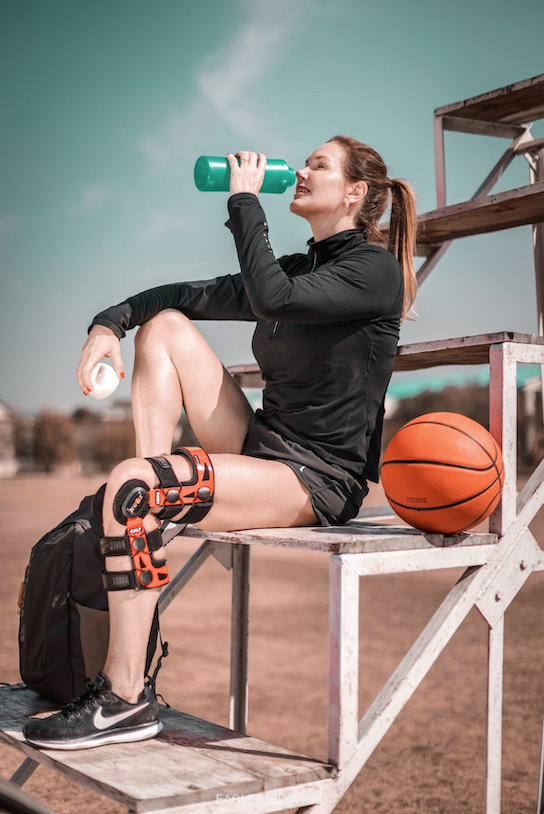
How to Prevent Running Injuries – Part 1
What we see in clinic all the time, is people coming in with running or training injuries that have blindsided them, they have no idea how it happened. Its like the injury came out of nowhere. Injuries don't come out of nowhere. Most running injuries produce signals
- aches
- soreness
- persistent pain

Having a ball?
Previously I have written my guide to foam rolling parts 1 & 2. Now I want to explore the uses for another self-massage tool, the spikey ball. I would recommend you use both a foam roller and a spikey ball the reason is that for some parts of the body it is easier to use a spikey ball, for example: Releasing the feet Stand on one leg use a chair or the wall for balance. Roll one foot at a time over the ball for a good few minutes. Include the heel, the outside edge and the instep. Push down stronger into any area to deepen the intensity. Do each foot separately. Between the shoulders A common area of tension with modern postural habits is between the shoulder blades. You can easily reach this area with a ball placed anywhere between the shoulder blades and move up and down against the wall. One tip to stop the ball dropping it to put it in a long sock or stocking, drap it over your shoulder and then hold it in your hand. Lower back - Under sacrum and glutes You can use the floor of resistance to press your weight into or when lying to let gravity give you a help in hand. Simply lie on the floor, bend your knees but keep your feet flat on the floor. Then place the ball underneath your sacrum – the large triangular bone that forms part of your pelvis. Now move just gently move your sacrum and glutes all over the ball. If it feels safe to do so your can bring your knees into your chest to add additional pressure. This will help release off your lower back.
Does mindfulness meditation help you if you are depressed?
Mindfullness is very trendy right now because it is claimed to help you cope with anxiety and stress and build resilience. But does it help you if you are depressed? This is the question that researchers from Northwestern University Feinberg School of Medicine tried to answer in a recent study. During the study, 31 women most of whom had done nothing to help themselves to deal with their depression in the last 12 months, participated in an mindfullness group. They practicied mindfullness meditation and yoga on average 150 minutes per week. Before starting the study 45% said they had no experience of mediation and 71% said they had never tried yoga. The primary outcome, depression and secondary outcomes (stress, mindfulness, functioning, well-being and depression stigma) were assessed at start of the study and then again at weeks 8 and 16 weeks . The depressive symptoms significantly decreased during the study, in addition the stigma of depression increased from the start of the study to 8 weeks and then significantly decreased between 8 to 16 weeks of the study. A significant decrease in stress and significant increase in mindfulness was found at week 8 and the end of the study when compared to the start of the study. In addition, the women reported increased sense of well-being including self-acceptance and growth. In conclusion mindfulness medication can reduce levels of depression and stress as much as powerful drugs and psychotherapy do. Reference I E Burnett-Zeigler, M D Satyshur, S Hong, A Yang et al, 2016, Mindfulness based stress reduction adapted for depressed disadvantaged women in an urban Federally Qualified Health Centre, Complementary Therapies in Clinical Practice; 25; 59 - 67 see >> http://www.ctcpjournal.com/article/S1744-3881(16)30072-X/abstract
