What can assist you with anxiety?
Like most people there are times when I feel anxious. I appreicate I am luck in that this isn’t a permanent state. Based on anetdotal evidence I am aware that there seems to be a rise in our clients feeling anxious. So I wanted to share some latest scientfic evidence of what may be able to assist you.
Recently researches in Iran conducted a randomised control trail to compare the effectivness of hand reflexology and acupressure for reducing anxiety in patients with coronary artery diseases undergoing procedures in hospital.
One hundred and thirty-five women with coronary artery disease were randomly assigned to three groups, receiving hand reflexology, acupressure or a placebo. For the first group, hand reflexology was performed on each hand for 10 minutes. The acupressure was also performed for 10 minutes on each hand. For the placebo, similar conditions to the intervention groups were created, but a thumb touching method was used without applying acupressure or hand reflexology. The patients were asked to complete a questionnaire to examine the effects of treatments.
The results revealed significant changes in anxiety in the hand reflexology and acupressure groups, when compared to the placebo group. Mean anxiety scores reduced similarly with both treatments, indicating that they were equally effective.
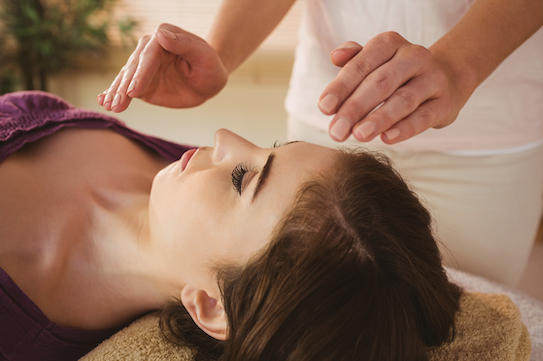
So if you have been feeling anxious recently why not try a reflexology treatment or a Seated Acupressure Neck & Shoulder massage. To book click here.
Reference
https://www.ncbi.nlm.nih.gov/pmc/articles/PMC6473738/
Related Posts

Tips for a healthy stomach
The stomach is the body's food processor. It takes about 4 hours for a moderate meal to be processed. It takes 7 seconds for food to travel from your mouth to your stomach. Your stomach can hold 1.5 litres of food and drink. Chew each mouthful at least 20 times Chewing produces saliva which start the digestive process efficiently, enabling the food to the broken down thoroughly. Eating to quickly often means you don't chew each mouthful enough and causes problems such as heartburn and indigestion. Swallowing large lumps of food causes problems for the gut as undigested food ferments, creating toxins and gases that irritate the stomach lining; it also prevents absorption of nutrients and creates digestive problems. Digestive enzymes Digestive enzymes help to minimize indigestion, acide reflux, bloating and gas. There are three main clasifications of digestive enzymes:
- Amylases: which break down carbohydrates
- Lipases: which break down fats
- Proteases: which break down protiens
The Impact of Sitting All Day – Part 3
In part 1, I looked at the impact of sitting on your muscles, and in part 2 I started to explore the impact on the rest of your body. In this post I continue to explore the impact of sitting on your circulatory system including your heart. Heart Disease When sitting for prolonged periods of time, muscles burn less fat and blood flows more sluggishly, allowing fatty acids to more easily clog the heart. In 2012 Ford & Caspersen in their research paper, Sedentary behaviour and cardiovascular disease: a review of prospective studies (International Journal of Epidemiology, Vol 41, No 5 pages 1338 - 1353) showed that the people with the most sedentary time are more than twice as likely to have cardiovascular disease than those with the least. In 2012 Zedric and Hamilton found that just a few hours sitting suppresses a gene that helps keep your cardiovascular system healthy by controlling inflammation and blood clotting. T W Zedric & M T Hamilton, 2012 Identification of hemostatic genes expressed in human and rat leg muscles and a novel gene (LPP1/PAP2a) suppressed during prolonged physical inactivity (sitting), Lipids in Health and Disease, Vol 11 see http://www.biomedcentral.com/content/pdf/1476-511X-11-137.pdf Cholesterol Sitting also means that your large postural support muscles are inactive. When active these muscles produce a quite of beneficial molecules. One molecule skeletal muscles produce is an enzyme called lipoprotein lipase - which you can think of as a vacuum cleaner for fats in the blood stream. A study in rats showed that after 24 hours forced inactivity, their lipoprotein lipase acitivity was reduced by 90 - 95%, which led to a 75% drip in the ability of their muscles to remove fats from their bloodstream as will as a significant decrease in "good" (HDL) cholesterol. L Bay & Mark Hamilton, 2003, Suppression of skeletal muscle lipoprotein lipase activity during physical inactivity: a molecular reason to maintain daily low-intensity activity, Journal of Physiology, Vol 551, No 2 pages 673 - 682.See http://onlinelibrary.wiley.com/doi/10.1113/jphysiol.2003.045591/full