Does massage help you if you have achilles tendinopathy

Achilles tendinopathy affects 150,000 pepole in the UK every year (Davies, 2019).

Tendinopathy, also known as tendinitis or tendonitis, is a type of tendon disorder that results in pain, swelling, and impaired function. The pain is typically worse with movement.  Given the achilles tendon connects the calf muscles to the foot at the heel – so impared function impacts your ability to walk and exercise.

Scientists at the University of Iceland and University of Copehagen recruited 60 patients with Achilles Tendinopathy and assigned them to three groups:

  1. Eccentric exercise protocol (rehabilitation exercises)
  2. Pressure massage
  3. Eccentic exercise protocol and pressure massage

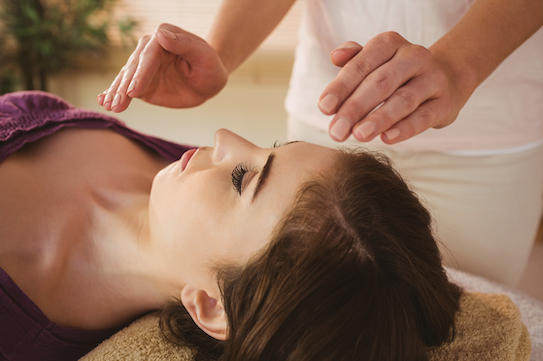
The scientists monitored all three groups progress.  In the second group the participants received pressure massage from a therapist twice a week for 6 weeks and once a week for the next 6 weeks.

Symptoms in all groups improved, but the pressure massage group improved significantly more that the eccentric exercise protocol group after four weeks, suggesting that althought both exercise and massage improved outcomes, the pressure massage group acheived faster results.

So if you have any issues with your achilles tendon why not book a massage?

Reference:

Stefansson SH, Brandsson S, Langberg H, Arnason A. Using Pressure Massage for Achilles Tendinopathy: A Single-Blind, Randomized Controlled Trial Comparing a Novel Treatment Versus an Eccentric Exercise Protocol. Orthop J Sports Med. 2019;7(3)

Related Posts

  • Reflexology and Pain Management – Part 2

    In part 1, I explored what pain was, the pain response and briefly explained how reflexology helps manage pain. Much anecdotal evidence shows the benefits of reflexology in pain management and several studies indicate successful treatment outcomes including pain reduction. (See references at end of article). However I would like to focus on one recent study by Dr Carol Samuel and Dr Ivor Ebenezer of University of Portsmouth as this is the first time Reflexology has been scientifically evaluated as a study for acute pain.  The results indicate that reflexology may be as effective as pain killers for common conditions such as osteoarthritis, backache and cancer. Participants attended two sessions, in which they were asked to submerge their hand in ice water. In one of the sessions they were given reflexology before they submerged their hand, and in the other session they believed they were receiving pain relief from a Tens machine, which was not actually switched on.  The use of the Tens machine is equivalent of a sugar pill in drug trials. The researches found that people felt about 40% less pain, and were able to stand pain for about 45% longer, when they used reflexology as a method of pain relief. So if you are in pain now, by not book a reflexology session. References Booth L (1997) Vertical Reflex therapy: results of a reflexology trail in a Bristol residential home for elderly Khan S, Otter S and Springett K (2006) The effects of reflexology on foot pain and quality of life in a patient with rheumatoid arthritis: a case report, The Foot 16 pg 112-116 Brown CA and Lido C (2008) Reflexology treatment for patients with lower limb amputations and phantom limb pain: an exploratory pilot study, Complementary Therapies in Clinical Practice 14 pg 124-131 Hughes CM, Smyth S and Lowe-Strong A (2008) Reflexology for the treatment of pain in people with multiple sclerosis: a double-blind randomised controlled trail, The Journal of Alternative and Complementary Medicine 14(1) S1-S109

  • Tips for a healthy stomach

    The stomach is the body's food processor.  It takes about 4 hours for a moderate meal to be processed.  It takes 7 seconds for food to travel from your mouth to your stomach.  Your stomach can hold 1.5 litres of food and drink. Chew each mouthful at least 20 times Chewing produces saliva which start the digestive process efficiently, enabling the food to the broken down thoroughly.  Eating to quickly often means you don't chew each mouthful enough and causes problems such as heartburn and indigestion.  Swallowing large lumps of food causes problems for the gut as undigested food ferments, creating toxins and gases that irritate the stomach lining; it also prevents absorption of nutrients and creates digestive problems. Digestive enzymes Digestive enzymes help to minimize indigestion, acide reflux, bloating and gas.  There are three main clasifications of digestive enzymes:

    • Amylases: which break down carbohydrates
    • Lipases: which break down fats
    • Proteases: which break down protiens
    All three types are naturally found in raw fruits, vegatables, sprouted seeds, raw nuts and whole grains.  Most digestive enzyme supplements will contain all three plus some additional supporting enzymes. Ulcers For ulcers take deglycyrrhizinated liquorice (DLG) in a chewable form not a capsule as saliva makes it work more effectively. Reference https://www.ncbi.nlm.nih.gov/pmc/articles/PMC1552833/    
  • The Impact of Sitting All Day – Part 4

    In part 1, I looked at the impact of sitting on your muscles,  and in part 2 generally explored the impact  on the rest of your body.  In part 3 I focused on the impact of sitting on your circulatory system including your heart.  In this article I will explore the impact of sedentary behaviour (sitting) and the link to cancer.

    So how common is cancer? According to Cancer Research UK
    • Every two minutes someone in the UK is diagnosed with cancer.
    • 1 in 2 people in the UK born after 1960 will be diagnosed with some form of cancer during their lifetime.
    • Breast, lung, prostate and bowel cancers together account for over half of all new cancers each year.
    • Overall cancer incidence rates in Great Britain have increased by more than a third since the mid-1970s, with almost this entire rise occurring before the late 1990s.
    And here is the good news is more people survive cancer than die from it now.
    • 46% of men and 54% of women cancer patients diagnosed in 2010-2011 in England and Wales are predicted to survive 10 or more years.
    • Cancer survival in the UK has doubled in the last 40 years.
    The Link Between Cancer & Inactivity Last year in a meta-analysis, Daniela Schmid and Michael F. Leitzmann of the University of Regensburg in Germany analyzed 43 observational studies, amounting to more than 4 million people’s answers to questions about their sitting behavior and cancer incidences. The researchers examined close to 70,000 cancer cases and found that sitting is associated with a 24% increased risk of colon cancer, a 32% increased risk of endometrial cancer, and a 21% increased risk of lung cancer. D Schmid & MF Leitzmann, 2014, Sedentary behaviour insreases the risk of certain cancers, Journal of National Institute of Cancer, Volume 106, No 7. see http://jnci.oxfordjournals.org/content/106/7/dju206.full The really bad news is that your can't exercise away the harmful effects, "Adjustment for physical activity did not affect the positive association between sedentary behavior and cancer" write Schmid & Leitzmann.  Even participants who achieved the daily recommended levels of physical activity were at the same risk as those who spent their day sitting. One theory as to why this is the case, is that regular movement boosts natural antioxidants that kill cell-damaging and potentially cancer-causing free radicals, another theory is that the excess insulin encourages cell growth. The pancreas produces insulin, a hormone that carries glucose to cells for energy.  But cells in idle muscles don't respond as readily to insulin, so the pancreas produces more and more. A 2011 study by Stephens et al found a decline in insulin response after just one day of prolonged sitting. Stephens et al, 2001, Effects of 1 day of inactivity on insulin action in healthy men and women: interaction with energy intake, Metabolism Volume 60, No 7 pages 941 - 949. see http://www.sciencedirect.com/science/article/pii/S002604951000315X