
Do your friends impact your health?
In our day to day lives, during the times when we are deciding what to eat or whether to watch TV or take a walk, who is more likely to be around us, our family, friends, flat mates or a doctor? Even for individuals living with a chronic condition who will probably only spend a few hours a year with medical professionals compared to the thousands of waking hours with family and friends.
Recently researches discovered that women are more likely to survive breast cancer if they have a strong social network of friends and family, whereas those who are more isolated are twice as likely to die of the disease.
University of Pennsylvania have found that good health is more likely if people see fewer doctors and more of their family and friends especially if they get their support and help. They discovered that people are more likely to make healthier choices – like going for a walk over watching TV if they are around family and friends. In addition people are more likely to go to the gym if they have someone to go with.
Being part of a group e.g. family, friends, book club, tennis club, social group, religious/spiritual practice seems to aid our motivation to be healthier in terms of diet, exercise, smoking or drinking. This could be because being part of a group enhances your sense of meaning in life, which in turn leads you to better take care of yourself. Or it could be down to feeling a sense of responsibility towards other or even just wanting to fit in.
References
D A. Asch, and R Rosin, Engineering Social Incentives for Health, N Engl J Med 2016; 375:2511-2513
Kroenke, C. H., Michael, Y. L., Poole, E. M., Kwan, M. L., Nechuta, S., Leas, E., Caan, B. J., Pierce, J., Shu, X.-O., Zheng, Y. and Chen, W. Y. (2017), Postdiagnosis social networks and breast cancer mortality in the After Breast Cancer Pooling Project. Cancer, 123: 1228–1237. doi:10.1002/cncr.30440
Tarrant, M., Warmoth, K., Code, C., Dean, S., Goodwin, V. A., Stein, K., & Sugavanam, T. (2016). Creating psychological connections between intervention recipients: development and focus group evaluation of a group singing session for people with aphasia. BMJ Open, 6(2), e009652.
Related Posts

Are maternal levels of Vitamin D linked to Autism?
Autumn babies are more likely to suffer from learning difficulties. This is probably because their mothers levels of Vitamin D were at their lowest when they were conceived researches believe. In fact, there could be around 11% fewer cases of autism, dyslexia and other learning problems if mother's levels of Vitamin D were higher according to researchers from the University of Glasgow. In an analysis of more that 800,000 Scottish school children during 2006 - 2011, they discovered that 8.9% of children conceived between January and March when vitamin D levels are most likely at their lowest - had learning difficulties compared with 7.6% of children conceived between July and September. While the researchers can't be certain, they believe maternal levels of vitamin D are the most plausible explanation, especially as the first three months after conception are vital for brain development - and other studies have shown just how important vitamin D is to the process. This research has created a change in public health policy, and all pregnant women are now advised to take Vitamin D supplements. Reference
DF Mackay, GCS Smith, A Cooper et al, 2016, Month of Conception and Learning Disabilities: A Record-Linkage Study of 801,592 Children, American Journal of Epidemiology, Vol 184, Issue 7 pages 485-93
See >> http://aje.oxfordjournals.org/content/184/7/485.abstract
How to test if you have good posture
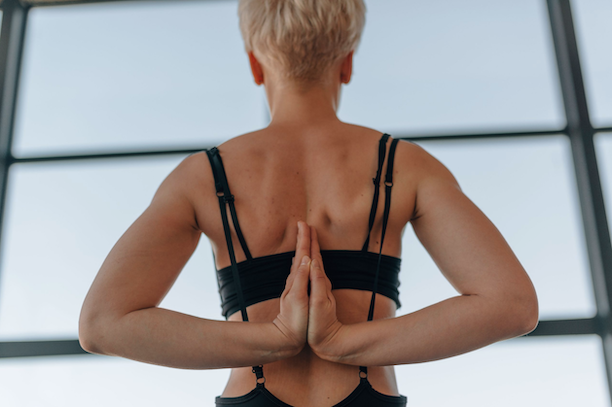
We all know that we need good posture. So today I wanted to share with you how to test if you have good posture.
The Wall Test - Stand with the back of your head touching the wall and your heels six inches from the baseboard. With your buttocks touching the wall, check the distance with your hand between your lower back and the wall, and your neck and the wall. If you can get within an inch or two at the low back and two inches at the neck, you are close to having excellent posture. If not, your posture may need professional attention to restore the normal curves of your spine.
The 'Jump' Test - Feel the muscles of your neck and shoulders. Do you find areas that are tender and sensitive? Are the buttock muscles sore when you apply pressure? What about the chest muscles?
If any of your muscles feel tight, sore or achy then why not book in for a massage.
Is this you…
Like a trusty guard dog, your smart phone probably rests right next to you (or even under your pillow) every night when you go to sleep. You’re able to answer calls, texts and emails at a moment’s notice – even during the wee hours of the night. And isn’t that the best part about technology? Always being connected and never truly shutting down or logging off? Not so fast. You probably don’t even realize how your smart phone habits are affecting your sleep. 1. It keeps your mind psychologically engaged Smart phones were designed to make us more productive and our lives easier. They’re designed to entertain us and provide information. But when it’s time to turn off the lights and go to sleep, the last thing our brain needs is more information and more entertainment. (And that seems fair enough – we give our brains enough to think about during the day!) The smart phone era has forced us to feel like we can never really log off, even when we’re sleeping. Your mind can stay active and engaged long after you’ve scrolled through Instagram or responded to a few work emails. Going to bed and falling asleep should be a peaceful, happy and relaxing experience. Engaging with your phone too close to bedtime can negatively impact those feelings. 2. The blue light from the screen suppresses melatonin Blue light from screens of laptops, tablets and smartphones supresses melatonin. Melatonin is a hormone responsible for controlling your sleep-wake cycle. So when your body runs low on it, you can experience insomnia, tiredness during the day and irritability. 3. Alerts delay REM sleep Knowing your smartphone is at hand can mean you are aware of new email alerts or social media alerts. These alerts or simply waiting for these alerts can delay REM sleep. So if you want to improve the quality of your sleep simply have 1 hour technology free before bed. Reference https://www.physiology.org/doi/full/10.1152/japplphysiol.01413.2009
