Hip Pain
Hip pain is common problem, and it can be confusing because there are many causes. The most common cause of Hip Pain is arthritis for which you will need to see your GP for them to advise on the best treatment option of you.
Trochanteric Bursitis
Trochanteric bursitis is an extremely common problem that causes inflammation of the bursa, which is a protective cusion over the outside of the hip joint. There are two main bursa which protect the hip joint, the superficial trochanteric bursa and the deep trochanteric bursa. The superficial trochanteric bursa lies beneath the tensor fasciae latae (one of the muscles on the side of your hip) and the deep trochanteric bursa lies beneath the the largest of your glutes (gluteus maximus) both of the these muscles insert in to the Iliotibial Band (ITB). Reduced flexibility in your gluteus maximus, tensor fasciae latae or ITB can cause trochanteric bursitis, from too much cycling or running or from running on uneven surfaces. Another common cause is some women is an imbalance between your abductor and adductor muscles. Trochanteric bursitis can also be caused by clients altering their posture as a result of a previous back injury.
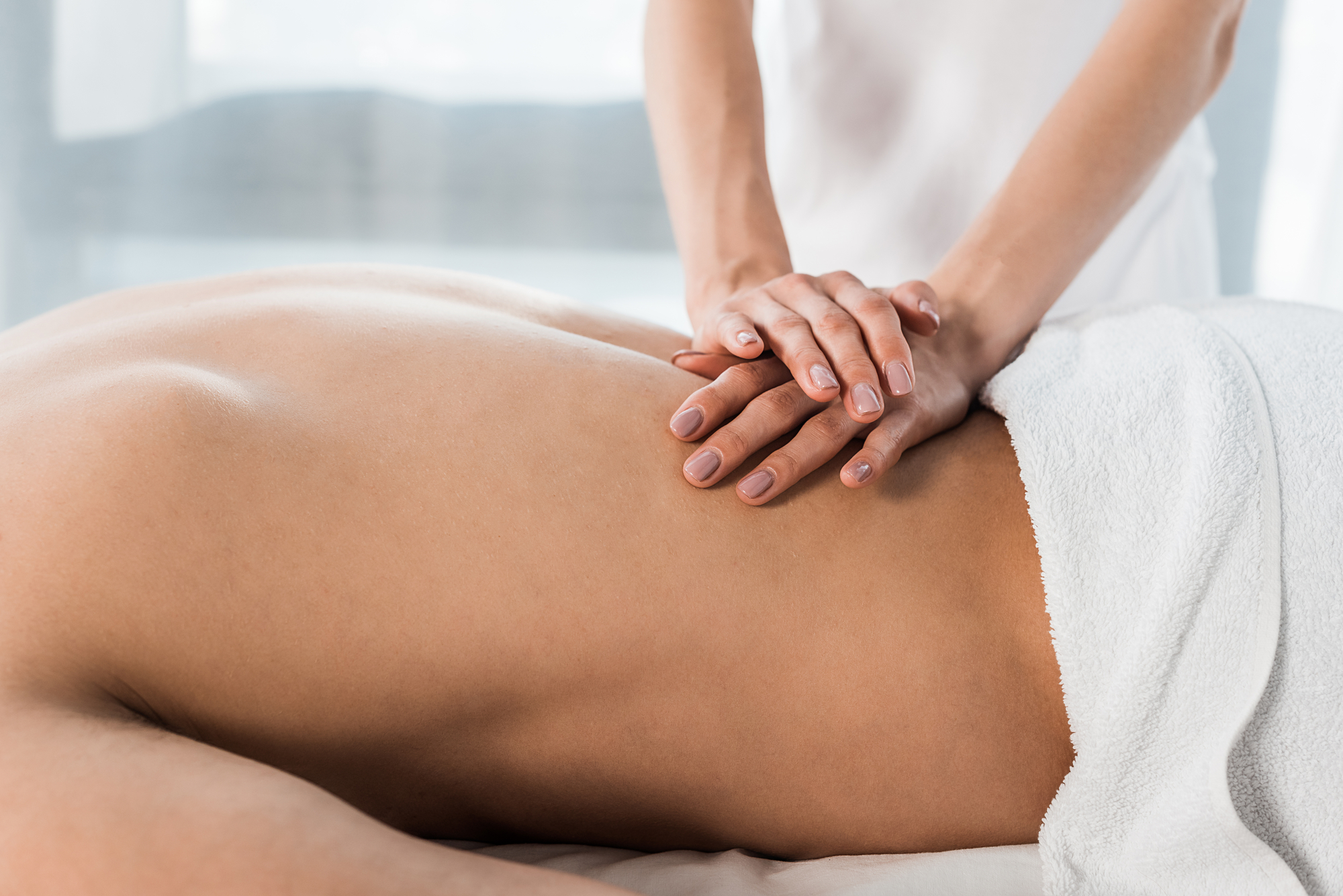
In all these cases a deep tissue or sports massage can help. However if the cause is walking with more weight going through the outside of your foot (excessive foot eversion) then your make need to see a podiatrist for personalized orthotics.
Hip Flexors
Illiopsoas the main hip flexor, shortens when we sit down, so prolonged sitting can cause contracture (anatomical shortening) which can cause either lower back or hip pain. I have personally found this to be a common cause of hip pain which can be successfully treated with deep tissue or sports massage.
If you experience lower back or hip pain when standing up from a seated position then rectus femoris which is one your largest quadriceps muscle make be tight and/or your gluteus maximus which is the other muscle which helps your stand from a seated position may be weak. If you suspect you have weak glutes you can strengthen them with squats and lunges.
Fractures
Hip fractures are common in the elderly with osteoporosis. Stress fractures of the hip are common in people who participate in high impact sports e.g. long distance running, treatment is usually to avoid the high impact sport and this is usually successfully.
When should I see my GP about my hip pain?
- Inability to walk comfortably on the affected side
- Injury that causes deformity around the joint
- Hip pain that occurs at night or while resting
- Hip pain that persists beyond a few days
- Inability to bend the hip
- Swelling of the hip or the thigh area
- Signs of an infection, including fever, redness, warmth
- Any other unusual symptoms
If you want to know if Vitality Therapy can help you with your hip pain then please email joanne@vitalitytherapy.co.uk.
Related Posts

More oops I did it again ….
We all wonder why after an injury or issue has healed and after several weeks of feeling pretty good, bang it flares up again, why? Last week I explained so factors influencing why this happens, now I want to explore the physiological aspects. The Physiological Law of Facilitation (the path of least resistance) The law explains why old injuries flare up under stress.
 When an impulse has passed once through a certain set of neurons in your brain to the exclusion of others, it will tend to take the same course on a future occasion, and each time it does, the resistance will become less.
An analogy of this would be the image of rain on a dirt hill each time it rains the pathway becomes more entrenched, larger, and more intricate spreading out to nearby pathways. So once a nerve learns a pain pattern it tends to repeat it even in the absence of the injury. So the effects of stress to your mind and body can be a trigger for this response to kick in.
But wait, there is good news!
The Law of Facilitation can be maneuvered to help a massage therapist make the benefits of their treatment last longer. You may be wandering how can this be? In massage, patterns of imbalance which result from trauma, or from habitually stressful patterns like poor posture can be addressed. So your body should adapt to changes taking place in the musculoskeletal system and create new pathways.
The body likes sameness, which produces habitual patterns. When a pattern is established, it does not take as much stimulation to activate the response.
When an impulse has passed once through a certain set of neurons in your brain to the exclusion of others, it will tend to take the same course on a future occasion, and each time it does, the resistance will become less.
An analogy of this would be the image of rain on a dirt hill each time it rains the pathway becomes more entrenched, larger, and more intricate spreading out to nearby pathways. So once a nerve learns a pain pattern it tends to repeat it even in the absence of the injury. So the effects of stress to your mind and body can be a trigger for this response to kick in.
But wait, there is good news!
The Law of Facilitation can be maneuvered to help a massage therapist make the benefits of their treatment last longer. You may be wandering how can this be? In massage, patterns of imbalance which result from trauma, or from habitually stressful patterns like poor posture can be addressed. So your body should adapt to changes taking place in the musculoskeletal system and create new pathways.
The body likes sameness, which produces habitual patterns. When a pattern is established, it does not take as much stimulation to activate the response.