What are postural muscles?

Postural muscles are also referred to as core stability muscles, are found deep in the body.

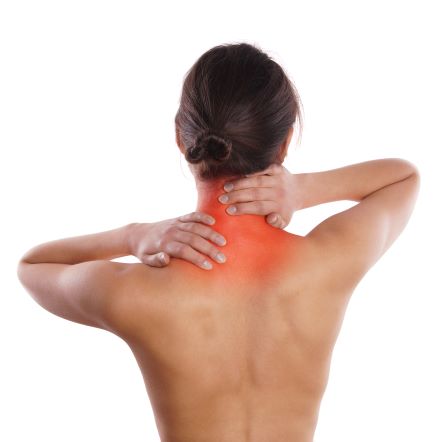
The first muscles that typically come to mind with posture are the muscles along the spine. The erector spinae muscles run along the bones of your spine, the vertebrae, from your neck all the way to your tailbone. These muscles hold the spine in extension or upright, counteracting the pull of gravity. Abdominal muscles support the structures at the front of your trunk, balancing the pull of your back extensors. The quadratus luborum muscles at the top of your pelvis help stabilize the pelvis and spine in the lower back in an upright position.

The purpose of postural muscles is to keep good posture in the field of gravity. These muscles consist mostly of slow-twitch muscle fibres and have a greater capacity for prolonged use but are prone to over working. This means if you have poor posture or you have long periods of sitting immobile your postural muscles get tired and they become weak and less efficient. The longer the situation continues the more likely you are to develop postural imbalances and they finally you get knots and pain!

Related Posts

  • How to prevent muscle cramps?

    I know previously I have discussed how to minimise the risk factors associate with muscle cramps including during pregnancy. Exercise Related Muscle Cramps May occur during, after or in some case many hours after vigorous activity.  In addition to minimising the risk factors I have previously documented you need to ensure you

    1. Don't exercise when injured - cramps can occur as a protective mechanism following an injury.
    2. Warm up thoroughly
    3. Stretch before and after exercise
    4. Cool down properly
    5. Don't over do it - their is a clear correlation between muscle fatigue and cramps.  In addition if you suddenly place a huge physical demand on the body (e.g. a late spurt to win the race) that it is not used to, your body can react by contracting all the muscle and creating cramps.  So remember to follow a suitable training program before entering that competition!
    Rest Cramps Night cramps and other rest cramps can often be prevented by regular stretching exercises particularly before going to bed.  The most common night cramps are in the calf muscles, to stretch this muscle
    1. Stand about 2 or 2.5 feet away from a wall.  Lean into the wall to place the forearms against the wall with the knees and back straight and the heels in contact with the floor. Hold for 10 to 15 seconds and repeat three times before going to bed.
    2. In bed while lying down, you can try flexing the ankle by pulling the toes up toward the head with the leg as straight as possible.
  • Can massage help you if you are constipated?

    Recently scientists have looked at the impact of abdominal massage on people with constipation. Constipation affects twice as many women as men.  Older people are more likely to be affected and in addition taking certain medications e.g. opioids can cause it. A randomised control trail of 204 patients with constipation (from opioid medication), were split into two equal groups.  The intervention group were taught how to administer abdominal massage on themselves, in a clockwise direction over the intestines on the abdominal wall, which they performed twice a day for four weeks after breakfast & dinner. The control group received standard medical care, such as laxatives, suppositories and enemas. Both groups were asked to keep a diary of their bowel movements and to complete three questionnaires, including the Bristol stool scale for evaluating stools and bowel habits, the visual analogue scale, which contains questions about constipation, including severity, straining & pain. Patients in the massage group reported significant improvements in stool consistency, straining during defecation, the feeling of incomplete emptying after defecation and experienced increase bowel movements.  They also reported a reduction in the severity of constipation, pain, straining, gas & fullness in the rectum.  However, the massage had no effect on the stool amount. The researchers concluded that abdominal massage was an effective approach for managing opioid induced constipation.  So if you suffer from constipation consider abdominal massage. Reference https://www.ncbi.nlm.nih.gov/pubmed/31358243

  • Why does massage help so much?

    In a previous post I outlined some of the benefits of the 15 minutes Seated Acupressure Neck & Shoulder massage including the scientific evidence for these claims. But I think their is one benefit that stands out above these.

    I know in my previous life as an IT project manage, several times I spent most of a day trying to fix a problem and I just couldn't find a solution.  I had a tendency to get caught up in a problem and its just frustrating -- it can literally stress you out. When you're stressed out, it's harder to think clearly. Emotional stress can send your problem-solving skills into a tailspin.  To make matters worse I used to flip over that fine line between being focused on solving the problem and obsessing over it.

    The trick to break this cycle is to shift your focus. The purpose of shifting your focus is to temporarily get your mind off whatever challenge has it tied up in knots.   So when you come back to it you have are re-energised and have a fresh perspective.

    Going for a massage, shifts your focus to your body releases anxiety and the seated acupressure massage energises you & improves your mental alertness.  So I found it an ideal way of breaking the cycle of mentally obsessing over problems when I worked in IT.