
Natural ways to reduce anxiety – Part 3
What I want to share with you know is probably the simplest and easiest method of reducing anxiety, you can do it anywhere and it costs nothing. Its called breathing. Yes I know we do it all the time. But when you get anxious we begin to breathe rapidly and shallowly from our upper chest. This breathing breath from your upper chest is why you get tight neck muscles as they can get overused as they help to move the top rib we breathing.
What I am talking about is breathing deeply or calm breathing.
- Take a long, slow breath in through your nose, first filling your lower lungs – put your hand on your belly and you should feel it move out as your breath in. Then breath into your upper lungs.
- Hold your breath to the count of “three.”
- Exhale slowly through pursed lips, while you relax the muscles in your face, jaw, shoulders, and stomach.
Calm breathing you can stimulate the body’s parasympathetic response. This is the body’s equally powerful and opposite system to the flight or fight response and is often called the relaxation response. When you trigger the body’s relaxing response, your
- heart rate slows
- blood pressure decreases
- muscle tension decreases
- growing sense of ease in body, calmness in mind
So you stop anxiety in its tracks!. I recommend you practice this calm breathing for several times a day (up to 10 times) for several weeks until it becomes natural.
Related Posts

Is slouching that bad for you? – part 3
Modern man is born to slouch. But he rarely considers the long term potential consequences:
In addition it may also make you... Sad and Shy A study of 110 students by San Francisco State University last year found those who walked with a slouched body posture reported feeling more depressed and having lower energy levels than those who were more upright. Study leader Erik Peper, a professor of health education at the university, says sitting or standing up straight with shoulders back does not just give other people a good impression, but also sends a message to the brain that makes us feel better about ourselves. ‘We tend to think the brain and body relationship goes one way. In fact, the passages go both ways. ‘When you choose to put your body in a different mode, it’s harder to drop into depression.’ Meanwhile, in a 2007 study at Colorado College, students with the best sitting posture felt more confident — and scored significantly higher on tests — than those who sat slumped. Interestingly, though, the trend was only true for male students. Women felt more confident if they’d slouched, possibly because men tend to determine how they feel according to internal cues, while women think more about how they look to others — for them an upright posture made them feel pressured and self-conscious. So sit up straight!
Natural remedies for the winter blues – Part 1
By January I am seriously missing the sun. While I know we have had the shortest day, the grey weather and the snow jsut reminds me we are in deep winter. So with the Brexit impass being deeply demoralising and frustraing, I wanted to share some tips to combat the blues. 1. Vitamin D Most people are short of Vitamin D in the uk. One of the signs of being short of Vitamin D is feeling blue. 2. Spice it up. Earlier today I was planning my meals for the week before I went to the supermarket. At this time of year I always fancy dishes containting yellow rice i.e. paella or pilau rice. I know its the yellow colour that particularly appeals which you get by adding either Tumeric or Saffron. In clinical trails Curcumin the main active ingredient in Tumeric (the bright yellow Indian spice) has been to be as effective as Prozac. A review of several trains of Saffron found it was a safe and effective treatmetn for depression. While I like to cook with the spices, it isn't as effective as supplements which are standardised extracts. For me cooking with the spice is fine as I am not depressed. 3. 5-HTP A naturally occuring amino acid, 5-HTP is used by the body to make serotonin the "happy hormone". Suplements produced from the seeds of the West African medicinal plant Griffonia Simplicifoia show promised for depression. References Woo YS, Kim S, Jeong JH, Jung YE, Kim MD, Bahk WM. Vitamin D Deficiency/Insufficiency among Inpatients with Depressive Symptoms. Clin Psychopharmacol Neurosci. 2019 Feb 28;17(1):121-124. Sanmukhani J, Satodia V, Trivedi J, Patel T, Tiwari D, Panchal B, Goel A, Tripathi CB. Efficacy and safety of curcumin in major depressive disorder: a randomized controlled trial. Phytother Res. 2014 Apr;28(4):579-85. Moshiri E, Basti AA, Noorbala AA, Jamshidi AH, Hesameddin Abbasi S, Akhondzadeh S. Crocus sativus L. (petal) in the treatment of mild-to-moderate depression: a double-blind, randomized and placebo-controlled trial. Phytomedicine. 2006 Nov;13(9-10):607-11 Birdsall TC. 5-Hydroxytryptophan: a clinically-effective serotonin precursor. Altern Med Rev. 1998 Aug;3(4):271-80.
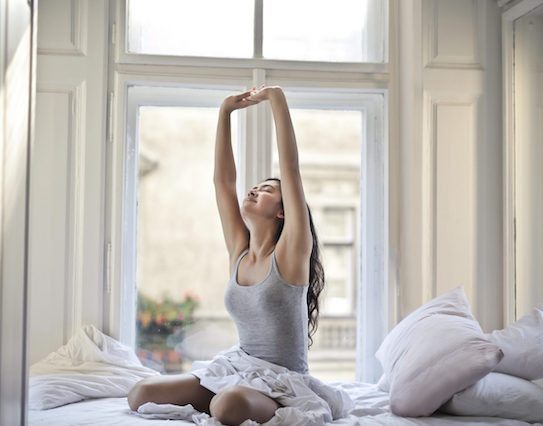
Sleep – Its only one way of getting energy.
The function of sleep is to renew us and its gives us our vitality or give us energy to live our lives. But while it may be ideal to have 7, 8 or 9 hours a sleep it’s not always possible with our 21st century life styles. For many people there is simply too much to do to sleep. So given you can’t create time, what can you do. First remember that sleep is only one way to recharge our energy battery. Energy How much energy you have right now isn’t purely based on how well you slept last night or how well you have been sleeping recently. By “energy” I mean your personal ability to live life to its fullest capacity. So where would you put yourself on an energy scale of 1 to 100% where 1 is very low energy and 100 is full of energy? Below 30% we are de-motivated, low in self-esteem and feel out of control. Just like jump-starting a car when the car battery has gone flat, if your energy falls below 30% then you need an energy boost from something like acupuncture, shiatsu or reiki. Once your energy level is about 30% then it’s possible to help yourself boost your energy. Physical Energy Boosters This is what we do to care for ourselves physical and the things that give us our vitality and make us feel physically well and energised.
- Rest is not just the essential precursor to brilliant sleep; it is also a substitute for sleep as it allows us to recharge our batteries.
- A healthy diet provides the nutritional support your body needs to provide physical energy.
- Exercise including yoga, swimming, walking and tai chi help re-charge our batteries.
