
How to live to 100
Here are some top tips on how to live to 100. These tips are from Dr Claudia Kawas at the University of California, on of the world’s leading scientific researchers into longevity and scientists at Northwestern University Feinberg School of Medicine in Chicago and the scientists working on the Blue Zone project.
Scientists studying lonevity are tyring to answer the question why doesn one person live until they are 94 while another dies at 75. Dr Claudia Kawas has spent 15 years studying “super-agers” – those who live until into their nineties and beyond while keeping their minds sharp. By studying the lifestyles of these “super-agers” scientists have discovered some common lifestyle habits and traits including:
- Drinking two cups of coffee a day
- Don’t over eat
- Get out and socialise including talking to strangers
- Drink two glases of wine a day
- 15 mins of light exercise a day
- Positive thinking or optimistic outlook in life
- Resilience when bad things happen
- Having a purpose/ belief in life
- Put others including family first
- Be with the “right” people for you
- Healthy eating i.e. more plant based diets
References
Nature, 2017; 546 (7660); E8; doi: 10.1038/nature22786
Related Posts
Is Reiki a Placebo? – Part 4
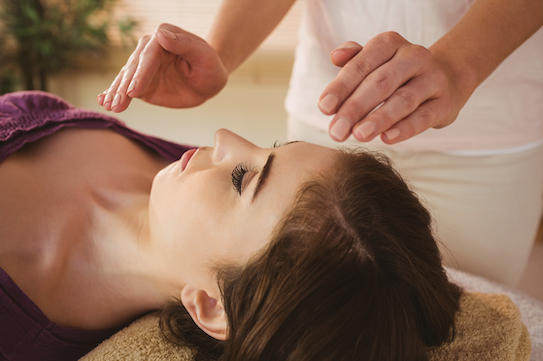
I know want to examine the scientific evidence of the impact of Reiki on more subjective issues like pain and anxiety. Heidt (1979) utilised healing to reduce levels of anxiety in patients in a hospital cardiovascular unit. Ninety volunteers were divided into three matched groups receiving treatments as follows: a five-minute period of healing, casual touch and no touch at all. Pre- and post-intervention levels of anxiety were measured using a special questionnaire. In those subjects receiving healing there was a highly significant reduction in anxiety following the treatment. Quinn (1982) also studied the effects of healing on anxiety states in hospitalised cardiac patients, but without making physical contact. Sixty patients were randomly assigned to either an experimental group receiving five-minute treatments of non-contact healing given by an experienced practitioner; or to a control group where inexperienced practitioners went through similar procedures whilst doing mental arithmetic. Assessments were done by the patients before and after treatment using a specialised questionnaire. Results showed that the experimental group had a very significant reduction in anxiety post-treatment. Gulak (1985), a healer, undertook a study on his patients measuring anxiety levels before and after healing treatment. Seventy six patients were given 15-minute treatments, with anxiety levels being assessed 14 days before and 21 days following the treatments using a specialised questionnaire. Different statistical analyses showed the reductions in anxiety to be significant as well as other health issues being cleared up. Wirth, Brenlan, Levine & Rodriguez (1993) performed a double-blind, crossover study on the effect of healing on post-operative pain, following surgical removal of both impacted lower molar teeth. Twenty one patients were randomly assigned to control or treatment groups before the first tooth was removed; and before the second operation the groups were transposed from control to experimental and vice versa. All conditions for both groups were the same except that the experimental groups received Reiki and healing post-operatively. Healing was undertaken at a distance of several miles from the patients with the healers concentrating on individual patients' photographs. Patients measured their pain intensity and pain relief over a period from 3 to 9 hours after operation using specialised pain assessment techniques. A statistically significant difference was found between the treatment and control groups in both pain intensity and amount of pain relief at hours 4 to 8 and hour 9. When combined, the data showed a highly significant improvement in pain levels as a result of the distant/remote healing. I started the series of articles by saying that Reiki is intangible. But in the last four articles I have demonstrated the impact on Reiki energy on human blood, yeast and plants as well as the human body. In addition there is clear evidence Reiki helps with pain, anxiety and lowering blood pressure. References Heidt, Patricia (1979). An Investigation of the Effect of Therapeutic Touch on the anxiety of Hospitalized Patients. Ph.D. dissertation, New York Univesity. See also: Heidt, Patricia (1981). Effects of therapeutic touch on the anxiety level of hospitalized patients, Nursing Res., 30, 30-37. Gulak, J. (1985). Lowering the anxiety levels in persons undergoing bioenergo-therapy. Psychotronika, 1985, 6-9. Quoted by Benor (1993). Wirth, D. P., Brenlan, D. R., Levine, R. J. & Rodriguez, C. M. (1993). The effect of complementary healing therapy on postoperative pain after surgical removal of impacted third molar teeth. Compl. Therap. Med., 1. 133-138.

Do your friends impact your health?
In our day to day lives, during the times when we are deciding what to eat or whether to watch TV or take a walk, who is more likely to be around us, our family, friends, flat mates or a doctor? Even for individuals living with a chronic condition who will probably only spend a few hours a year with medical professionals compared to the thousands of waking hours with family and friends. Recently researches discovered that women are more likely to survive breast cancer if they have a strong social network of friends and family, whereas those who are more isolated are twice as likely to die of the disease. University of Pennsylvania have found that good health is more likely if people see fewer doctors and more of their family and friends especially if they get their support and help. They discovered that people are more likely to make healthier choices - like going for a walk over watching TV if they are around family and friends. In addition people are more likely to go to the gym if they have someone to go with. Being part of a group e.g. family, friends, book club, tennis club, social group, religious/spiritual practice seems to aid our motivation to be healthier in terms of diet, exercise, smoking or drinking. This could be because being part of a group enhances your sense of meaning in life, which in turn leads you to better take care of yourself. Or it could be down to feeling a sense of responsibility towards other or even just wanting to fit in. References D A. Asch, and R Rosin, Engineering Social Incentives for Health, N Engl J Med 2016; 375:2511-2513 Kroenke, C. H., Michael, Y. L., Poole, E. M., Kwan, M. L., Nechuta, S., Leas, E., Caan, B. J., Pierce, J., Shu, X.-O., Zheng, Y. and Chen, W. Y. (2017), Postdiagnosis social networks and breast cancer mortality in the After Breast Cancer Pooling Project. Cancer, 123: 1228–1237. doi:10.1002/cncr.30440 Tarrant, M., Warmoth, K., Code, C., Dean, S., Goodwin, V. A., Stein, K., & Sugavanam, T. (2016). Creating psychological connections between intervention recipients: development and focus group evaluation of a group singing session for people with aphasia. BMJ Open, 6(2), e009652.
Are you excessively tired?
Fatigue and depleted energy could be addressed with weekly Swedish or Thai massages according to researchers at Teeside and Leeds Universities . One in 5 people experience excessive tiredness at any given time, while one in 10 people have chronic fatigue (Royal College of Psychiatrists, 2018). They invited 20 participants with fatigue and/or depleted energy to receive trestments with a massage therapist. The participants all agreed to commit to a six-week study and complete diaries describing how they felt after their treatments. The participants were split into two groups and half of them received three 45-minute sweedish massage treatments and then three Thai massages in weeks 4 ot 6. The treatment order was reversed for the other ten participants. The results showed that both Swedish and Thai massage relieved symptoms of fatigue or depleted energy by
- reducing stress
- promoting relaxation
- relieving pain
- improving energy
