
More how to chill out…
In my previous post I said that the activity you do to chill out doesn’t matter it you just need to enjoy it and it absorbs you.
So why not consider paying video games, yes video games. If you ask any gamer, who enjoys playing them and they will tell you it help them relax or de-stress. I know this may sound unlikey. However that is scientific research to support the idea that regularly playing video games can help people unwind an dimprove their ability to handle everyday stress.
In 2010 Associate Professor Dr. Christopher J. Ferguson of the Texas A&M Public Research Facility demonstrated that both men and women who play violent video games long-term seem to be able to adopt mental skills to handle stress, become less depressed and get less hostile during stressful tasks. In 2014 reserarchers from University College London found that people who played video games after work experienced faster recovery from work related stress.
While there are a number of video games on the market which are specifically aimed at helping people unwind and manage stress, it seems that almost any form of game playing will do the trick. Spending half an hour each day on a video console could be be as effective as going to the gym for helping you “chill out” at the end of a busy day.
References
http://www.christopherjferguson.com/hitman.pdf
http://discovery.ucl.ac.uk/1418103/
Related Posts
Is Reiki a Placebo? – Part 4
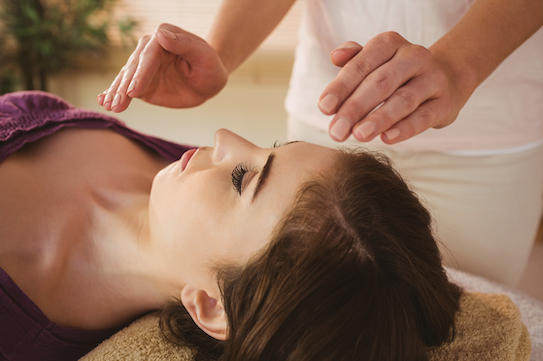
I know want to examine the scientific evidence of the impact of Reiki on more subjective issues like pain and anxiety. Heidt (1979) utilised healing to reduce levels of anxiety in patients in a hospital cardiovascular unit. Ninety volunteers were divided into three matched groups receiving treatments as follows: a five-minute period of healing, casual touch and no touch at all. Pre- and post-intervention levels of anxiety were measured using a special questionnaire. In those subjects receiving healing there was a highly significant reduction in anxiety following the treatment. Quinn (1982) also studied the effects of healing on anxiety states in hospitalised cardiac patients, but without making physical contact. Sixty patients were randomly assigned to either an experimental group receiving five-minute treatments of non-contact healing given by an experienced practitioner; or to a control group where inexperienced practitioners went through similar procedures whilst doing mental arithmetic. Assessments were done by the patients before and after treatment using a specialised questionnaire. Results showed that the experimental group had a very significant reduction in anxiety post-treatment. Gulak (1985), a healer, undertook a study on his patients measuring anxiety levels before and after healing treatment. Seventy six patients were given 15-minute treatments, with anxiety levels being assessed 14 days before and 21 days following the treatments using a specialised questionnaire. Different statistical analyses showed the reductions in anxiety to be significant as well as other health issues being cleared up. Wirth, Brenlan, Levine & Rodriguez (1993) performed a double-blind, crossover study on the effect of healing on post-operative pain, following surgical removal of both impacted lower molar teeth. Twenty one patients were randomly assigned to control or treatment groups before the first tooth was removed; and before the second operation the groups were transposed from control to experimental and vice versa. All conditions for both groups were the same except that the experimental groups received Reiki and healing post-operatively. Healing was undertaken at a distance of several miles from the patients with the healers concentrating on individual patients' photographs. Patients measured their pain intensity and pain relief over a period from 3 to 9 hours after operation using specialised pain assessment techniques. A statistically significant difference was found between the treatment and control groups in both pain intensity and amount of pain relief at hours 4 to 8 and hour 9. When combined, the data showed a highly significant improvement in pain levels as a result of the distant/remote healing. I started the series of articles by saying that Reiki is intangible. But in the last four articles I have demonstrated the impact on Reiki energy on human blood, yeast and plants as well as the human body. In addition there is clear evidence Reiki helps with pain, anxiety and lowering blood pressure. References Heidt, Patricia (1979). An Investigation of the Effect of Therapeutic Touch on the anxiety of Hospitalized Patients. Ph.D. dissertation, New York Univesity. See also: Heidt, Patricia (1981). Effects of therapeutic touch on the anxiety level of hospitalized patients, Nursing Res., 30, 30-37. Gulak, J. (1985). Lowering the anxiety levels in persons undergoing bioenergo-therapy. Psychotronika, 1985, 6-9. Quoted by Benor (1993). Wirth, D. P., Brenlan, D. R., Levine, R. J. & Rodriguez, C. M. (1993). The effect of complementary healing therapy on postoperative pain after surgical removal of impacted third molar teeth. Compl. Therap. Med., 1. 133-138.

The Impact of Sitting All Day – Part 1
For most people know they sit all day as part of their job. Recently there has been a spate of article in the press about the impact of sitting all day, so I wanted to take some time to look at the impact of sitting all day.
Sit up Straight
I want to start this series of articles on a positive note, as most of my clients have to sit to work, the negative impact of sitting is minimised if you sit correctly. As your Mum always said, "Sit up straight", i.e.- Not leaning forward
- Shoulders relaxed
- Arms close to sides
- Elbows bent 90°
- Lower back should be supported
- Feet flat on floor
So what happens if you don't sit up straight?
As you would expect from a masseur I am going to start by looking at the impact on your muscles.
Strained Neck & Sore Shoulders
If most of your sitting occurs at a desk at work, craning your neck forward toward a keyboard or tilting your head to cradle a phone while typing can strain the cervical vertebrae and lead to permanent imbalances. The neck doesn't slouch alone. Slumping forward overextends the shoulder and back muscles as well, particularly the trapezius, which connects the neck and shoulders. Here at Vitality Therapy we offer Seated Acupressure Massage to directly address these issues.Bad back
When we move around, soft discs between vertebrae expand and contract like sponges, soaking up fresh blood and nutrients. But when we sit for a long time, discs are squashed unevenly. Collagen hardens around supporting tendons and ligaments. So people who sit more are at greater risk of slipped disks or herniated disks.I recommend the Yoga position cat-cow for increasing your spinal flexibility. (Click here for guidelines on how to do cat-cow.)
When you sit for a long time, a muscle called the psoas travels through the abdominal cavity and, when it tightens, pulls the upper lumbar spine forward. Upper-body weight rests entirely on the ischial tuberosity (sitting bones) instead of being distributed along the arch of the spine. A sports massage or a deep tissue massage can release a tight psoas muscle.
Mushy abs
When you stand, move or even sit up straight, abdominal muscles keep you upright. But when you slump in a chair, they go unused. Tight back muscles and wimpy abs form a posture-wrecking alliance that can exaggerate the spine's natural arch, a condition called hyperlordosis, or swayback. So sitting up straight is the first step to good abs!Tight hips
Flexible hips help keep you balanced, but chronic sitters so rarely extend the hip flexor muscles in front that they become short and tight, limiting range of motion and stride length. Studies have found that decreased hip mobility is a main reason elderly people tend to fall. So when you are in the gym remember tohttp://vitalitytherapy.co.uk/wp-admin/post-new.php stretch your hip flexors.Limp glutes
Sitting requires your glutes to do absolutely nothing, and they get used to it. Soft glutes hurt your stability, your ability to push off and your ability to maintain a powerful stride when walking. They can impact your performance when you run, as all powerful glutes are the key to increasing your speed and powering you up hills.Procrastination
In general in life I am very self-motivated, which is essential when you are self-employed. However this is the time of year of my annual bout of procrastination kicks in. Each year I promise myself its going to be different, I will fill out my tax form early and every year, like ground hog day, I leave it as late as possible. So this year I decided to research options for helping me tackle my procrastination around doing my accounts and filling out my tax form. I read the reason most people procrastinate is that they consider the task unpleasant or boring or they associate unpleasant feelings with the task. To me this is blatantly obvious as no on every puts of anything they enjoy. For me tax forms manage to be both unpleasant and boring. So I decided that this year I would try a new approach to tackle my procrastination. Firstly I decided to focus on the end goal. As filling out a tax form leaves me cold, I decided that focusing on the fine for not doing it on time would motivate me, after all my money is on line. As in life I tend to prefer more positive options, I decided to pencil in a treat for myself when I finished, so I am going to arrange a girlie lunch for a specific date so I have something positive to look forward to. In the past I have dedicate one sold lump of time to doing my accounts and tax form and plodded through it. This year I decide that I would split it down into little chunks as this should help me do it with a smile on her face. In addition some experts recommend roping a friend so that you have a buddy to help motivate you and also making a public commitment to completing something helps motivate you. So this is my public commitment. So now its just a case of taking the first step and staring.
