
An alternative way to do simple mindfulness (Part 2)
Following on from part 1, I want to introduce you to more ways to do simple mindfulness.
1. Tuning into sounds
The hum of a gan, tickeing of a cloack, the round of rain on the window, voices outside the room. Realing tuning in ot hte volume, pitch and noticing if there’s a rthythmic quality to the sound.
2. Experimenting with taste
Using a small pleasant tasting boiled sweet, chocolate melting int he mouth or taking a few sips of water. Noticing the flavour, physical sensations and returning the attention when it wanders.
3. Smell
Simply light a scented candle where your like the smell or inhale the sent of your favourite essential oil by placing a drop on a tissue.
4. Hold an object in your hands
A pebble, wooden bead pen, cup etc any everyday object. Focus your attention in to notice the temperature, the texture (roughness/smoothness), the shape and how it feels. Experiment with your eyes start with open and then notice the difference if you close your eyes.
Remember mindfulness is about training the mind, so you don’t need to use breath as your anchor be creative, be kind to yourself and start simple with 30 seconds and build up the time slowly and gradually – its a practice not a race!
Related Posts

Do your friends impact your health?
In our day to day lives, during the times when we are deciding what to eat or whether to watch TV or take a walk, who is more likely to be around us, our family, friends, flat mates or a doctor? Even for individuals living with a chronic condition who will probably only spend a few hours a year with medical professionals compared to the thousands of waking hours with family and friends. Recently researches discovered that women are more likely to survive breast cancer if they have a strong social network of friends and family, whereas those who are more isolated are twice as likely to die of the disease. University of Pennsylvania have found that good health is more likely if people see fewer doctors and more of their family and friends especially if they get their support and help. They discovered that people are more likely to make healthier choices - like going for a walk over watching TV if they are around family and friends. In addition people are more likely to go to the gym if they have someone to go with. Being part of a group e.g. family, friends, book club, tennis club, social group, religious/spiritual practice seems to aid our motivation to be healthier in terms of diet, exercise, smoking or drinking. This could be because being part of a group enhances your sense of meaning in life, which in turn leads you to better take care of yourself. Or it could be down to feeling a sense of responsibility towards other or even just wanting to fit in. References D A. Asch, and R Rosin, Engineering Social Incentives for Health, N Engl J Med 2016; 375:2511-2513 Kroenke, C. H., Michael, Y. L., Poole, E. M., Kwan, M. L., Nechuta, S., Leas, E., Caan, B. J., Pierce, J., Shu, X.-O., Zheng, Y. and Chen, W. Y. (2017), Postdiagnosis social networks and breast cancer mortality in the After Breast Cancer Pooling Project. Cancer, 123: 1228–1237. doi:10.1002/cncr.30440 Tarrant, M., Warmoth, K., Code, C., Dean, S., Goodwin, V. A., Stein, K., & Sugavanam, T. (2016). Creating psychological connections between intervention recipients: development and focus group evaluation of a group singing session for people with aphasia. BMJ Open, 6(2), e009652.
How to Prevent Running Injuries – Part 1
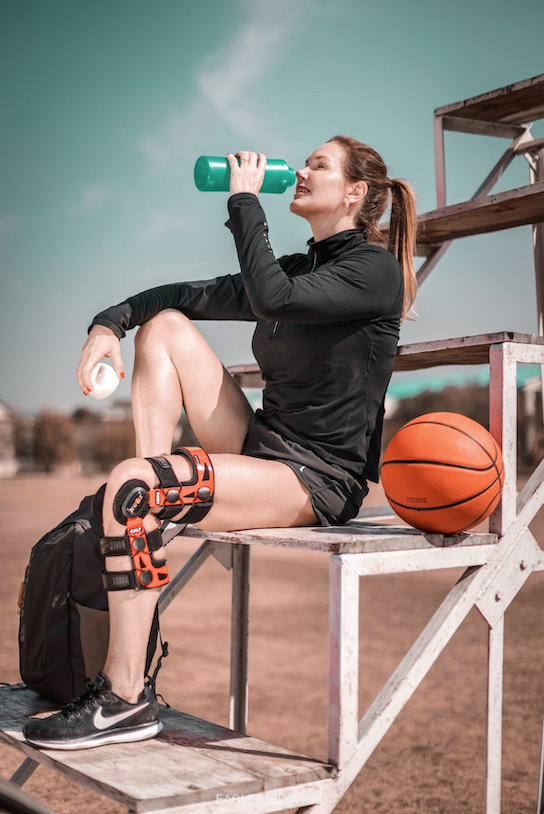
What we see in clinic all the time, is people coming in with running or training injuries that have blindsided them, they have no idea how it happened. Its like the injury came out of nowhere. Injuries don't come out of nowhere. Most running injuries produce signals
- aches
- soreness
- persistent pain
Build your resilience
This week it has been widely reported in the press that Hector Sants is taking time off to recover from stress and exhaustion. While it is fantastic that he is getting the time and space he needs to recover his health, it reminded me of the importance of looking after ourselves. So today I wanted to share my top tips for building your resilience. I say building resilience, as the key to good stress management is to build the emotional and mental strength to know that you are OK, even if you don’t feel fully in control of your situation. While I encourage everyone to manage their time effectively, take control of what you are able to, there are times when we simply have to accept there are things we can’t control. I was reminded of this myself this week when my landlady told me she would like me to move out by the end of the year, so her spare room is available for her cousin in case he needs it. This came as a big shock given that I only re-located to London in August. So while yes it was a shock, it is annoying to have to move again so quickly, I am very aware that I have the resilience to cope with moving again. So what helps build resilience?
- As I already said taking control of what you can control and accepting what you can’t control.
- Building a supportive network of friends to who are able to listen when you need support is essential, the old adage a problem shared is a problem halved is true.
- Be active, whether it’s simply going for a walk in the park or going to the gym. Physical activity helps us feel mentally stronger and helps clams us emotionally so we are able to see the root cause of our problems so we are able to find effective solutions. I find going for a walk in a park, clears my mind and gets my creative juices flowing so I can calmly deal with my problems.
- My next tip may seem rather strange but volunteer or do some kind of community work. Being around people who have more challenges helps us put our problems in perspective. For example talking to someone who is dealing with the challenges of cancer really put my needing to move again into perspective.
- When we feel really in a rush and under pressure it is very tempting to reach for alcohol, coffee or chocolate, but in the long term these don't offer real solutions.
- In the spirit of keep it simple, stupid, always remember that deep breaths helps the body to relax and help you to let go of whatever mental angst is going on. When you get busy or anxious it is common to breath very rapidly from the top of your chest. Putting your hand on your belly, and try breathing in for a count of three and then breath out for a count of three - with the aim of seeing your hand move as you breath deeply enough.
- Remember Reiki is great if you feel all over the pace and jaded, while massage helps release all those tight achy shoulders.
