
Migraines – Part 2
In part 1, I explained the difference between a headache and a migraine. In this article I want to explore evidence for nutritional fixes to assit migraine sufferers.
5-HTP
5-HTP, or 5-Hydroxytryptophane is a naturally occuring amino acid that may help prevent chronic headaches of various types including tension headaches and prevent migraines. In one study, 5-HTP was just as effective at preventing migraines as methysergide (a perscription migrane drug) and it was espeically good at reducing the intensity and duration of attacks.
Magnesium
A lack of magnesium has been linked to migraine, and several trails suggest taht supplementing with the mineral can reduce the frequency of attacks.
Reference
Titus F, Dávalos A, Alom J, Codina A. 5-Hydroxytryptophan versus methysergide in the prophylaxis of migraine. Randomized clinical trial. Eur Neurol. 1986;25(5):327-9. PubMed PMID: 3536521.
Facchinetti F, Sances G, Borella P, Genazzani AR, Nappi G. Magnesium prophylaxis of menstrual migraine: effects on intracellular magnesium. Headache. 1991 May;31(5):298-301. PubMed PMID: 1860787.
Related Posts
Can tackling the big questions in life make you less depressed and anxious?
Mixed anxiety & depression is the most common mental disorder in Britain,and it estimates to cause one fifth of days off from work. Well according to researches if you prepared to tackle big questions in life e.g.
- Is there a God?
- Does life have a purpose?
Do your friends impact your health?
In our day to day lives, during the times when we are deciding what to eat or whether to watch TV or take a walk, who is more likely to be around us, our family, friends, flat mates or a doctor? Even for individuals living with a chronic condition who will probably only spend a few hours a year with medical professionals compared to the thousands of waking hours with family and friends. Recently researches discovered that women are more likely to survive breast cancer if they have a strong social network of friends and family, whereas those who are more isolated are twice as likely to die of the disease. University of Pennsylvania have found that good health is more likely if people see fewer doctors and more of their family and friends especially if they get their support and help. They discovered that people are more likely to make healthier choices - like going for a walk over watching TV if they are around family and friends. In addition people are more likely to go to the gym if they have someone to go with. Being part of a group e.g. family, friends, book club, tennis club, social group, religious/spiritual practice seems to aid our motivation to be healthier in terms of diet, exercise, smoking or drinking. This could be because being part of a group enhances your sense of meaning in life, which in turn leads you to better take care of yourself. Or it could be down to feeling a sense of responsibility towards other or even just wanting to fit in. References D A. Asch, and R Rosin, Engineering Social Incentives for Health, N Engl J Med 2016; 375:2511-2513 Kroenke, C. H., Michael, Y. L., Poole, E. M., Kwan, M. L., Nechuta, S., Leas, E., Caan, B. J., Pierce, J., Shu, X.-O., Zheng, Y. and Chen, W. Y. (2017), Postdiagnosis social networks and breast cancer mortality in the After Breast Cancer Pooling Project. Cancer, 123: 1228–1237. doi:10.1002/cncr.30440 Tarrant, M., Warmoth, K., Code, C., Dean, S., Goodwin, V. A., Stein, K., & Sugavanam, T. (2016). Creating psychological connections between intervention recipients: development and focus group evaluation of a group singing session for people with aphasia. BMJ Open, 6(2), e009652.
Sleep
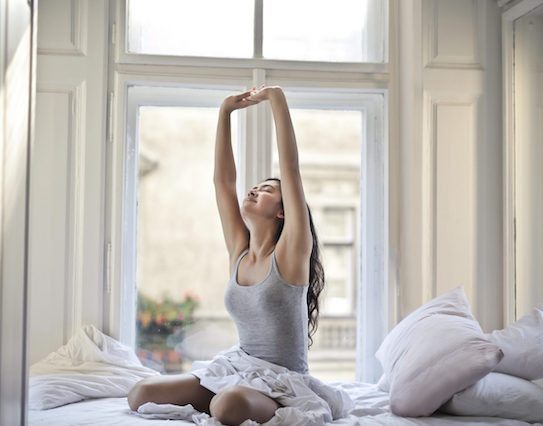
This week the press seem to be full of articles on sleep, ranging from recent research to the reasons why we lose sleep - the top reason being a heavy workload. I am sure that most people reading this blog post know that if they have a good night’s sleep they wake up feeling refreshed. So the recent discovery by scientists from University of Wisconsin which shows sleep restores your brain will be of no surprise. (For any geeks out there the research showed that sleep boosts myelin which is essential in the growth and repair of our brains. The research also revealed that deep sleep doubles the rate of reproduction of some cells.) While over in Stockholm researchers have discovered that people think sleep deprived individuals “look sad, unhealthy and unattractive”. For anyone that is struggling to get a good night’s sleep knowing science has proved that they look as awful as they feel isn’t exactly helpful either! So I wanted to share a few tips with you on getting a good night’s sleep.
- Try to go to bed and get up at the same time as bodies like routine and it will help you sleep better.
- Ensure your bedroom is quiet, dark, restful and the right temperature i.e. not to hot and not to cold. Remember it isn’t ideal to watch TV or work in your bedroom that includes trying to sleep while keeping one eye on your blackberry.
- Try to mentally and physically relax before going to bed by turning of the TV or computer and having a warm bath, listen to some relaxing music, read a book or simply sip a cup of Chamomile tea.
- Valerian is a dietary supplement that has been used since ancient times to help with a good nights sleep as it is known for combat insomnia and nervousness.
- While exercise is great to combat stress, exercising too close to bedtime can actually make it harder to sleep.
- It is best to avoid alcohol before your go to bed as for some people it will interrupt their sleep pattern later in the night.
- It is best to avoid coffee from later afternoon onwards as for some people it will keeps them awake.
