
Is deep pressure in a massage ever bad?
One of the first things you learn as a massage therapist is that everyone wants deep pressure in massage. This is because no one wants a light fluffy massage because they feel there will be no benefit and they have wasted both their time and money.
The second thing you learn as a massage is that everyone has their own idea what deep pressure is and what would be light pressure for one person is deep pressure for another person. Even if you take one client, the pressure they consider deep on their tight shoulders will be different from their idea of deep pressure on their legs. So there is no fixed concept of what deep pressure is, it varies from client to client, and with the same client it varies treatment to treatment and depending up on the part of their body your are treating.
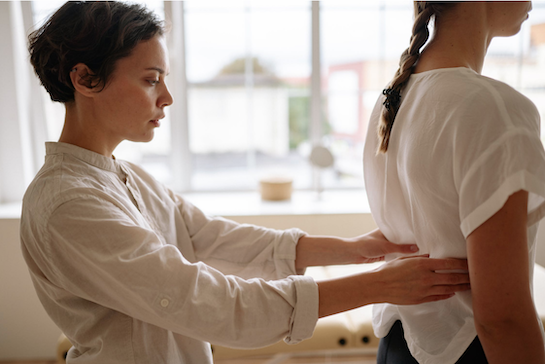
Given all this how do we work out pressure in clinic. First, we base it on our experience, your body type, the tension in the muscle we are working on. But most of all we talk to you about how the pressure feels to you and respect your preferences for pressure.
I am sure most of you have heard me talk about good pain. Its based on a phenomenon that I have seen in clinic over the years. This is where someone comes into clinic in pain, we apply pressure and the pain turns into a good pain – because the pressure is a source of relief. For some people this “good pain” just feels right. This good pain is strong but welcome and came sometimes be described as a “sweet ache”. For some clients the good pain, is such a welcome relief that pain doesn’t even seem the right word.
A word of warning, I like all my other therapists are only human and sometimes we get it wrong. This can be if we have missed a trigger point that is very sensitive, and we go into deep or the opposite can happen where a muscle locks up and we apply pressure and you as the client can’t feel anything. These situations can also arise due to change with your body i.e. an intense gym session or longer work hours than usual so lots of extra time sitting at your desk.
I try to ask all my clients regularly without sounding like its some automated message, do you want the pressure deeper or lighter and if so let me know. I know the other therapists in clinic do this as well.
In clinic we always want you to get the most out of your treatment. So please remember we always welcome feedback on pressure throughout your treatment.
Related Posts
What is NMT or Neuromuscular Technique?
NMT (Neuromuscular Technique) is a soft tissue technique developed in the 1930's by Dr Stanley Lief. NMT is the application of quasi-static pressure perpendicular to the skin with the aim of releasing pain and tension in muscles (normally in skeletal muscles). Neuromuscular Technique is used by
- Physiotherapists
- Osteopaths
- Chiropractors
- Massage Therapists
- muscle spasms
- muscle tension
- aches & pains
- trigger points

Foam Rolling Guide – Part 2
In Part 1 I introduced the concept of foam rolling and explained what it is. In part 2 I want to give you my tips and techniques. How long should you foam roll? For general maintenance, each muscle should be focused on for up to 2 minutes at a time. I know many of my readers are highly educated and now there are over 600 muscle in the body – don’t worry you don’t need to foam roll them all! You focus on the ones that feel tight and in need of the foam rolling. How to use a foam roller if you hunch over your desk all day? To open up your chest you can lay on the foam roller so it is underneath your spine – for about 10 minutes and this will open up your back & chest. Any more tips? You can essentially foam roll any part of your body. You just start and place with the movement, speed and pressure to see what works for you. But don’t expect it to feel comfortable – those tender spots are the ones that need the help most. I would suggest you start off slowly and build up time, speed and pressure slowly. The outside of the thighs (or IT bands) are an area of tightness for runners and cyclists and its highly accessible on a foam roller. The larger muscles in the legs, quads (front of thighs), hamstrings (back of thighs), calf musles are very easy to foam roll.
Is it time you considered a digital detox?
For those of your who don't know I have a background in IT. This means I am very comfortable with technology and love my smartphone. However I am for once a month to do a digital detox the reason is that I recognise that I live in an "always on" society. I am inundated on a daily basis with social media updates, text messages and emails. What's worse are "always on" society ecpects us to be contactable at all times and to respond immediatley. Its no surprise that research has found a link between heavy smarphone usage and increased anxiety. Did you know that smartphones are actually designed to distract us? They rob our brains of vitally important downtime preventing them from being creative. A digital detox allows my brain to reachage and focus on the present. No one needs to give you permission to go off grid for half a day and you don't need to feel guilty either. A digital detox can start simply as 45 minutes without using a smartphone, laptop, tablet or other device one evening a week and then build up slowly to a couple of hours. I find regular digital detox is hugely beneficial to my state of mind and can be easily incorporated into your routine. Reference https://www.ncbi.nlm.nih.gov/pmc/articles/PMC4500888/
