
Can acupuncture cut hot flushes by half?
Hot flushes are temporary but recurring feeling of warmth that spreads over the body which often begins in the head and neck region and can be very troublesome. Hot flushes often occur during sleep, producing perspiration known as night sweats. As a result, hot flushes can have a big impact on your quality of life.
Hot flushes are one of the most common symptoms women have when they go through the menopause. About 3 out of 4 women going through the menopause (75%) will have hot flushes. If you’ve had one, there’s no mistaking it: the sudden, intense, hot feeling on your face and upper body, perhaps preceded or accompanied by a rapid heartbeat and sweating, nausea, dizziness, anxiety, headache, weakness, or a feeling of suffocation.
Researches recruited 209 women who experienced at least four hot flushes or night sweats every day. All the patients received up to 20 acupuncture treatments within 6 months. Nearly half the women saw a 47% reduction in hot flushes or night sweats, while almost 12% reported that their symptoms had stopped almost completely although 4% actually saw an increase in their problems.
What is interesting is that most of the women how saw their hot flushes and night sweats decrease started seeing improvements after three sessions.
Research
Related Posts

Is reflexology or massage better at reducing stress or pain?
While amongst my clients there is a clear preference for massage, I decided to investigate if there was any scientific evidence if massage was better than reflexology (or vice versa) at reducing pain and stress. In 2012 there was a small study comparing massage to reflexology on cancer survivors over the age of 75 living in a care home. The study compared the effectiveness of 20 minutes of reflexology treatments against 20 minute Swedish massage by examining the impact on the patients stress levels, pain levels and mood. Pre and post treatment levels of salivary cortisol, observed affect and pain were compared. Both reflexology and Swedish massage resulted in significant declines in salivary cortisol indicating a reduction in stress levels, reduced pain levels and improvements in mood. So to go back to my original question, there is scientific evidence for both and I suggest you book the treatment you prefer. Hodgson N, Lafferty D (2012) Reflexology versus Swedish Massage to Reduce Physiologic Stress and Pain and Improve Mood in Nursing Home Residents with Cancer: A Pilot Trial. Evidence Based Complement Alternat Med. 2:456897

Sleep – Its only one way of getting energy.
The function of sleep is to renew us and its gives us our vitality or give us energy to live our lives. But while it may be ideal to have 7, 8 or 9 hours a sleep it’s not always possible with our 21st century life styles. For many people there is simply too much to do to sleep. So given you can’t create time, what can you do. First remember that sleep is only one way to recharge our energy battery. Energy How much energy you have right now isn’t purely based on how well you slept last night or how well you have been sleeping recently. By “energy” I mean your personal ability to live life to its fullest capacity. So where would you put yourself on an energy scale of 1 to 100% where 1 is very low energy and 100 is full of energy? Below 30% we are de-motivated, low in self-esteem and feel out of control. Just like jump-starting a car when the car battery has gone flat, if your energy falls below 30% then you need an energy boost from something like acupuncture, shiatsu or reiki. Once your energy level is about 30% then it’s possible to help yourself boost your energy. Physical Energy Boosters This is what we do to care for ourselves physical and the things that give us our vitality and make us feel physically well and energised.
- Rest is not just the essential precursor to brilliant sleep; it is also a substitute for sleep as it allows us to recharge our batteries.
- A healthy diet provides the nutritional support your body needs to provide physical energy.
- Exercise including yoga, swimming, walking and tai chi help re-charge our batteries.
Is Reiki a Placebo? – Part 4
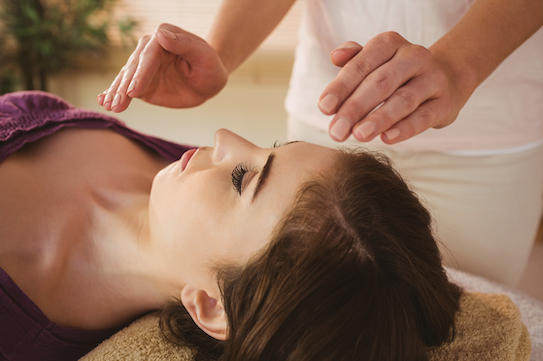
I know want to examine the scientific evidence of the impact of Reiki on more subjective issues like pain and anxiety. Heidt (1979) utilised healing to reduce levels of anxiety in patients in a hospital cardiovascular unit. Ninety volunteers were divided into three matched groups receiving treatments as follows: a five-minute period of healing, casual touch and no touch at all. Pre- and post-intervention levels of anxiety were measured using a special questionnaire. In those subjects receiving healing there was a highly significant reduction in anxiety following the treatment. Quinn (1982) also studied the effects of healing on anxiety states in hospitalised cardiac patients, but without making physical contact. Sixty patients were randomly assigned to either an experimental group receiving five-minute treatments of non-contact healing given by an experienced practitioner; or to a control group where inexperienced practitioners went through similar procedures whilst doing mental arithmetic. Assessments were done by the patients before and after treatment using a specialised questionnaire. Results showed that the experimental group had a very significant reduction in anxiety post-treatment. Gulak (1985), a healer, undertook a study on his patients measuring anxiety levels before and after healing treatment. Seventy six patients were given 15-minute treatments, with anxiety levels being assessed 14 days before and 21 days following the treatments using a specialised questionnaire. Different statistical analyses showed the reductions in anxiety to be significant as well as other health issues being cleared up. Wirth, Brenlan, Levine & Rodriguez (1993) performed a double-blind, crossover study on the effect of healing on post-operative pain, following surgical removal of both impacted lower molar teeth. Twenty one patients were randomly assigned to control or treatment groups before the first tooth was removed; and before the second operation the groups were transposed from control to experimental and vice versa. All conditions for both groups were the same except that the experimental groups received Reiki and healing post-operatively. Healing was undertaken at a distance of several miles from the patients with the healers concentrating on individual patients' photographs. Patients measured their pain intensity and pain relief over a period from 3 to 9 hours after operation using specialised pain assessment techniques. A statistically significant difference was found between the treatment and control groups in both pain intensity and amount of pain relief at hours 4 to 8 and hour 9. When combined, the data showed a highly significant improvement in pain levels as a result of the distant/remote healing. I started the series of articles by saying that Reiki is intangible. But in the last four articles I have demonstrated the impact on Reiki energy on human blood, yeast and plants as well as the human body. In addition there is clear evidence Reiki helps with pain, anxiety and lowering blood pressure. References Heidt, Patricia (1979). An Investigation of the Effect of Therapeutic Touch on the anxiety of Hospitalized Patients. Ph.D. dissertation, New York Univesity. See also: Heidt, Patricia (1981). Effects of therapeutic touch on the anxiety level of hospitalized patients, Nursing Res., 30, 30-37. Gulak, J. (1985). Lowering the anxiety levels in persons undergoing bioenergo-therapy. Psychotronika, 1985, 6-9. Quoted by Benor (1993). Wirth, D. P., Brenlan, D. R., Levine, R. J. & Rodriguez, C. M. (1993). The effect of complementary healing therapy on postoperative pain after surgical removal of impacted third molar teeth. Compl. Therap. Med., 1. 133-138.
