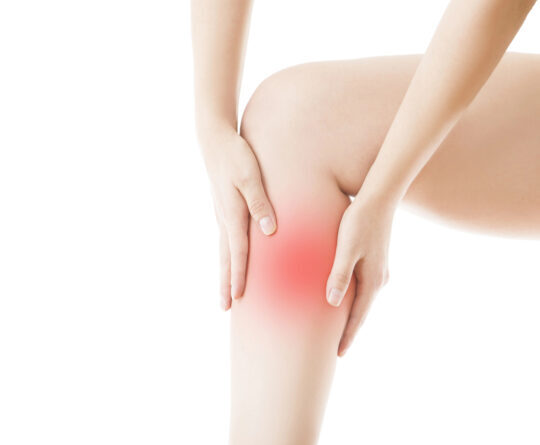
Elbow Pain
Recently we have treated a few cases of elbow pain.

There are two common site for elbow pain, the outside edge of the elbow which is often an indication of tennis elbow or lateral epicondylitis and the inside edge of the elbow which is often an indication of glofer’s elbow or medial epicondylitis. With both of these conditions the pain may radiate up the arm and / or down along the forearm.
Both conditions can be caused by precise wrist movements from using a mouse or keyboard. As the name suggests tennis elbow can be caused by faulty backhand technique when playing tennis. While golfer’s elbow can be caused by poor technique when playing Golf or faulty forehand technique when playing tennis.
In addition tennis elbow can be caused by carrying heavy shopping bags as it causes tension in the wrist extensors.
Most of the cases we see are caused by long hours using computers. The first thing we do is try and establish the cause of the pain, which can be tightness or spasm in the muscles of the forearm, neck or shoulders and then treat accordingly. We can also show you simple stretches to stretch out the muscles of the forearm.
What surprised us, and prompted me to write this blog is that they all the clients had just assumed that elbow pain was something that they just had to lived with. In all the cases we dramatically reduced the pain and in most cases after a few treatments the clients were pain free! So don’t sit their in pain, book a massage.
Related Posts

What is the difference between sports and deep tissue massage?
Deep tissue is a very descriptive name and is self-explanatory. The confusion comes when it is compared to sports massage. The big difference is the focus. Sports massage is dedicated to
- improving sports performance
- prevention of and treating sports injuries
- You work out religiously, but aren't as relgious about stretching
- You cycle or run to work and don't think to stretch
- You play sports but don't cross train so have specific trouble spots
- Your performance (in a particular sport) has dropped
- You have a history of injuries and want to reduce the likely hood of further injuries
- You work at a computer all day and your neck, shoulders & back are chronically sore
- You are so tense your back feels like concrete
- You have tired achy legs
- You are in pain
- You are stiff (or are unable to move your neck/arm/leg freely)
- You are stressed or anxious
- You have a knot or a muscle spasm
What causes muscle cramps?
Unfortunately no one totally understands what causes muscle cramps. Most authorities agree that in skeletal muscles they are frequently caused by the hyper-excitability of the nerves that stimulate muscles. Rather than thinking of a single cause of muscle cramps, I find it more helpful to think in terms of risk factors. A field study of 433 Ironman triathletes suggest that those so cramped had exercised harder than usual, had a family history of cramping and had previous tension or ligament damage. Because muscle cramps often occur due to muscle fatigue the problem may be related to nerve malfunction creates an imbalance between muscle excitation and inhibition which prevents the muscle from relaxing. (see Schwellnus et al 2004). In summary although muscle cramps are likely to be related to overexertion there are other contribution factors. References Shang G, Collins M and Schwellnus M (2001). Factors associated with self-reported history of exercise associated muscle cramps in Ironman Triathletes: A case-control study, The Clinical Journal of Sports Medicine 21(3): p204-210 Schwellnus MP, Nicol J, Laubscher R et al (2004). Serum electrolyte concentrations and hydration status are not associated with exercise associated muscle cramping in distance runners, British Journal of Sports Medicine 38(4): p488-492