
How can Reflexology help me?
As a human being, you are a complex, delicately balanced machine that is synergistic … everything working together for the benefit of the whole person. When each part of you, mind, body and soul works in harmony, you feel at your peak. At a biological level, this harmony is achieved by a myriad of glands, organs, nerves, chemicals etc. and if one of these gets out of balance then the effects are felt throughout the whole body.
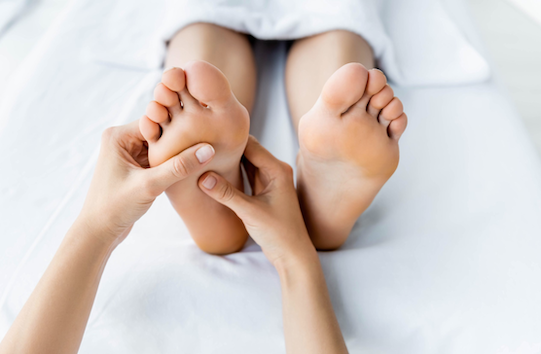
Reflexology restores your inner harmony and instils a sense of well being. It treats the whole person and can be used to tackle a wide range of conditions such as pre-menstrual tension, headaches, migraines, sinus problems, anxiety, tension, insomnia, digestive disorders, backache, stiffness and tension.
Related Posts

What is the history of Reflexology?
A 2,300 B.C wall painting in the tomb of Ankmahor, known as the physicians’ tomb, shows a series practitioners giving patients reflexology treatments. In addition, there is evidence that reflexology was known to some early African tribes and the American Indians. Dr William Fitzgerald and American ENT (ear nose and throat) consultant rediscovered it in the early 1920s. He found that by applying pressure to reflex points on the feet, he could anaesthetize a patient’s ear and this enabled him to perform minor ear operations. Eunice Ingham, a nurse, publicised much of Dr Fitzgerald’s research by treating patients, lecturing and training practitioners including Dorean Bayley who introduced the therapy into England in the early 1960s.
I am pregnant, is Reflexology safe for me?
Obviously when you are pregnant you want to make sure everything you do is safe for both you and your baby. Reflexology is generally considered safe if you are pregnant providing all is well with the pregnancy and you tell the Reflexologist you are pregnant. Reflexology should be avoided by women with a risk of pre-eclampsia or deep vein thrombosis (DVT) and they should seek medical advice before having Reflexology. It is not suitable if:
- you have a history of miscarriages
- you have been diagnosed with Placenta Previa
- you have been diagnosed with Hydroamnios
Reflexology: Scientific Evidence of it’s effects physiological anxiety signs
Recently a scientific study (see details below) was published which evaluated the physiological anxiety signs and sedation needs of patients in intensive care units in a Turkish hospital.
Background It is an accepted medical fact that when it is necessary to mechanically ventilate patients in intensive care units of hospitals, the patients experience stress and anxiety. It is standard medical practice to relieve anxiety, pain, agitation with sedatives to ensure patient comfort. Sedatives however also have side effects causing high blood pressure, slow heart beat, coma, respiratory depression, muscle weakness and atrophy, increased risk of pneumonia, kidney problems and immunosuppression. It may also prolong the need for ventilation which in turn increases the risk of complications. Method 60 patients were split into two groups one of which was the control group. Sedation (Propofol) was reduced 30 min before treatment (or no treatment) which resulted in patients with mixed consciousness to which the outcome measure was administered. This was the American Association of critical care nurses sedation assessment scale (AACNSAS) and the vital signs recorded. Reflexology applied to ears, hands and feet bilaterally was given twice a day for a total of 30 minutes per day, over 5 days. The reflexology focussed on the brain, cortex, hypothalamus, hypophysis and subcortex; areas though to influence anxiety, agitation and stress response. No reflexology was given to the control group but the sedation was reduced and all the same measurements were taken. Results The physiological signs of anxiety and stress i.e. blood pressure, heart rate and respiratory rate were are reduced in the group that received reflexology on each of the 5 days. In addition there was a reduction in the requirement for sedatives in the group that received reflexology. Conclusions These findings ‘show that reflexology is an effective treatment in reducing the physiological signs of anxiety and stress in patients receiving mechanically ventilated support.’ This study provides scientific evidence to underpin the idea that reflexology has a beneficial effect on anxiety and stress.Title: Reflexology: It’s effects on Physiological Anxiety Signs and Sedation Needs Journal: Holistic Nursing Practioner Authors: E. Korhan, L. Khorshid, M Uyar Reference: 2014; 28 (1);6-23 Study Type: Randomised Controlled Trial - with control group receiving no treatment
