What can help my sciatica?
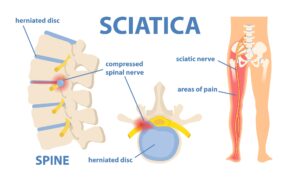
- Sudden numbness or muscle weakness in a leg.
- Pain after a violent injury, such as a traffic accident.
- Trouble controlling bowels or bladder
It’s not always possible to prevent sciatica, and the condition can come back. To protect your back:
- Exercise regularly. To keep the back strong, work the core muscles — the muscles in the abdomen and lower back needed for good posture and alignment. A healthcare professional can recommend activities.
- Keep good posture when sitting. Choose a seat with good lower back support, armrests and a swivel base. For better low back support, place a pillow or rolled towel in the small of the back to keep its normal curve. Keep knees and hips level.
- Use your body correctly. When standing for long periods, rest one foot on a stool or small box from time to time. When lifting something heavy, let your legs do the work. Hold the load close to your body. Don’t lift and twist at the same time. Find someone to help lift heavy or awkward things.
- Ensure you say adequately hydrated. This will assist the discs in your back.
Related Posts

Why does slumping at your desk contribute to lower back pain?
We all know that we should maintain good posture when sitting rather than slumping (poor posture) to avoid lower back pain, but why? The human spine is an upright bendy column and in someone with good posture it’s an S shape. With perfect posture a straight line can be drawn through the ear, the tip of the shoulder, the front of the knee joint and the back of the ankle. The spine is made of 24 vertebrae or segments. If we look at the S shape it consist of the cervical lordosis which is the arch in the neck, this is followed by the thoracic kyphosis which is an arch in the chest in the opposite direction, this is then followed by the lumbar arch or lumbar lordosis which is the hollow in the lower back. Perfect lumbar lordosis (or perfect arch in your lower back) helps
- Ensure the correct distribution of your body weight
- Allows your lower back to bow forwards slightly when walking to absorb the impact during walking
- Choose a chair that allows you to rest both feet flat on the floor while keeping your knees level with your hips. If necessary, prop up your feet with a footstool or other support.
- Sit back in your chair. If the chair doesn't support your lower back's curve, place a rolled towel or small pillow behind your lower back.
- Stretch the top of your head toward the ceiling, and tuck your chin in slightly.
- Keep your upper back and neck comfortably straight.
- Keep your shoulders relaxed — not elevated, rounded or pulled backward.
Remember
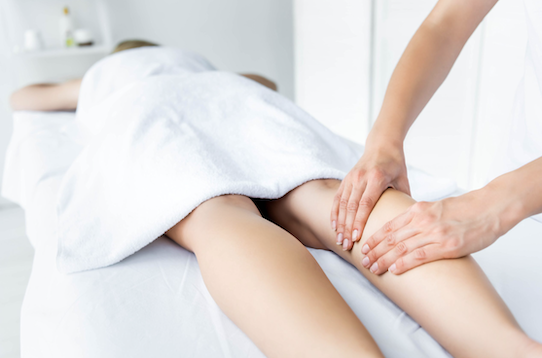
Although good posture should be natural, you might feel wooden or stiff at first if you are used to slumping rather than sitting up straight. The key is to practice good posture all the time, and be extra vigilant when you are really concentrating, getting tired or its late in the day. You can make improvements at any age. Stretching and core strengthening exercises can help, too. And if you have got lower back pain, why not try massage.Arm and Hand Stretches
These stretches can either be done as a complete series or individually and most of them can be done at your desk. Some will ease tension in specific parts of the body whilst others are generally relaxing. Please remember stretching should always be relaxing and never painful! To get maximum benefit from these stretches you should do them daily and hold each stretch for 15 seconds and repeat twice unless otherwise stated. Arm and Hand Stretches
- Stand with your feet together, keeping you feet together and your knees soft. Raise your arms alternatively swinging them over your head as if you were performing backstroke.
- Raise your left arm above your head and push up as high as you can. Feel the stretch down the left side of the body. Hold for 30 seconds. Repeat on the right.
- Raise your right arm to the side, keeping at shoulder height. Point your fingers towards the ceiling and push your palm away from your body. Hold for 30 seconds and repeat on left side.
- With your right hand by your side, point your fingers behind you with your palm facing up. Push your right shoulder and wrist towards the floor, then make a fist. Hold. Repeat on the other side.
- Keep your arms by your side and clench your fists as tight as you can, then spread your thumb and fingers as far apart as possible.
- Let your arms hang loosely by your side and shake them for about 15 seconds.