
Is your headache a tension headache?
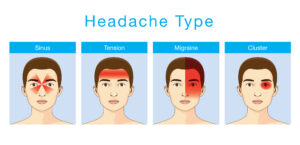
Common symptoms of tension headaches include:
- pain on both sides of your head, face or neck
- feeling like something is pressing on your head or being tightened around it
- the affected area may feel tender and your head may hurt more when touched
Tension headaches are annoying but not as disabling as for example, migraines. When you have a tension headache it is normal that you are able to continue with your daily activities without risking making your headache worse.
Common causes of tension headaches include:
- stress
- sleep problems
- caffeine
- tight muscles in your neck & shoulders
If you feel your sleeping issues are contributing to your tension headaches then changing your sleeping habits may be beneficial. If you feel stress is contributing to your tension headaches then prioritising relaxing activities or yoga may be beneficial.
In my experience some clients who have tight neck & shoulder also suffer from tension headaches. In addition it is common for people to carry their stress in their neck & shoulders which means they become tense which may lead to tension headaches. Feeling stressed or having tight neck & shoulder are issues that frequently lead to clients booking a massage.
Related Posts

Is the way you breathing causing your neck pain? – Part 2
In my last post, I explained how both your scalenes and sternocleidomastoid can become both tense and painful from shallow breathing. Obviously deep breathing will help as it will address the cause. But what if you have a bad habit of shallow breathing, and know its causing tension in your neck muscles? First there are some stretches that will help.
Finally you can book a Seated Acupressure Neck & Shoulder massage.- Sternocleidomastoid Stretch
 The sternocleidomastoid muscle runs like two long strap-like muscles on either side of the front of the neck.
To stretch it, rotate the head to one side as far as is comfortable. Then tilt the head to the same side, as if trying to reach the ear to the shoulder.
Hold for 30 seconds and then repeat on the other side of your neck.
The sternocleidomastoid muscle runs like two long strap-like muscles on either side of the front of the neck.
To stretch it, rotate the head to one side as far as is comfortable. Then tilt the head to the same side, as if trying to reach the ear to the shoulder.
Hold for 30 seconds and then repeat on the other side of your neck.
- Scalenes Stretch

What is a muscle cramp?
What is a muscle cramp? Normal movement of our bodies involves muscles alternating between contract and relaxation. A muscle that contracts involuntarily and is unable to relax is a spasm; and a forceful and prolonged spasm becomes a cramp. A muscle cramp can last anywhere from a few seconds to up to 15 minutes or occasionally longer. Any muscle can develop a cramp, but the most common site for muscle cramps are the legs, particularly the front of the thighs (quadriceps), back of the thighs (hamstrings) and calf muscles (gastrocnemius & soleus). Unfortunately almost everyone, one estimate is 95% of the population will experience a muscle cramp at some time in their life. Muscle cramps are one of those things that also increases as we get older. Those of you that have already had a muscle cramp will undoubtedly remember the unrelenting pain! Tip: Most muscle cramps can be stopped if the muscle can be stretched. Muscle spasms & cramps are one of the most common complaints that massage therapists deal with.
Heat
Last time, I discussed the use of Cryotherapy to aid healing, today I would like to discuss the use of heat. As many of you will know who have had a full body massage treatment with me, I often incorporate hot stones into my treatment. And some of my readers will have heard me say they should use a wheat bag or cherry stone bag or some other type of hot pack. The simple reason why I do this is that most people I treat have one or more knots. A knot is created when a muscle contracts for a sustained period of time and looses its ability to stretch or relax. A simple "muscle knot" will deprive an area of blood, oxygen, nutrients and a thyroid hormone called T3. When a muscle has been deprived of T3 even for a few minutes it will lose its ability to relax, creating the perfect conditions for inflammation and fibrosis (the creation of adhesions). A reduction in the partial pressure of oxygen (to 55 mm of Hg) due to restriction of blood to an area in that muscle will start the inflammatory process that causes the fibrotic condition (adhesion) to proliferate. In the hands of a skilled massage practitioner the knot and any adhesions are located and ideally removed but at least reduced. With the restoration of normal muscle motion, pain is decreased or eliminated, joint motion improves, and normal or near normal activities can be resumed. So heat is often incorporated into a massage treatment treatment because it
- Increases blood supply to an area of the body
- It warms up the muscle tissues to allow them to stretch (relax)
- It reduces muscle spasm
