How does Reflexology work?

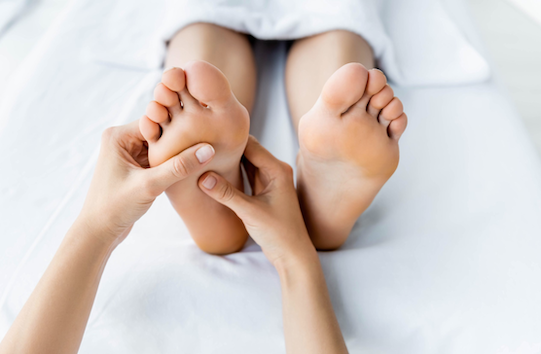
Different areas of the feet (or reflex areas) correspond to different parts of the body and the whole body is represented.  By working on these reflex areas, a balancing effect can be brought about in the corresponding part of the body.  The right foot corresponds to the right side of the body and the left foot to the left side.   By working on both feet the whole body can be brought back into harmony.

Related Posts

  • Are their any side effects of Reflexology treatments?

    The aim of Reflexology is to restore harmony within the client and instil a sense of well being.   During a Reflexology treatment, some clients experience fleeting sensations in their body.   As part of restoring the body to balance some clients may notice subtle changes in their appetite, changes to their sleeping pattern, dream more often, go to the loo more often or feel tired.   All of these reactions are short lived and the vast majority of my reflexology clients simply report that they felt tired after the treatment and then slept better.
  • Reflexology and Pain Management – Part 1

    Pain is a fact of life, it is a necessary part of being human.  Pain is a universal experience that serves the vital function of triggering avoidance. Pain is not a simple sensory experience, it can occur even in the absence of tissue damage. It involves emotional, social and cognitive beliefs. The four pillars of pain include

    1. Peripheral nervous system or the movement system
    2. Autonomic system, composing the sympathetic, parasympathetic, hormonal and visceral systems
    3. Central nervous system
    4. Psycho-emotional aspects, such as stress, anxiety, fear, social life and memory of pain.
    Physiological pain acts as a warning of actual or potential tissue damage and is usually transient.  It may be accompanied by an increase in heart rate, blood pressure and temperature.  Physiological pain of pathological origin results from tissue damage.  Tissue damage causes the release of neurotransmitters into the bloodstream creating inflammation, which can produce redness, swelling, and heat and further enhance the pain experience.  The area may also be sensitised, stimulating further neurochemical output and resulting in an ongoing cycle of pain - referred to as chronic pain. A growing evidence base for reflexology in pain management.  It is not yet fully understood how reflexology helps manage pain, although current opinion suggests it works on the neurological system through the release of endogenous opioids*. So if you are in pain, why not book a reflexology treatment.   * Sources Stephenson NLN and JA Dalton (2003).  Using Reflexology for pain management; a review, Journal of Holistic Nursing 21(2) pg 179 - 191 Mackereth P (2005) An explanation of therapeutic outcomes of reflexology and relaxation interventions for people with multiple sclerosis, University of Mancherster  
  • Reflexology and Pain Management – Part 2

    In part 1, I explored what pain was, the pain response and briefly explained how reflexology helps manage pain. Much anecdotal evidence shows the benefits of reflexology in pain management and several studies indicate successful treatment outcomes including pain reduction. (See references at end of article). However I would like to focus on one recent study by Dr Carol Samuel and Dr Ivor Ebenezer of University of Portsmouth as this is the first time Reflexology has been scientifically evaluated as a study for acute pain.  The results indicate that reflexology may be as effective as pain killers for common conditions such as osteoarthritis, backache and cancer. Participants attended two sessions, in which they were asked to submerge their hand in ice water. In one of the sessions they were given reflexology before they submerged their hand, and in the other session they believed they were receiving pain relief from a Tens machine, which was not actually switched on.  The use of the Tens machine is equivalent of a sugar pill in drug trials. The researches found that people felt about 40% less pain, and were able to stand pain for about 45% longer, when they used reflexology as a method of pain relief. So if you are in pain now, by not book a reflexology session. References Booth L (1997) Vertical Reflex therapy: results of a reflexology trail in a Bristol residential home for elderly Khan S, Otter S and Springett K (2006) The effects of reflexology on foot pain and quality of life in a patient with rheumatoid arthritis: a case report, The Foot 16 pg 112-116 Brown CA and Lido C (2008) Reflexology treatment for patients with lower limb amputations and phantom limb pain: an exploratory pilot study, Complementary Therapies in Clinical Practice 14 pg 124-131 Hughes CM, Smyth S and Lowe-Strong A (2008) Reflexology for the treatment of pain in people with multiple sclerosis: a double-blind randomised controlled trail, The Journal of Alternative and Complementary Medicine 14(1) S1-S109