
Does nature restore you? – Part 1
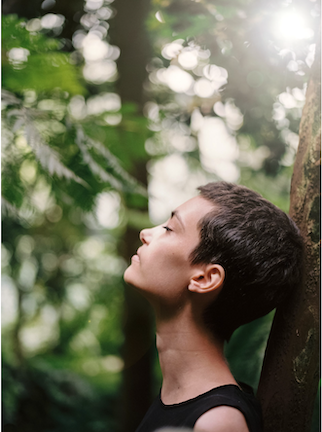
A few years ago now, I moved to London and one of my concerns about moving to London was that I would loose easy access to open green spaces. I have always found that walking through natural green spaces which feel very open have always had a restorative affect on my mental health and general sense of well-being. I know that now I live in London I am very lucky to live within walking distance of Blackheath, so I can still get my “nature top up”. My reaction to nature, made me wonder if their is any scientific evidence of the benefits of nature on health.
A narrative review from Mount Royal University in Canada looked at how contact with nature could help the emotional & mental well-being of cancer survivors. Researches were encouraged by findings that concluded nature could have a positive impact on the well-being of cancer survivors.
Gladwell et al show that lunchtime walks in nature-based environments may provide a greater restorative effect and may improve essential recovery during night-time sleep, potentially enhancing physiological health. While it may be difficult to take a nature-based walk at lunchtime, it is much easier in the summer to take one in the evening.
For those of you that may be thinking, “walking through parks is all very well for you Joanne, but where am I going to find the time for that!”. Please read on…
In 201o researched in the UK looked at evidence from 1,250 people in 10 studies and found fast improvements in mood and self-esteem from green exercise. (Green exercise is defined as activity such as walking, cycling, running, climbing etc in nature). The study found the strongest impact was in young people and just five minutes of green exercises can boost mental health.
References
Ray H and Jakubec SL (2014) Nature based experiences and health of cancer survivors, Complementary Therapies in Clinical Practice 20(4): 188 – 192
Gladwell, V.F.; Kuoppa, P.; Tarvainen, M.P.; Rogerson, M. A Lunchtime Walk in Nature Enhances Restoration of Autonomic Control during Night-Time Sleep: Results from a Preliminary Study. Int. J. Environ. Res. Public Health 2016, 13, 280.
Barton J and Pretty J (2010) What is the Best Dose of Nature and Green Exercise for Improving Mental Health? A Multi-Study Analysis Environ. Sci. Technol., 2010, 44 (10), pp 3947–3955
Related Posts

Natural remedies for the winter blues – Part 1
By January I am seriously missing the sun. While I know we have had the shortest day, the grey weather and the snow jsut reminds me we are in deep winter. So with the Brexit impass being deeply demoralising and frustraing, I wanted to share some tips to combat the blues. 1. Vitamin D Most people are short of Vitamin D in the uk. One of the signs of being short of Vitamin D is feeling blue. 2. Spice it up. Earlier today I was planning my meals for the week before I went to the supermarket. At this time of year I always fancy dishes containting yellow rice i.e. paella or pilau rice. I know its the yellow colour that particularly appeals which you get by adding either Tumeric or Saffron. In clinical trails Curcumin the main active ingredient in Tumeric (the bright yellow Indian spice) has been to be as effective as Prozac. A review of several trains of Saffron found it was a safe and effective treatmetn for depression. While I like to cook with the spices, it isn't as effective as supplements which are standardised extracts. For me cooking with the spice is fine as I am not depressed. 3. 5-HTP A naturally occuring amino acid, 5-HTP is used by the body to make serotonin the "happy hormone". Suplements produced from the seeds of the West African medicinal plant Griffonia Simplicifoia show promised for depression. References Woo YS, Kim S, Jeong JH, Jung YE, Kim MD, Bahk WM. Vitamin D Deficiency/Insufficiency among Inpatients with Depressive Symptoms. Clin Psychopharmacol Neurosci. 2019 Feb 28;17(1):121-124. Sanmukhani J, Satodia V, Trivedi J, Patel T, Tiwari D, Panchal B, Goel A, Tripathi CB. Efficacy and safety of curcumin in major depressive disorder: a randomized controlled trial. Phytother Res. 2014 Apr;28(4):579-85. Moshiri E, Basti AA, Noorbala AA, Jamshidi AH, Hesameddin Abbasi S, Akhondzadeh S. Crocus sativus L. (petal) in the treatment of mild-to-moderate depression: a double-blind, randomized and placebo-controlled trial. Phytomedicine. 2006 Nov;13(9-10):607-11 Birdsall TC. 5-Hydroxytryptophan: a clinically-effective serotonin precursor. Altern Med Rev. 1998 Aug;3(4):271-80.

Anxiety reduction & massage?
I know that I often say that one of the benefits of massage is that it may reduce anxiety. I think most people would agree that being in hospital or undergoing hospital procedures may makes us feel anxious. So I was interested in a recent study that looked at the effectiveness of massage with or without guided imagery (a therapist talking you through a scene to help you relax), prior to cardiac catheterisation. As you can imagine anxiety is very common in patients prior to cardiac catheterisation, which can lead to high blood pressure and increase the amount of sedation necessary to complete the procedure. Fifty five patients opted to receive either a 15-minute massage (31 patients) and a 20 minute guided imagery (24 patients) in a quiet area of the hospital prior to cardiac catheterisation. Self-report anxiety levels, blood pressure and heart rate were evaluated in the research participants as well as matched for comparison to a control group not taking part in the study. The results indicated that massage, with or without guided imagery, produced significant reductions in self-reported anxiety, with the combined intervention having a more pronounced effect. In addition a lower diastolic blood pressure and heart rate were found when compared to the control group. In my experience slow, deep stokes help to reduce anxiety and as a team we often incorporate this into treatments. References Amstrong K, Dixon S, May S, Patricolo GE (2014). Anxiety reduction in patients undergoing cardiac catheterisation, following massage and guided imagery. Complementary Therapies in Clinical Practice 20 (4): 334 - 338.
Bates Method – Part 2
In Part 1, I introduced the Bates Method. It was created as result of over three decades of clinic practice as an ophthalmologist. It is based on the theory that errors of focusing are temporary abnormalities which, due to the inability of the eyeball to change shape and when exposed to the healing powers of the body, can be reduced in severity or eliminated. While conventional wisdom is based on the work of Hermann von Helmholtz states that errors of focusing are due to the inability of the lens to change shape. Dr W H Bates postulated that focusing problems where the result of strain, either emotional or due to “trying” to see. The logical anti-dote to strain is rest, hence he developed palming a technique for resting the eyes. As I know lots of my readers spend long ours in front of computer screens which can strain the eyes. I wanted to share with you this simple version of palming.

- Cover your eyes with your cupped palms.
- Add a pillow under your elbows if more height is need to keep your back relaxed and straight.
- Breathe deeply while you palm for a few minutes.
