
What helps carpal tunnel syndrome?
Carpal Tunnel Syndrome (CTS)mis caused by compression of the median nerve creating tingling, numbness and pain. For people with really severe CTS or where other teatments have failed surgery is the available.
Recently an Iranian pilot study assessed the effectiveness of chamomile oil in patients with severe CTS. Chamomile oil is considered a tonic for the nerve system and is well known for its anti-inflamatory and analgesic (pain relief) properties. Twenty six patients with severe CTS who had declined surgery took parit in a randomised double-blind placebo controlled trial and were allocated either to the treatment group or the control group. Both groups were requested to wear immobilising wrist splint every night for four weeks as the standard treatment. Both groups were asked to to apply five drops of the perscribed oil (chamomile for the treatment group and parrafin/sesame oil mixture for the control group) for their wrists morning and evening without massaging the area. Electodiagnostic measure shows no significant changes however significant improvements were reports in the symptomatic and functional status of the patients. The author’s concluded that “chamomile oild seems to be helpful for patients with severe CTS” however, longer intervention period seem to be essential and further studies of a larger patient group are recommended.
If you are experience any symptoms associated with Carpal Tunnel Syndrome we office Seated Acupressure Neck & Shoulder massage which may assist you.
References
Hashempur MH, Lari ZN, Ghoreishi PS, et al (2015). A pilot randomised double-blind placebo-controlled trial on topical Chamomile oil (Marticaria Chamomilla L.) for severe carpal tunnel syndrome, Complementary Therapies in Clinical Practice 21: 223-228
Related Posts

Hip Pain
Hip pain is common problem, and it can be confusing because there are many causes. The most common cause of Hip Pain is arthritis for which you will need to see your GP for them to advise on the best treatment option of you. Trochanteric Bursitis Trochanteric bursitis is an extremely common problem that causes inflammation of the bursa, which is a protective cusion over the outside of the hip joint. There are two main bursa which protect the hip joint, the superficial trochanteric bursa and the deep trochanteric bursa. The superficial trochanteric bursa lies beneath the tensor fasciae latae (one of the muscles on the side of your hip) and the deep trochanteric bursa lies beneath the the largest of your glutes (gluteus maximus) both of the these muscles insert in to the Iliotibial Band (ITB). Reduced flexibility in your gluteus maximus, tensor fasciae latae or ITB can cause trochanteric bursitis, from too much cycling or running or from running on uneven surfaces. Another common cause is some women is an imbalance between your abductor and adductor muscles. Trochanteric bursitis can also be caused by clients altering their posture as a result of a previous back injury. In all these cases a deep tissue or sports massage can help. However if the cause is walking with more weight going through the outside of your foot (excessive foot eversion) then your make need to see a podiatrist for personalized orthotics. Hip Flexors Illiopsoas the main hip flexor, shortens when we sit down, so prolonged sitting can cause contracture (anatomical shortening) which can cause either lower back or hip pain. I have personally found this to be a common cause of hip pain which can be successfully treated with deep tissue or sports massage. If you experience lower back or hip pain when standing up from a seated position then rectus femoris which is one your largest quadriceps muscle make be tight and/or your gluteus maximus which is the other muscle which helps your stand from a seated position may be weak. If you suspect you have weak glutes you can strengthen them with squats and lunges. Fractures Hip fractures are common in the elderly with osteoporosis. Stress fractures of the hip are common in people who participate in high impact sports e.g. long distance running, treatment is usually to avoid the high impact sport and this is usually successfully. When should I see my GP about my hip pain?
- Inability to walk comfortably on the affected side
- Injury that causes deformity around the joint
- Hip pain that occurs at night or while resting
- Hip pain that persists beyond a few days
- Inability to bend the hip
- Swelling of the hip or the thigh area
- Signs of an infection, including fever, redness, warmth
- Any other unusual symptoms
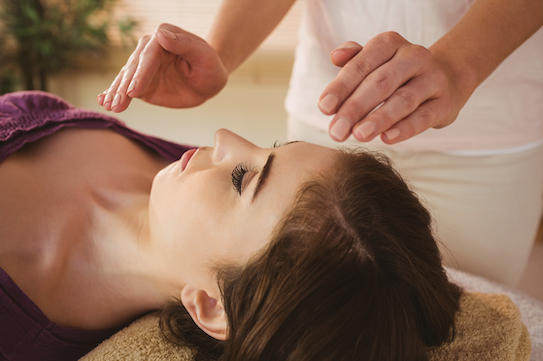
Is Reiki a Placebo? – Part 4
I know want to examine the scientific evidence of the impact of Reiki on more subjective issues like pain and anxiety. Heidt (1979) utilised healing to reduce levels of anxiety in patients in a hospital cardiovascular unit. Ninety volunteers were divided into three matched groups receiving treatments as follows: a five-minute period of healing, casual touch and no touch at all. Pre- and post-intervention levels of anxiety were measured using a special questionnaire. In those subjects receiving healing there was a highly significant reduction in anxiety following the treatment. Quinn (1982) also studied the effects of healing on anxiety states in hospitalised cardiac patients, but without making physical contact. Sixty patients were randomly assigned to either an experimental group receiving five-minute treatments of non-contact healing given by an experienced practitioner; or to a control group where inexperienced practitioners went through similar procedures whilst doing mental arithmetic. Assessments were done by the patients before and after treatment using a specialised questionnaire. Results showed that the experimental group had a very significant reduction in anxiety post-treatment. Gulak (1985), a healer, undertook a study on his patients measuring anxiety levels before and after healing treatment. Seventy six patients were given 15-minute treatments, with anxiety levels being assessed 14 days before and 21 days following the treatments using a specialised questionnaire. Different statistical analyses showed the reductions in anxiety to be significant as well as other health issues being cleared up. Wirth, Brenlan, Levine & Rodriguez (1993) performed a double-blind, crossover study on the effect of healing on post-operative pain, following surgical removal of both impacted lower molar teeth. Twenty one patients were randomly assigned to control or treatment groups before the first tooth was removed; and before the second operation the groups were transposed from control to experimental and vice versa. All conditions for both groups were the same except that the experimental groups received Reiki and healing post-operatively. Healing was undertaken at a distance of several miles from the patients with the healers concentrating on individual patients' photographs. Patients measured their pain intensity and pain relief over a period from 3 to 9 hours after operation using specialised pain assessment techniques. A statistically significant difference was found between the treatment and control groups in both pain intensity and amount of pain relief at hours 4 to 8 and hour 9. When combined, the data showed a highly significant improvement in pain levels as a result of the distant/remote healing. I started the series of articles by saying that Reiki is intangible. But in the last four articles I have demonstrated the impact on Reiki energy on human blood, yeast and plants as well as the human body. In addition there is clear evidence Reiki helps with pain, anxiety and lowering blood pressure. References Heidt, Patricia (1979). An Investigation of the Effect of Therapeutic Touch on the anxiety of Hospitalized Patients. Ph.D. dissertation, New York Univesity. See also: Heidt, Patricia (1981). Effects of therapeutic touch on the anxiety level of hospitalized patients, Nursing Res., 30, 30-37. Gulak, J. (1985). Lowering the anxiety levels in persons undergoing bioenergo-therapy. Psychotronika, 1985, 6-9. Quoted by Benor (1993). Wirth, D. P., Brenlan, D. R., Levine, R. J. & Rodriguez, C. M. (1993). The effect of complementary healing therapy on postoperative pain after surgical removal of impacted third molar teeth. Compl. Therap. Med., 1. 133-138.

Is Reiki a Placebo? – Part 1
By nature Reiki is very intangible. So in a series of blog articles I will try to explore how Reiki works and what the scientific research says. For me Reiki is merely a modern name for an ancient healing practice. Which is administered by "laying on hands" and is based on the idea that an unseen "life force energy" flows through us and is what causes us to be alive. If one's "life force energy" is low, we are run down and then we are more likely to get sick or feel stress, and if it is high, we are more capable of being happy and healthy. The benefits of Reiki
- Help some people to feel deeply relaxed
- Help people cope with difficult situations
- Relieve emotional stress and tension
- Help to improve overall wellbeing
- Help alleviate pain & anxiety
